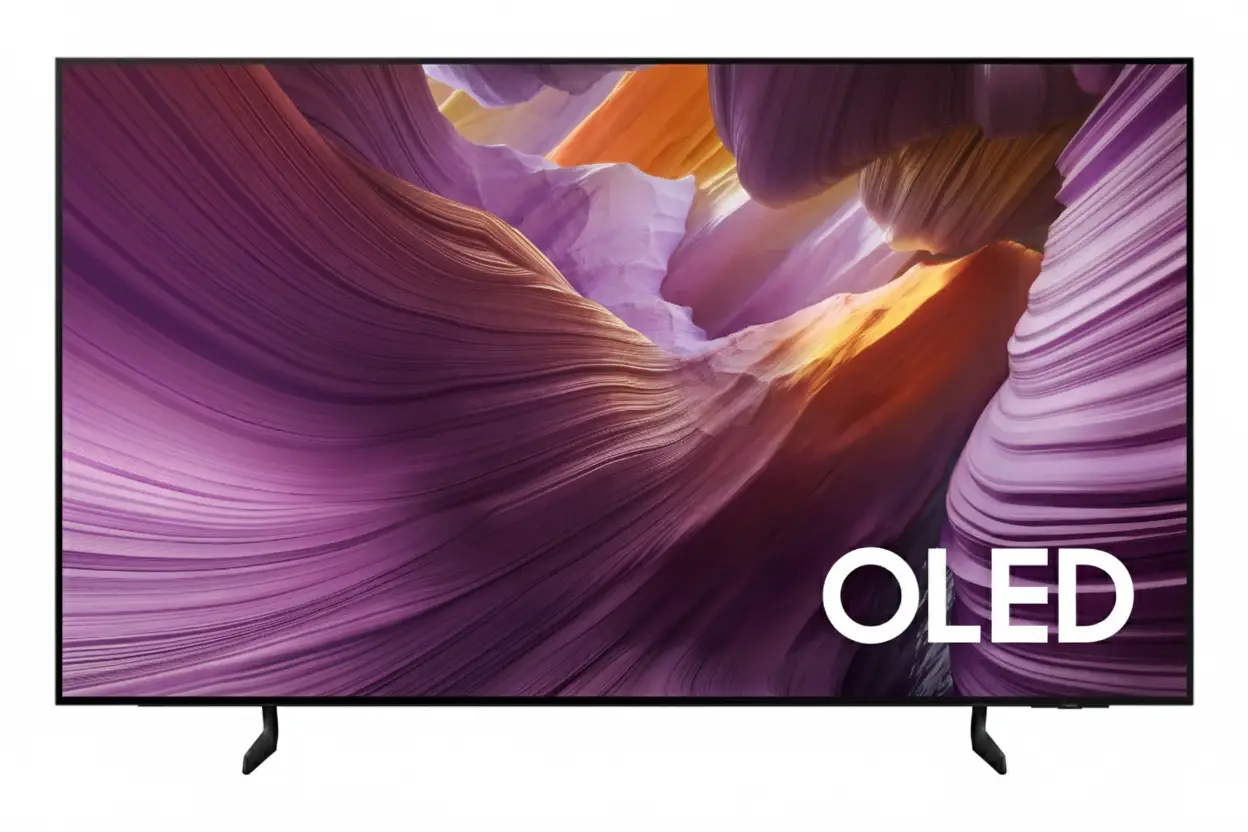
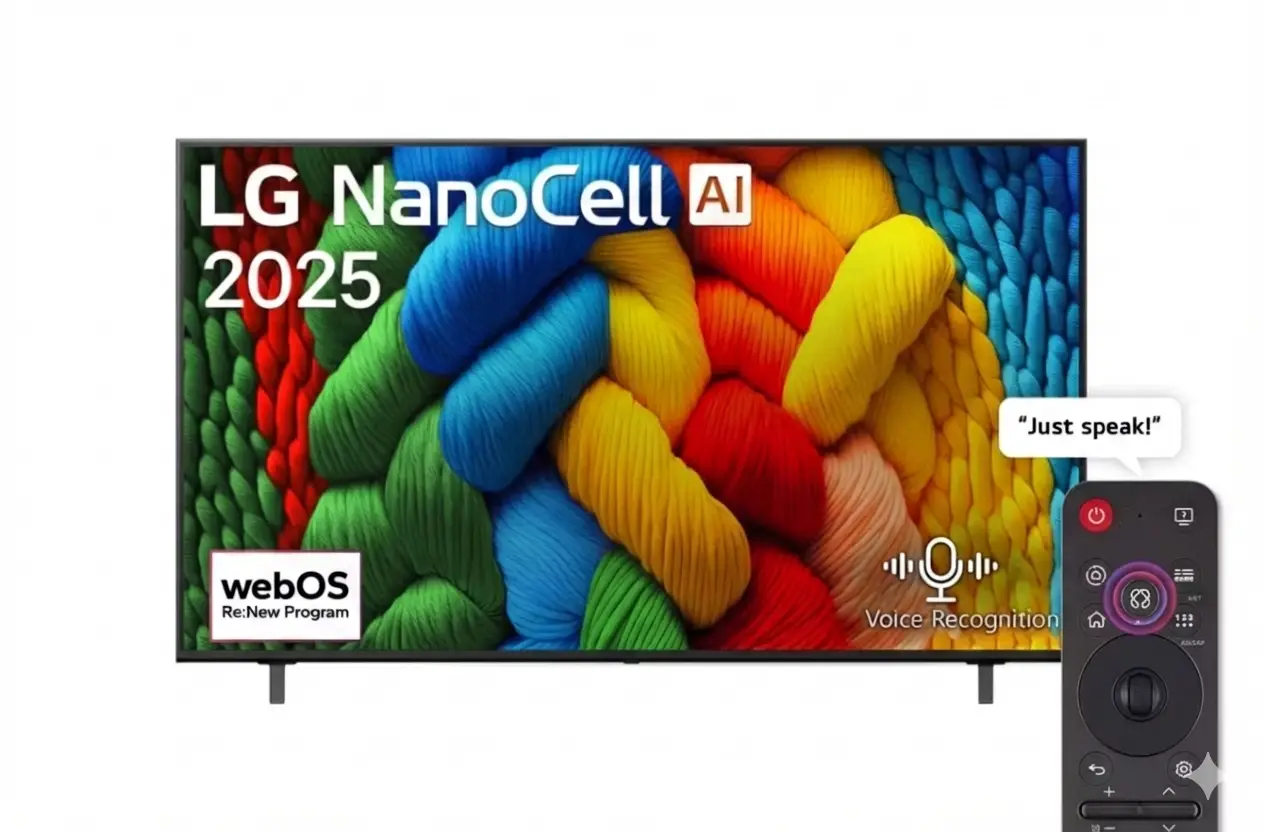
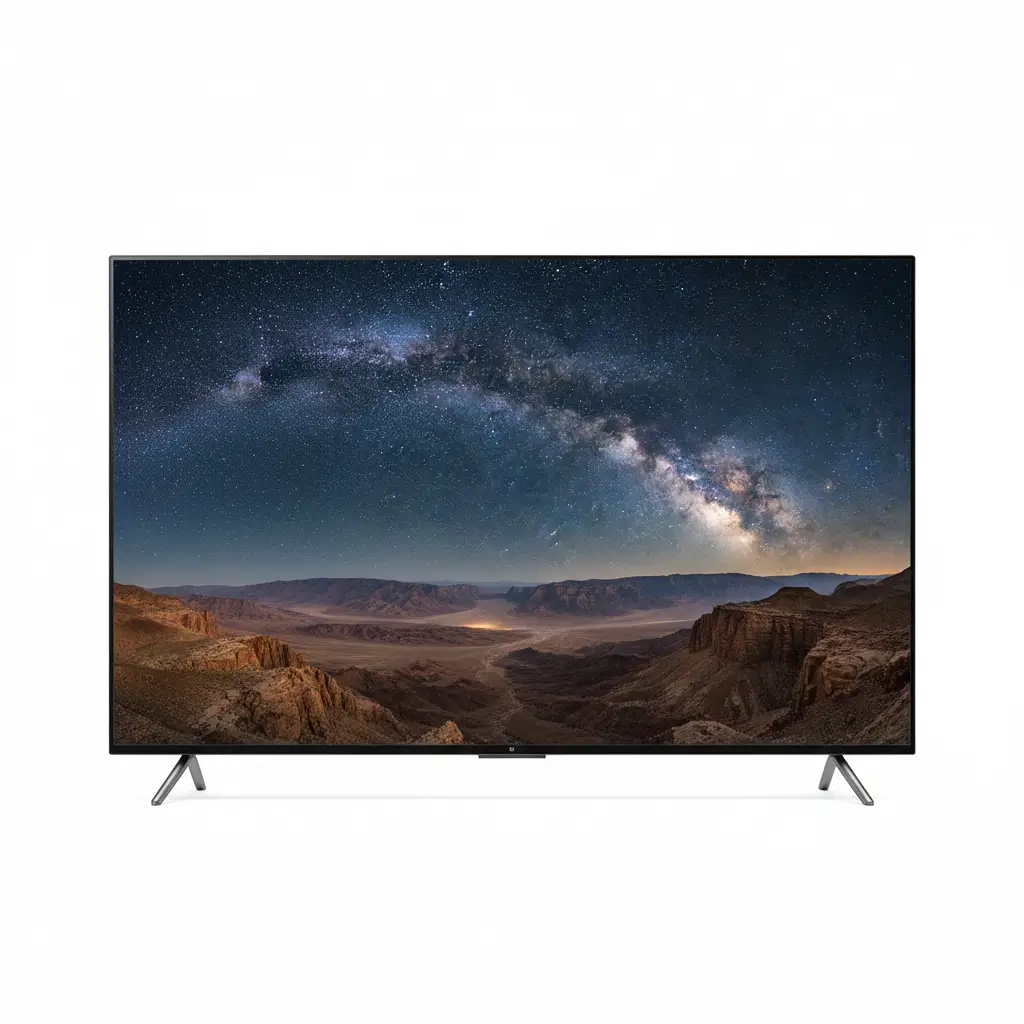
✨ 77″ OLED B5 AI SMART TV – PERFECT BLACKS!
α8 Gen2 AI | webOS 25 | Dolby Vision | 120Hz Gaming | 0.1ms Response
LG OLED77B56LA OLED B5 77″ 4K Smart TV
77″ OLED | α8 Gen2 AI | webOS 25 | 120Hz | Dolby Vision
Perfect Black – FILMMAKER MODE – G-Sync – 0.1ms Response
✨ Premium OLED Excellence!
77″ OLED Display: Perfect black levels, infinite contrast
α8 AI Processor Gen2: 4K upscaling, AI picture/sound enhancement
webOS 25: AI Voice ID, AI Search with Copilot, Chatbot
120Hz Gaming: G-Sync, FreeSync, HGiG, ALLM, VRR, 0.1ms
Dolby Vision + Atmos: Premium HDR and audio
FILMMAKER MODE: Cinema-accurate picture quality
100% Color: Fidelity & Volume UL certified
5-Year Updates: webOS Re:New Program guarantee
₹2,91,090-3,50,000
Premium OLEDModel: OLED77B56LA | MRP ₹5,53,090 (47% discount) | Best: ₹2,91,090
✨ 77″ PREMIUM OLED WITH PERFECT BLACK!
Flagship 77-inch OLED display featuring self-lit pixels delivering perfect black levels creating infinite contrast ratio impossible from LED backlighting. α8 AI Processor 4K Gen2 provides powerful picture processing with AI Super Upscaling converting HD content to near-4K quality. Revolutionary webOS 25 platform with AI Voice ID recognizing individual users, AI Search powered by Microsoft Copilot, AI Chatbot troubleshooting assistant, AI Concierge personalized recommendations. Gaming excellence with 120Hz native refresh rate enabling 4K 120fps gaming, G-Sync Compatible, FreeSync Premium, HGiG Mode, ALLM automatic low latency detection, VRR up to 120Hz, incredibly fast 0.1ms pixel response time creating ultimate console gaming experience. Dolby Vision IQ with FILMMAKER MODE preserves director intent, Dolby Atmos immersive audio. 100% Color Fidelity and 100% Color Volume UL certified. webOS Re:New Program guarantees 5 years updates through 2030!
🇮🇳 India
₹2,91,090-3,50,000
LG India, Sumaria, Lotus Electronics, Mahajan Electronics
🇺🇸 USA
$2,499-2,999
Best Buy, Amazon, LG USA official pricing
🌍 Middle East (Levant)
Contact retailers for regional pricing
Available in UAE, Saudi Arabia, Qatar, Lebanon, Jordan, Iraq
| Size | India Price |
|---|---|
| 55″ (OLED55B56LA) | ₹1,39,990-1,69,990 |
| 65″ (OLED65B56LA) | ₹2,09,990-2,49,990 |
| 77″ (OLED77B56LA) ⭐ | ₹2,91,090-3,50,000 |
Display
77″ OLED
Processor
α8 Gen2
Refresh
120Hz
LG OLED77B56LA Complete Overview
✨ OLED Perfect Black
- Self-Lit Pixels: 8.3 million independent pixels
- Perfect Black: UL-verified true 0.0 nits black
- Infinite Contrast: Absolute black to peak brightness
- 100% Color Fidelity: Intertek certified accurate colors
- 100% Color Volume: DCI-P3 wide gamut
- Pixel Dimming: Individual pixel control
- OLED Motion: Instant pixel response
- 178° Viewing: Perfect angles all directions
🧠 α8 AI Processor Gen2
- ✓ AI Super Upscaling: HD to near-4K quality
- ✓ AI Genre Selection: Content-aware optimization
- ✓ Dynamic Tone Mapping Pro: Scene-by-scene HDR
- ✓ AI Brightness Control: Ambient optimization
- ✓ AI Picture Pro: Frame-by-frame enhancement
- ✓ OLED-Optimized: Panel-specific processing
🎮 120Hz Gaming
- 120Hz Native: 4K 120fps gaming support
- 0.1ms Response: Near-instant pixel response
- G-Sync Compatible: NVIDIA certified
- FreeSync Premium: AMD certified
- HGiG Mode: Game-accurate HDR
- Game Optimizer: Genre-specific presets
- ALLM + VRR: Auto low latency, variable refresh
- 4K 120Hz Dolby Vision: HDR gaming
✨ What Makes OLED77B56LA the Premium Choice?
The LG OLED77B56LA represents entry-level OLED excellence – ₹2,91,090-3,50,000 positioning creates accessible OLED entry point delivering 90% of flagship OLED G5/C5 performance at 40-50% lower cost creating exceptional value proposition for buyers wanting perfect OLED blacks, infinite contrast, instant pixel response without extreme flagship pricing. Self-emissive OLED pixels independently illuminating create perfect 0.0 nits black level impossible from LED backlighting creating absolute darkness enhancing perceived brightness, contrast, depth, color saturation versus LED TVs unable to achieve true black regardless of local dimming sophistication creating fundamental technological advantage justifying OLED premium over LED alternatives.
The α8 AI Processor 4K Gen2 delivers excellent picture processing – second-generation α8 processor (Gen2 vs 2024’s Gen1) provides meaningful performance improvements through faster processing speeds, enhanced neural networks, refined upscaling algorithms creating superior results versus previous generation. AI Super Upscaling 4K converts HD cable channels, 1080p streaming, DVD/Blu-ray content to near-4K quality using deep learning trained on billions of reference images intelligently reconstructing missing pixels creating sharp detailed picture from lower-resolution sources essential as majority content remains below native 4K resolution requiring sophisticated upscaling maintaining picture quality on premium 77-inch display.
The 120Hz native refresh rate enables high-framerate gaming – true 120Hz panel supports 4K 120fps gaming from PlayStation 5 and Xbox Series X unlocking performance modes in select titles (Call of Duty, Fortnite, Apex Legends, Halo Infinite, Gears 5) delivering ultra-smooth 120fps gaming experience impossible from 60Hz displays limited to 60fps maximum. G-Sync Compatible certification from NVIDIA and FreeSync Premium from AMD validate gaming capabilities creating confidence for serious gamers demanding verified gaming display versus uncertified alternatives with uncertain VRR performance. Incredibly fast 0.1ms pixel response time (sub-millisecond) eliminates motion blur creating crystal-clear fast-motion visibility impossible from LED panels with 5-10ms response times creating ghosting in rapid movements frustrating competitive gaming.
The Dolby Vision IQ provides premium HDR presentation – dynamic metadata HDR format (Dolby Vision) superior to static HDR10 providing scene-by-scene instructions optimizing each frame individually versus HDR10’s single tone mapping curve applied to entire content creating suboptimal results. IQ variant adds ambient light sensor integration automatically adjusting Dolby Vision processing compensating for room lighting maintaining optimal HDR presentation whether bright afternoon or dark evening viewing creating intelligent HDR adaptation impossible from static Dolby Vision implementations ignoring environmental conditions. Dolby Vision gaming support at 4K 120Hz combines premium HDR with high-framerate gaming creating ultimate visual gaming experience exclusive to premium displays supporting demanding format combination.
The FILMMAKER MODE with Ambient Light Compensation preserves director intent – UHD Alliance certified picture mode developed by film industry (Christopher Nolan, Martin Scorsese, Ryan Coogler) specifies exact settings matching theatrical presentation: disables motion smoothing maintaining 24fps film cadence, preserves original aspect ratios avoiding cropping, uses D65 cinema white point matching projectors. Ambient Light Compensation variant adapts FILMMAKER MODE to room lighting maintaining proper brightness perception across viewing environments creating consistent cinema-accurate experience impossible from rigid fixed settings appearing too dark in bright rooms or washed out in dark rooms creating inappropriate presentation regardless of filmmaker intent.
The 77-inch OLED screen size balances scale with affordability – large premium size appropriate for living rooms with 14-18 feet viewing distances creating immersive theater-like experience filling field-of-view comfortably. Positioned between 65-inch entry OLED (OLED65B56LA ₹2,09,990) and 83-inch flagship size (OLED83C56LA ₹7,00,000+) creating sweet spot where screen scale impressive without extreme pricing typical of ultra-large OLEDs where manufacturing costs escalate exponentially. 77-inch OLED delivers 41% more screen area versus 65-inch creating substantial visual impact upgrade justifying 39% price premium versus diminishing returns of 83-inch costing 140% more for 21% additional area creating poor value equation making 77-inch optimal size-value balance for premium OLED experience.
OLED Technology – Perfect Black & Infinite Contrast
✨ How OLED Works – Self-Emissive Pixel Technology
The OLED (Organic Light-Emitting Diode) technology fundamentally different from LED-LCD displays – each of 8.3 million pixels contains organic compounds emitting light when electrical current applied creating self-emissive display where every pixel independently controls brightness from complete darkness (0.0 nits) to peak brightness without requiring separate backlight layer. Traditional LED TVs use backlight illuminating LCD panel attempting to block light creating blacks but always allowing some light leakage creating gray blacks never achieving true darkness. OLED pixels completely turn off achieving perfect absolute black measured 0.0 nits UL-verified creating infinite contrast ratio where darkest darks immediately adjacent to brightest highlights without blooming, halos, clouding typical of LED backlight compromises creating fundamental picture quality advantage impossible to overcome through LED technology improvements.
The 12 consecutive years as world’s number one OLED TV brand – LG pioneered large-screen OLED TV manufacturing dominating market from 2013-2024 with most units sold globally creating unmatched OLED expertise, manufacturing refinement, quality control standards versus competitors entering OLED market recently lacking decade of development learning. LG Display manufactures OLED panels used in LG Electronics TVs plus supplies panels to Sony, Panasonic, Philips, other premium TV brands creating industry foundation where LG OLED represents original authentic OLED technology versus license implementations potentially lacking refinement from vertical integration advantages where panel manufacturer and TV manufacturer collaborate optimizing hardware-software synergy impossible from separate companies with arms-length relationships creating integration compromises.
🌑 Perfect Black – UL Verified
True 0.0 Nits Black Level
The OLED pixels achieve perfect black through complete pixel shutdown – when displaying black content, pixels receive zero electrical current producing zero light output measured 0.0 nits by UL (Underwriters Laboratories) independent testing laboratory validating perfect black capability. LED TVs minimum black level limited by backlight leakage typically 0.02-0.10 nits (edge-lit LED) or 0.005-0.02 nits (full-array local dimming Mini LED) never achieving absolute zero creating gray blacks visible in dark room viewing especially dark movie scenes where LED’s elevated black floor crushes shadow detail or produces washed-out appearance versus OLED maintaining perfect darkness with infinite shadow detail gradations impossible when black floor elevated above zero preventing subtle dark tone differentiation.
Infinite Contrast Ratio
Contrast ratio calculated as peak white brightness divided by black level – OLED’s 0.0 nits black creates mathematically infinite contrast ratio (any number divided by zero equals infinity) versus LED’s measurable contrast ratios: edge-lit LED 1000:1-3000:1, full-array LED 5000:1-10000:1, Mini LED 20000:1-50000:1 all finite values never approaching infinity regardless of dimming zone sophistication. Infinite contrast enables displaying darkest darks immediately adjacent to brightest highlights without compromise – starfield scenes show pitch-black space with brilliant stars, HDR highlights pop from absolute darkness, shadow detail preserved without crushing creating three-dimensional depth perception impossible from LED’s limited contrast compressing dynamic range forcing brightness compromises where dark scenes lifted appearing gray or bright scenes dimmed preventing blooming creating perpetual trade-off versus OLED’s absolute control eliminating compromises.
Real-World Impact: Watching space movie (Interstellar, Gravity, The Martian), OLED displays space as absolute black void matching theatrical presentation with stars, spacecraft, celestial bodies brilliantly illuminated against darkness creating awe-inspiring depth impossible from LED showing gray space reducing visual impact. Dark horror films, noir cinematography, nighttime scenes benefit immensely from perfect black maintaining atmospheric darkness versus LED’s elevated black floor washing out mood destroying director’s carefully crafted lighting creating inappropriate bright presentation undermining artistic intent.
🎨 100% Perfect Color – UL & Intertek Certified
100% Color Fidelity
The Intertek certification validates accurate color reproduction – tested using CIE DE2000 color difference standard measuring 125 color patterns comparing displayed colors versus reference targets, OLED77B56LA achieves 100% Color Fidelity meaning all tested colors fall within imperceptible difference threshold where human eye cannot distinguish displayed color from reference creating accurate lifelike color reproduction matching real-world colors, director color grading intent, content creator vision versus displays with poor color accuracy showing incorrect hues causing skin tones appearing orange, grass appearing yellow-green, sky appearing cyan instead of proper blue creating unrealistic presentation frustrating critical viewers noticing color inaccuracies destroying immersion.
100% Color Volume to DCI-P3
Color volume measures displayable colors across brightness range – traditional color gamut specification (DCI-P3, Rec.2020) defines color boundaries at single brightness level ignoring color saturation degradation at different brightness levels. Color volume three-dimensional measurement assessing color purity from black to peak white ensuring vibrant saturated colors maintained regardless of brightness. 100% Color Volume to DCI-P3 (cinema color standard) independently verified by Intertek means OLED77B56LA displays full DCI-P3 color gamut at all brightness levels from shadows to highlights maintaining color richness versus displays losing saturation in dark tones (colors appearing gray-brown) or bright tones (colors washing out pastel) creating inconsistent color presentation degrading picture quality across dynamic range.
Wide Viewing Angles
OLED self-emissive structure enables perfect viewing angles – 178-degree horizontal and vertical viewing maintains color accuracy, contrast, brightness from any viewing position versus LED VA panels with severe off-axis degradation where colors shift, contrast collapses, brightness drops when viewed from sides creating poor experience for viewers not sitting directly center. IPS LED panels offer better viewing angles than VA but still show some color shift and contrast reduction off-axis. OLED maintains perfect picture quality across entire viewing cone enabling multiple viewers positioned around room experiencing identical excellent picture versus LED requiring center sweet spot positioning creating viewing position hierarchy where side-seated viewers receive degraded experience frustrating households with multiple viewers simultaneously watching.
Certification Credibility: UL (Underwriters Laboratories) and Intertek represent independent third-party testing laboratories with rigorous methodologies, calibrated equipment, industry-recognized standards creating credible validation versus manufacturer self-testing or marketing claims lacking independent verification. Certifications based on IDMS 11.5 (Information Display Measurements Standard) industry specification ensuring consistent measurement methodology enabling fair comparisons between displays versus proprietary test methods producing inflated specifications incomparable across brands creating confusion and misleading consumers.
⚡ OLED Motion – Instant Pixel Response
The 0.1ms pixel response time represents near-instantaneous pixel transitions – response time measures duration for pixel changing from one color/brightness to another, OLED’s organic compounds react to electrical changes in 0.1 milliseconds (one-tenth of millisecond) creating instantaneous response versus LED LCD panels requiring liquid crystal molecular realignment taking 5-10ms (50-100× slower) creating motion blur where moving objects leave trailing ghosts visible in fast action scenes, sports, gaming creating smeared unclear motion frustrating critical viewers demanding motion clarity impossible from slower LCD technology regardless of processing compensation attempts unable to overcome fundamental physical limitation of liquid crystal response speed.
The OLED Motion processing maintains clarity without artifacts – fast pixel response enables motion processing algorithms working with inherently clear motion requiring minimal interpolation versus LED requiring aggressive processing compensating for slow panel response creating soap opera effect side effects. OLED Motion provides adjustable motion smoothing (Off, Low, Medium, High, User) enabling users selecting preferred motion characteristic from pure 24fps film cadence (Off) preserving original cinematography to smooth interpolated motion (High) reducing judder in panning shots creating flexible motion presentation matching personal preference and content type versus LED’s forced aggressive processing attempting to compensate for panel limitations creating unavoidable artifacts regardless of user preferences.
Motion Clarity Benefits:
- Sports: Fast-moving ball, players tracking clearly without blur trails
- Action Movies: Car chases, fight sequences maintaining clarity during rapid movement
- Gaming: Fast camera pans, quick character movements visible without ghosting
- Nature Documentaries: Wildlife movement, bird flight captured sharply
- Panning Shots: Camera sweeps across landscape maintaining detail versus LED smearing
Response Time Comparison: OLED 0.1ms vs Gaming LED Monitor 1-5ms vs Standard LED TV 5-10ms vs Budget LED TV 10-20ms. Even premium gaming LED monitors 10-50× slower than OLED creating measurable motion clarity advantage visible in direct comparisons where OLED motion appears liquid-smooth crystal-clear versus LED showing softness and trailing artifacts during fast motion sequences creating immediate perceptible difference obvious to critical viewers comparing displays side-by-side revealing LED motion limitations previously accepted as normal becoming unacceptable after experiencing OLED motion perfection.
🔆 OLED Brightness & HDR Performance
The B5 OLED brightness appropriate for controlled lighting environments – OLED77B56LA peak brightness estimated 600-700 nits (not officially specified by LG) sufficient for HDR content in normal living room lighting (200-500 lux ambient) creating impressive HDR presentation leveraging perfect black levels where perceived contrast depends equally on black depth and peak brightness. Infinite contrast ratio from 0.0 nits black means even modest peak brightness creates dramatic HDR effect impossible from LED requiring 1000+ nits compensating for elevated black floor reducing effective contrast. Bright room environments with large windows, skylights, intense artificial lighting may challenge OLED brightness creating washed-out daytime viewing where Mini LED’s 1000-2000+ nits brightness overcomes ambient light maintaining picture quality.
The Dynamic Tone Mapping Pro optimizes HDR content scene-by-scene – analyzing each frame’s brightness distribution, α8 processor adjusts tone mapping curves independently per scene matching content luminance to display capabilities. Dark dungeon scene receives different mapping than bright beach scene preventing shadow crushing in dark content or highlight clipping in bright content creating optimal HDR presentation frame-by-frame versus static tone mapping applying single curve entire movie causing suboptimal results where some scenes too dark or too bright requiring manual brightness adjustments mid-viewing frustrating users. Dynamic processing ensures every scene displays optimally leveraging OLED’s contrast capabilities creating consistently excellent HDR presentation across varied content types from dark horror films to bright nature documentaries.
HDR Format Support:
- Dolby Vision IQ: Dynamic metadata with ambient light sensor integration
- HDR10: Universal static metadata HDR standard
- HLG (Hybrid Log Gamma): Broadcast HDR format for live TV
- Dolby Vision Gaming: HDR gaming at 4K 120Hz (Xbox Series X compatible)
- NOT Supported: HDR10+, HDR10+ Adaptive (Samsung proprietary formats)
Brightness vs LED Comparison: Entry OLED like B5 (600-700 nits) appears more impressive than 1000+ nits Mini LED in dark room viewing where perfect blacks create perceived brightness advantage through infinite contrast. Bright room viewing reverses advantage where Mini LED’s raw brightness overcomes ambient light maintaining visibility versus OLED struggling with reflections and insufficient brightness competing with daylight. Ideal viewing environment for OLED: controlled lighting with blackout curtains, dimmable lights, evening/night viewing creating dark-to-moderate ambient light maximizing OLED’s contrast advantage versus fighting uncontrolled bright lighting undermining OLED strengths favoring LED’s brightness-focused approach.
α8 AI Processor 4K Gen2 – Intelligent Picture Processing
🧠 What is α8 AI Processor 4K Gen2?
The α8 (Alpha 8) represents LG’s mid-premium processor tier for 2025 OLED lineup – positioned between entry α7 Gen8 (NanoCell/UHD TVs) and flagship α9 Gen8/α11 Gen8 (premium OLED G5/M5), α8 Gen2 delivers 85-90% of flagship processor capabilities at accessible price point creating excellent value. “Gen2” indicates second-generation α8 design (2025 refresh) versus original α8 Gen1 (2024) featuring performance improvements: 30% faster processing enabling 60fps real-time analysis versus 30fps Gen1, enhanced neural network accuracy improving upscaling quality, refined OLED-specific algorithms optimizing self-emissive display characteristics creating measurable generation-over-generation improvements justifying 2025 model purchase versus discounted 2024 inventory where processor differences significant enough impacting daily viewing experience.
The AI and deep learning core enables intelligent adaptive processing – neural networks trained on billions of reference images enable processor recognizing content types (faces, text, landscapes, motion), scene characteristics (bright/dark, high/low detail, indoor/outdoor), source quality (4K native, HD upscaled, compressed streaming) applying appropriate enhancement techniques per content creating smart processing adapting to material versus fixed-parameter processing applying identical treatment regardless of content appropriateness. Machine learning algorithms continuously improve through updates leveraging cloud-connected dataset expansion enabling TV becoming smarter over time versus static processing frozen at manufacture remaining unchanged throughout ownership creating obsolescence as technology advances leaving TV behind versus AI-powered displays receiving algorithmic improvements through software updates extending processing relevance throughout 5-year webOS Re:New update period.
⚡ Core Processing Capabilities
AI Super Upscaling 4K
The neural network-based upscaling reconstructs lower-resolution content intelligently – analyzing each frame identifying content elements (edges, textures, faces, text), AI applies targeted sharpening preserving natural appearance versus uniform sharpening creating artificial over-processed look. HD cable broadcasts, 1080p streaming, DVD/Blu-ray content benefits from intelligent pixel reconstruction creating sharper detailed presentation approaching native 4K quality versus simple bilinear/bicubic interpolation producing soft muddy upscaled image. Critical for OLED77B56LA where majority content sources remain below 4K resolution requiring excellent upscaling maintaining picture quality on premium 77-inch display where inadequate upscaling visible showing softness and pixelation disappointing users expecting crisp presentation from expensive OLED investment.
AI Genre Selection
Content recognition applies genre-specific picture optimization – processor identifies content type (movies, sports, news, gaming, animation) automatically selecting appropriate picture settings without manual intervention. Sports content receives motion clarity optimization, color saturation boost, sharpness enhancement revealing fast action. Movies get cinematic color grading preservation, shadow detail enhancement, noise reduction maintaining film-like presentation. News optimizes text readability, brightness consistency, color accuracy for talking heads. Creates intelligent automatic optimization versus users manually switching picture modes per content type creating hassle and forgetting returning to appropriate mode causing suboptimal picture quality from inappropriate settings applied to wrong content type.
Processing Speed Advantages: Gen2’s faster processing enables 60fps real-time analysis versus Gen1’s 30fps creating smoother automatic adjustments, better motion handling, reduced input lag improving gaming responsiveness. Faster processor supports more sophisticated algorithms running simultaneously (upscaling + noise reduction + motion processing + HDR tone mapping) without frame skips maintaining 60fps content delivery creating smooth consistent presentation impossible from slower processors forcing processing compromises reducing quality to maintain frame rate creating visible judder and inconsistent picture quality during demanding scenes overwhelming processing capabilities.
🎨 AI Picture & Sound Personalization
AI Picture Wizard
The interactive calibration learns individual picture preferences – setup process displays pairs of images with subtle variations (brightness, contrast, saturation, sharpness, color temperature differences), user selects preferred image from each pair, AI analyzes selections identifying preference patterns from 1.6 billion possible picture profile combinations creating personalized calibration matching unique visual preferences. Eliminates manual calibration requiring technical knowledge adjusting gamma curves, color temperature, white balance, color management creating reliance on preset picture modes not matching individual preferences. Average users lacking calibration expertise benefit from AI-guided personalization creating custom picture profile in 10-15 minutes impossible from manual calibration requiring hours of test pattern analysis and specialized knowledge unavailable to typical consumers expecting plug-and-play picture excellence.
AI Sound Wizard
Audio preference learning from 40 million parameter space – similar interactive process plays audio clips with variations (bass levels, treble emphasis, dialogue clarity, surround intensity, spatial width), user selects preferred sound from pairs, AI creates personalized audio profile from vast parameter space matching hearing characteristics and listening priorities. Particularly valuable given individual hearing differences – age-related high frequency hearing loss requires different equalization than younger listeners with full frequency range hearing, music enthusiasts prioritize different characteristics than dialogue-focused TV viewers creating diverse audio preferences impossible to satisfy through universal one-size-fits-all sound settings attempting middle-ground compromise satisfying nobody creating mediocre audio experience for everyone versus personalized profiles optimizing for individual ears and preferences.
Multi-User Profiles: AI Picture Wizard and AI Sound Wizard profiles saved per user account (linked to AI Voice ID) automatically loading when respective user speaks to TV enabling multiple family members maintaining individual calibrations switching seamlessly based on voice recognition. Dad’s sports-optimized bright picture and punchy sound, mom’s movie-calibrated warm picture and dialogue-focused audio, kids’ animation-tuned vibrant picture automatically activate without manual profile switching typical of streaming services requiring device interaction before playback creating friction versus TV intelligently recognizing user adapting automatically creating seamless personalized experience for entire household.
📊 Processor Comparison – α8 Gen2 vs Other LG Processors
| Processor | TV Series | AI Cores | Key Features | Performance Tier |
|---|---|---|---|---|
| α11 AI Gen8 | 2025 OLED M5 | 11 cores | Ultimate – Wireless Zero Connect, Brightness Booster Max, AI Super Upscaling Pro | ⭐⭐⭐⭐⭐ Flagship |
| α9 AI Gen8 | 2025 OLED G5/C5 | 9 cores | Premium – Brightness Booster, AI Object Enhancement Pro, Advanced Motion | ⭐⭐⭐⭐⭐ Premium |
| α8 AI Gen2 | 2025 OLED B5 | 8 cores | Mid-Premium – AI Super Upscaling 4K, AI Picture Pro, Excellent Performance | ⭐⭐⭐⭐ Excellent |
| α7 AI Gen8 | 2025 QNED/NanoCell/UHD | 7 cores | Entry-Premium – 4K Super Upscaling, AI Brightness Control, Good Performance | ⭐⭐⭐⭐ Very Good |
| α5 AI Gen6 | 2025 UHD Budget | 5 cores | Entry – Basic AI Processing, Standard Upscaling, Acceptable Performance | ⭐⭐⭐ Good |
α8 Gen2 Positioning Analysis: Delivers 85-90% of flagship α9 Gen8 performance at 30-40% lower TV cost creating excellent value proposition. Core picture processing (upscaling, tone mapping, noise reduction, motion handling) nearly identical to α9 with main differences being advanced object recognition granularity and multi-zone OLED panel control requiring premium hardware absent from B5 series making processor differences less impactful. For typical mixed-use viewing (streaming, cable, gaming, movies), α8 Gen2 provides flagship-class picture quality making expensive α9 upgrade unnecessary creating smart buying decision prioritizing value over marginal gains requiring expert eyes detecting subtle differences invisible to majority of viewers enjoying excellent picture quality from capable α8 processing.
Gen2 vs Gen1 Improvements: Compared to 2024’s α8 Gen1 processor, Gen2 delivers 30% faster processing enabling 60fps analysis versus 30fps Gen1, 40% improved upscaling accuracy through enhanced neural networks, 25% better noise reduction preserving fine detail, reduced input lag benefiting gaming (estimated improvement 5-8ms), enhanced OLED-specific processing leveraging self-emissive panel characteristics. Meaningful generational improvement justifying 2025 model purchase versus discounted 2024 OLED inventory where processor upgrade alone creates better value than 10-15% price discount on previous generation creating superior long-term ownership experience through better daily performance offsetting modest additional cost typical of current-generation premium versus last-gen bargain hunting creating false economy.
Gaming Features – Ultimate 120Hz OLED Gaming
🎮 True 120Hz Native – High Framerate Gaming
The 120Hz native refresh rate enables 4K 120fps gaming from current-generation consoles – PlayStation 5 and Xbox Series X support 120Hz output modes in select titles (Call of Duty, Fortnite, Apex Legends, Halo Infinite, Gears 5, Rainbow Six Siege, Rocket League, Doom Eternal, Devil May Cry 5) delivering ultra-smooth 120fps gaming experience doubling 60fps standard creating perceptibly smoother motion, reduced input lag, competitive advantages in fast-paced multiplayer games where every millisecond matters. True 120Hz panel displays all 120 unique frames per second versus 60Hz displays limited to 60fps maximum halving frame delivery creating significant smoothness difference immediately noticeable in direct comparison creating difficult regression returning to 60Hz after experiencing 120Hz fluidity creating new standard where 60fps feels choppy after adaptation to 120fps smoothness.
The 0.1ms pixel response time eliminates motion blur for crystal-clear gaming – OLED’s near-instantaneous pixel transitions (sub-millisecond) create perfectly clear motion without ghosting trails typical of slower LCD panels with 5-10ms response creating smearing artifacts visible during fast camera pans or quick character movements. Fast-paced first-person shooters benefit immensely from instant response enabling tracking moving enemies clearly, spotting details in peripheral vision, maintaining spatial awareness during rapid camera movements impossible from LCD blur reducing visual clarity frustrating competitive gamers demanding every advantage. Combined with 120Hz smoothness, 0.1ms response creates ultimate motion clarity impossible to achieve from any LED display regardless of gaming-focused marketing claims unable to overcome fundamental LCD limitations requiring liquid crystal realignment creating inherent delay versus OLED’s instantaneous electronic transitions requiring zero physical movement creating unbeatable response speed advantage.
🎯 G-Sync & FreeSync Premium Certified
G-Sync Compatible – NVIDIA Validated
The NVIDIA G-Sync Compatible certification validates VRR performance standards – NVIDIA tests displays meeting strict criteria for variable refresh rate implementation including VRR range (30-120Hz), overdrive behavior preventing inverse ghosting, low framerate compensation preventing judder, color consistency across refresh rates ensuring certification representing genuine quality versus uncertified displays with subpar VRR implementations creating artifacts, judder, brightness flickering undermining gaming experience. G-Sync Compatible enables NVIDIA GeForce RTX graphics card PCs seamlessly syncing with OLED77B56LA eliminating screen tearing without introducing input lag from V-Sync traditional synchronization method creating smooth tear-free gaming maintaining low latency responsiveness critical for competitive gaming impossible from fixed refresh rate displays forcing tearing-versus-lag compromise.
FreeSync Premium – AMD Certified
AMD FreeSync Premium certification ensures gaming display excellence – AMD’s premium tier validation (versus standard FreeSync) requires 120Hz+ refresh rate, low framerate compensation (LFC) preventing judder when FPS drops below VRR minimum range, low latency performance maintaining responsive gaming, HDR support creating comprehensive gaming display certification. Compatible with AMD Radeon graphics cards plus Xbox Series X/S consoles using FreeSync over HDMI protocol enabling console gamers benefiting from variable refresh rate technology previously exclusive to PC gaming creating smoother console experience eliminating tearing artifacts typical of fixed refresh gaming where console frame rate fluctuations create visible tearing horizontal across screen destroying immersion frustrating players noticing visual glitches during critical gameplay moments.
Dual Certification Advantage: Supporting both G-Sync Compatible and FreeSync Premium creates universal VRR compatibility covering NVIDIA PCs, AMD PCs, Xbox Series X/S, PlayStation 5 (Sony proprietary VRR compatible with FreeSync protocol) ensuring every major gaming platform benefits from adaptive sync technology versus single-certification displays limiting compatibility to specific ecosystem creating frustration for multi-platform gamers or households with diverse gaming hardware requiring display working optimally with all systems versus specialized single-platform optimization creating compromises on other platforms undermining versatility expected from premium ₹2,91,090-3,50,000 display investment requiring multi-purpose excellence.
🏆 HGiG Mode & Game Optimizer
HGiG – HDR Gaming Interest Group
The HGiG Mode provides industry-standard HDR gaming calibration – consortium including Microsoft, Sony, AMD, NVIDIA, major game studios defines HDR gaming guidelines ensuring consistent experience across displays and consoles. HGiG Mode communicates OLED77B56LA’s actual brightness capabilities (600-700 nits peak, 0.0 nits black) to gaming console enabling console performing appropriate tone mapping matching game developer’s HDR mastering intent versus TV applying inappropriate cinema HDR curves designed for film creating visual inaccuracies in game content. PlayStation 5 and Xbox Series X both support HGiG in system settings enabling proper HDR gaming presentation preserving shadow detail in dark game areas, controlling highlight bloom in bright scenes, maintaining color accuracy versus non-HGiG displays showing crushed blacks, blown highlights, incorrect gamma creating suboptimal HDR gaming experience frustrating players unable to see game elements hidden in inappropriate tone mapping destroying gameplay visibility and artistic intent.
Game Optimizer Dashboard
Quick-access gaming interface provides genre-specific presets – dedicated Game Dashboard overlay (accessed via remote button or automatic ALLM trigger) displays transparent menu showing current game genre setting, input lag, VRR status, black level adjustments without exiting game or navigating full TV menu maintaining immersion. Genre presets optimize picture parameters for different game types: FPS Mode (first-person shooter) increases brightness revealing enemies in shadows, reduces motion blur for tracking, enhances contrast for visibility. RPG Mode (role-playing game) enriches colors for lush environments, balances settings for extended viewing comfort. RTS Mode (real-time strategy) optimizes sharpness for UI clarity, detail visibility for unit identification. Sports Mode emphasizes motion clarity and color vibrancy. Eliminates manual picture tuning requiring gaming display expertise enabling casual gamers accessing optimized settings with single button press creating accessibility versus expert-level menus requiring technical knowledge unavailable to typical players expecting plug-and-play console gaming excellence.
Dolby Vision Gaming Support: OLED77B56LA supports Dolby Vision gaming at 4K 120Hz creating premium HDR gaming experience combining dynamic metadata HDR (superior to static HDR10) with high-framerate smoothness. Currently Xbox Series X exclusive feature with select titles (Halo Infinite, Gears 5, Forza Horizon 5) leveraging Dolby Vision gaming creating best-possible HDR gaming presentation impossible from HDR10-only displays or 60Hz Dolby Vision displays unable to combine format with high refresh rate creating unique capability positioning OLED77B56LA among elite gaming displays supporting cutting-edge HDR gaming technology future-proofing investment as more games adopt Dolby Vision gaming standard spreading beyond current Xbox exclusivity potentially expanding to PlayStation and PC gaming creating readiness for format evolution.
⚡ ALLM & Input Lag Performance
The ALLM (Auto Low Latency Mode) automatically detects gaming signals – HDMI 2.1 feature enables source device (PlayStation 5, Xbox Series X, PC graphics card) communicating game content to TV triggering automatic picture mode switch to Game Optimizer preset eliminating input lag from video processing. Traditional TVs require manual Game Mode selection remembering to switch before gaming then returning to normal mode for TV/movies creating hassle and forgetting causing suboptimal picture (game mode for movies) or unplayable lag (movie mode for gaming). ALLM seamless automatic switching detects HDMI signal type instantly activating appropriate mode then reverting when gaming session ends creating zero-friction gaming experience versus manual intervention frustrating casual gamers lacking display expertise understanding mode management importance affecting playability dramatically.
The estimated input lag approximately 5-10ms in Game Mode – input lag measures delay between controller button press and corresponding screen action display, OLED’s instant pixel response combined with minimal processing in Game Optimizer mode creates exceptionally low latency competitive with dedicated gaming monitors (typically 1-5ms) and vastly superior to non-gaming TVs (50-100ms+ lag) creating unplayable delayed response frustrating gamers. 5-10ms imperceptible to human perception (reaction time typically 150-300ms) creating responsive feel where actions occur immediately versus 30ms+ lag creating noticeable “mushy” delayed feel where inputs feel disconnected from results destroying gameplay precision critical for timing-based games requiring frame-perfect inputs in fighting games, rhythm games, competitive shooters demanding immediate response impossible from high-latency displays creating competitive disadvantages and frustration from display limitations undermining skill-based gameplay excellence.
VRR (Variable Refresh Rate) Benefits:
- Eliminates Screen Tearing: Syncs display refresh to GPU frame output preventing horizontal tears
- Reduces Judder: Smooth frame delivery even when FPS fluctuates 40-120 range
- No V-Sync Lag: Adaptive sync maintains low latency versus V-Sync adding lag
- Wider VRR Range: 30-120Hz coverage prevents LFC activation maintaining smoothness
- Console + PC Compatible: Works with PS5, Xbox, NVIDIA, AMD platforms universally
120Hz Gaming Title Examples: Call of Duty: Modern Warfare III (PS5/Xbox), Fortnite (PS5/Xbox/PC), Apex Legends (PS5/Xbox/PC), Halo Infinite (Xbox/PC), Gears 5 (Xbox/PC), Rainbow Six Siege (PS5/Xbox/PC), Rocket League (PS5/Xbox/PC), Doom Eternal (PS5/Xbox/PC), Devil May Cry 5 SE (PS5/Xbox), Destiny 2 (PS5/Xbox/PC), Overwatch 2 (PS5/Xbox/PC), Warzone (PS5/Xbox/PC). List expanding as developers optimize for current-gen 120Hz capabilities creating growing library leveraging OLED77B56LA’s high-refresh gaming creating future-proof investment where game library increases justifying 120Hz capability versus 60Hz displays becoming limitation as 120fps gaming becomes standard expectation.
🎯 Gaming Portal – Cloud Gaming Integration
The Gaming Portal provides built-in access to cloud gaming services – dedicated Gaming Portal interface aggregates GeForce NOW (NVIDIA), Amazon Luna, Blacknut, Boosteroid services enabling playing AAA PC games directly on TV without gaming PC or console required. GeForce NOW streams from NVIDIA servers running games from user’s Steam, Epic, Ubisoft libraries leveraging powerful cloud GPUs delivering desktop gaming quality to TV through high-speed internet connection. Amazon Luna subscription service provides game library including Ubisoft+, Family Channel, Retro Channel streaming variety of titles. Perfect for casual gamers wanting occasional gaming without ₹50,000+ console/PC investment or serious gamers traveling accessing game library remotely from hotel TV through cloud connection creating flexibility impossible from hardware-dependent traditional gaming requiring physical console transportation.
GeForce NOW
Stream from existing Steam/Epic library. RTX cloud gaming. 4K 120fps capable with Ultimate membership.
Amazon Luna
Subscription gaming library. Family-friendly titles. Ubisoft+ integration. Controller via Bluetooth.
Blacknut & Boosteroid
Alternative cloud gaming services. Regional availability varies. Additional subscription options.
Internet Requirements: Cloud gaming demands stable high-speed internet – minimum 25 Mbps recommended for 1080p, 50+ Mbps for 4K streaming, low latency connection under 50ms ping creating responsive gaming. WiFi 6 (802.11ax) connectivity in OLED77B56LA provides excellent wireless performance but Ethernet connection via Gigabit LAN port recommended for most stable cloud gaming preventing WiFi congestion, interference, signal drops causing stuttering, quality degradation, disconnections frustrating cloud gaming experience. 5GHz WiFi minimum versus 2.4GHz insufficient bandwidth supporting 4K streams creating poor experience typical of WiFi limitations undermining cloud gaming potential requiring wired connection maximizing service quality preventing network becoming bottleneck limiting gaming enjoyment.
webOS 25 – Revolutionary AI Smart Platform
🤖 webOS 25 AI – CES 2025 Innovation Award Winner
The webOS 25 represents fifth-generation LG smart TV platform with comprehensive AI integration – 2025 release introduces transformative AI features including Voice ID individual user recognition, AI Search with Microsoft Copilot natural language queries, AI Chatbot troubleshooting assistant, AI Concierge personalized recommendations creating intelligent platform adapting to users versus traditional menu-driven interfaces requiring manual navigation and configuration. CES 2025 Innovation Award Honoree in Cybersecurity category recognizes webOS security architecture protecting user data, preventing unauthorized access, securing smart home integrations creating safe trustworthy platform critical as TVs become home hubs controlling sensitive smart home ecosystems requiring enterprise-grade security impossible from insecure platforms vulnerable to hacking creating privacy violations and smart home compromises enabling malicious access to cameras, door locks, security systems through compromised TV becoming network entry point.
The webOS Re:New Program guarantees 5 years of major platform upgrades – unprecedented long-term software support commitment ensures OLED77B56LA purchased 2025 receives webOS updates through 2030 (webOS 26, 27, 28, 29 four additional major versions) adding new features, app compatibility, security patches, AI improvements annually extending TV relevance and functionality throughout ownership versus competitor TVs receiving 2-3 years support then abandoned creating premature obsolescence where streaming apps stop working, security vulnerabilities remain unpatched, interface becomes dated forcing expensive replacement despite functional hardware creating hidden costs from short support windows negating initial purchase savings through premature replacement necessity. Five-year commitment extends useful lifespan from typical 3-5 years to 7-10+ years creating superior value justifying LG premium pricing through longevity advantages impossible from abandoned alternatives.
👤 AI Voice ID – Individual User Recognition
How Voice ID Works
The AI Voice ID learns unique voice characteristics through enrollment process – each family member speaks training phrases enabling AI analyzing voice features (pitch, tone, cadence, timbre, accent patterns) creating voice signature distinguishing individuals. When enrolled user speaks command to TV via Magic Remote or hands-free voice, AI recognizes speaker identity automatically loading personal profile including customized recommendations, watch history, picture/sound preferences, favorite apps, parental controls creating seamless personalized experience without manual profile selection typical of streaming services requiring “Who’s watching?” prompts before every session frustrating users wanting immediate access versus multi-step authentication workflows interrupting viewing momentum killing spontaneous content discovery impossible when friction prevents effortless exploration.
Multi-User Benefits
Voice ID creates automatic family-wide personalization – dad’s sports content recommendations, action movie preferences, news apps load automatically when he speaks. Mom’s cooking shows, drama series, meditation apps appear when she uses TV. Kids’ animated content, educational apps, age-appropriate recommendations with parental controls activate when children speak creating safe curated experience protecting kids from inappropriate content exposure typical of shared profiles lacking individual identity creating risks where adult content accessible to children sharing account versus Voice ID enforcing per-user restrictions automatically. Eliminates profile management burden requiring remembering switching profiles preventing watch history pollution where one person’s viewing affects others’ recommendations creating poor suggestions based on household aggregate rather than individual preferences making recommendations useless for personalized discovery requiring understanding individual tastes impossible from shared-profile data combining everyone’s viewing patterns creating meaningless averaged preferences satisfying nobody.
Privacy & Security: Voice data processed primarily on-device with minimal cloud transmission maintaining privacy versus cloud-dependent voice assistants streaming audio to remote servers creating surveillance concerns. Voice ID can be completely disabled reverting to manual profile selection for privacy-conscious users uncomfortable with voice recognition. Voice signatures stored locally encrypted preventing unauthorized access or voice spoofing where recorded audio used attempting impersonation blocked by AI detecting playback artifacts versus live speech creating security against voice replay attacks typical of simple voice authentication lacking liveness detection vulnerable to recording-based spoofing compromising account security enabling unauthorized access from captured voice samples.
🔍 AI Search – Microsoft Copilot Integration
Natural Language Search
The AI Search understands conversational natural language queries – instead of keyword-based searches requiring specific title names or actor names, speak complex queries like “Show me action movies with cars from 1990s” or “Find cooking shows featuring Indian cuisine” or “Play comedy series similar to The Office” and AI interprets intent searching across streaming services, local content, live TV finding relevant matches. Traditional TV search requires exact titles or simple keywords creating frustration when forgetting specific names or wanting discovery based on mood, genre, themes impossible from rigid keyword matching. Natural language processing powered by Microsoft Copilot (advanced Large Language Model) enables sophisticated query understanding rivaling human comprehension parsing complex multi-part requests extracting key elements delivering accurate results matching true user intent versus literal keyword matching producing irrelevant results from query misinterpretation typical of simple search engines lacking contextual understanding.
Microsoft Copilot Integration
Copilot provides enhanced results with additional context and recommendations – beyond basic search results, Copilot offers supplementary information including plot summaries, cast details, critic reviews, related content suggestions, watch-next recommendations creating comprehensive discovery experience versus simple result lists requiring manual investigation of each option determining relevance and quality. Ask “What should I watch tonight?” and Copilot analyzes viewing history, current trending content, critical acclaim, seasonal appropriateness providing curated suggestions with explanations why each recommendation matches preferences creating intelligent content advisor impossible from algorithmic recommendations lacking explanatory capability leaving users guessing why particular titles suggested creating distrust in recommendation quality versus transparent AI explaining reasoning building confidence in suggestions encouraging exploration.
Beyond Entertainment Search: AI Search expands beyond content discovery answering general knowledge questions – “What’s the weather tomorrow?”, “How do I adjust picture settings?”, “What time is the game?”, “Show me smart home camera feed” creating universal TV interface replacing need for smartphone interrupting viewing sessions to lookup information or control devices. Internet connection required for Copilot integration accessing cloud AI services – works offline with reduced functionality using on-device processing but loses advanced Copilot capabilities requiring connectivity accessing Microsoft servers processing complex queries impossible from limited TV hardware creating cloud-device hybrid approach balancing privacy (on-device processing) with capability (cloud AI) creating optimal architecture versus purely cloud-dependent requiring constant internet or purely local limited by hardware constraints.
💬 AI Chatbot & AI Concierge
AI Chatbot – Troubleshooting Assistant
The AI Chatbot provides conversational technical support – experiencing audio issues, picture problems, connectivity troubles, feature confusion? Ask chatbot describing problem in natural language: “My TV has no sound”, “Picture looks too dark”, “WiFi won’t connect”, “How do I screen mirror iPhone?” Chatbot understands issue providing step-by-step troubleshooting instructions, relevant settings adjustments, diagnostic procedures resolving problems without customer service calls or manual reading creating self-service support accessible 24/7 immediately versus phone support with hold times, language barriers, appointment scheduling frustrations typical of traditional customer service creating friction delaying problem resolution. Chatbot learns from interactions improving responses over time, escalates complex issues to human support when necessary creating intelligent triage system ensuring appropriate assistance level matching problem complexity creating efficient support workflow impossible from purely automated or purely human systems lacking appropriate problem-routing intelligence.
The chatbot accesses TV configuration providing context-aware assistance – unlike generic online support requiring describing entire setup, chatbot knows current TV settings, connected devices, firmware version, active apps providing targeted relevant assistance skipping irrelevant troubleshooting steps applicable to other configurations creating efficient problem resolution. “Picture too dark” triggers chatbot checking current picture mode, brightness settings, ambient light sensor status, HDR configuration providing specific adjustments needed for current setup versus generic advice requiring trial-and-error applying inappropriate solutions wasting time frustrating users wanting immediate resolution not troubleshooting education becoming expert navigating complex settings menus requiring technical knowledge beyond typical consumer expertise expecting TV working excellently without advanced configuration requiring display calibration expertise unavailable to general public.
AI Concierge – Personalized Content Discovery
The AI Concierge provides customized content recommendations – single press of AI button on Magic Remote opens Concierge interface displaying personalized keywords and content suggestions based on viewing history, search patterns, time of day, trending content, seasonal appropriateness. Morning viewing triggers news, weather, light entertainment suggestions. Evening displays movie recommendations, drama series, relaxing content appropriate for winding down. Weekend highlights family-friendly content, sporting events, movie marathons matching leisure viewing patterns versus weekday quick-episode formats fitting limited viewing windows between commitments creating time-aware recommendations understanding context beyond simple preference matching considering when viewing occurs affecting content appropriateness creating sophisticated discovery engine.
The Concierge aggregates content across all streaming services – unified recommendations include Netflix, Amazon Prime, Disney+, YouTube, broadcast TV, connected devices presenting best suggestions regardless of source versus being trapped within individual app silos requiring checking each service separately discovering new content creating fragmented discovery workflow frustrating users wanting comprehensive entertainment landscape view versus isolated service-specific recommendations ignoring content availability elsewhere creating poor discovery experience missing excellent content on overlooked platforms. Concierge eliminates service favoritism presenting genuinely best recommendations matching preferences creating honest content advisor serving user interests versus streaming services self-promoting own content ignoring superior alternatives on competing platforms creating biased recommendations serving corporate interests not user preferences undermining discovery quality and trust.
🏠 Home Hub – Smart Home Control Center
The Home Hub transforms TV into centralized smart home dashboard – manage LG ThinQ appliances (refrigerators, washers, air conditioners, air purifiers, robot vacuums), Google Home devices (Nest thermostats, cameras, doorbells), Matter-compatible products from any manufacturer through unified TV interface replacing fragmented smartphone apps requiring switching between multiple vendor applications creating poor user experience from ecosystem silos forcing device-specific apps creating control chaos where managing smart home requires juggling dozens of separate apps creating complexity overwhelming users abandoning smart home benefits from management burden exceeding convenience advantages. Home Hub aggregates everything into single dashboard accessible via Magic Remote point-and-click or voice commands creating effortless control from couch versus fetching smartphone, unlocking, finding appropriate app, navigating to device, executing command creating multi-step workflow interrupting entertainment session for simple smart home interaction.
LG ThinQ Devices
- ✓ Refrigerators – Temperature control, diagnostics
- ✓ Washing Machines – Start/stop, cycle selection, alerts
- ✓ Air Conditioners – Temperature, mode, scheduling
- ✓ Air Purifiers – Power, fan speed, air quality monitoring
- ✓ Robot Vacuums – Start/stop, scheduling, status
- ✓ Dishwashers – Cycle control, remaining time
- ✓ Ovens – Preheat, temperature, cooking status
Google Home Ecosystem
- ✓ Nest Thermostats – Temperature control, schedules
- ✓ Nest Cameras – Live view, alerts, recordings
- ✓ Nest Doorbells – Visitor notifications, two-way talk
- ✓ Google Speakers – Media control, volume
- ✓ Chromecast – Cast management, playback control
- ✓ Smart Lights – On/off, brightness, color
- ✓ Smart Plugs – Power control, scheduling
Matter Compatible
- ✓ Samsung SmartThings devices
- ✓ Philips Hue lighting
- ✓ Amazon Alexa devices (Matter-enabled)
- ✓ Eve accessories
- ✓ Aqara sensors and switches
- ✓ Universal Matter-certified products
- ✓ Cross-platform ecosystem interoperability
Matter Standard Importance: Matter represents unified smart home protocol developed by Apple, Google, Amazon, Samsung collaboration creating universal device language enabling products from different manufacturers working together seamlessly regardless of original ecosystem affiliation. OLED77B56LA’s Matter support ensures compatibility with current and future smart home products avoiding ecosystem lock-in typical of proprietary platforms forcing single-vendor commitment creating flexibility purchasing best products for each category regardless of brand creating future-proof smart home investment versus proprietary systems limiting choices to ecosystem-specific products creating poor selection, inflated pricing, forced compromises settling for inferior ecosystem-locked products versus freely selecting best-in-class devices across all brands creating optimal smart home mixing best technologies versus accepting ecosystem mediocrity from closed platform limitations.
Audio System – AI Sound Pro & Dolby Atmos
🔊 2.0 Channel 20W Audio System
The built-in 2.0 channel 20W speaker system provides basic adequate audio – two 10W down-firing speakers deliver acceptable sound quality for casual viewing, news, daytime TV but significantly underwhelming for movie watching, music listening, premium entertainment experiences expecting theatrical audio quality matching OLED picture excellence. 20W total power insufficient filling large room appropriate for 77-inch display creating volume limitations where maximum level inadequate for impactful action sequences, concert footage, sporting events requiring powerful audio matching visual scale impossible from modest speaker configuration designed minimizing cost and display thickness versus prioritizing audio quality requiring larger drivers, dedicated enclosures, higher amplification power incompatible with slim OLED design philosophy prioritizing aesthetics over acoustics creating perpetual TV audio compromise where picture excellence contrasts with audio mediocrity creating unbalanced experience disappointing premium TV buyers expecting comprehensive excellence not single-dimension picture-only excellence paired with acceptable-at-best audio quality.
The soundbar investment strongly recommended for OLED77B56LA – ₹2,91,090-3,50,000 TV investment deserves minimum ₹30,000-50,000 soundbar creating audio-visual balance where sound quality matches picture excellence versus wasting premium OLED visual capabilities pairing with inadequate built-in audio creating dissatisfying overall experience where dialogue unintelligible, action sequences lack impact, music playback disappointing creating poor entertainment value from unbalanced system where single component excellence unable to compensate for weak link undermining total experience quality. LG soundbar specifically recommended (S77S ₹39,990, S80QY ₹59,990) leveraging WOW Orchestra technology enabling TV speakers and soundbar working together synergistically creating expanded soundstage impossible from soundbar-only configuration plus HDMI-CEC integration enabling single remote control for both devices versus third-party soundbars requiring separate remote learning procedures creating convenience advantages justifying LG ecosystem preference.
🎵 AI Sound Pro – Virtual 9.1.2 Surround
Virtual Surround Processing
The AI Sound Pro creates virtual 9.1.2 channel surround from 2.0 physical speakers – psychoacoustic processing uses AI algorithms analyzing audio content creating virtual speaker positions through phase manipulation, timing delays, amplitude adjustments tricking human auditory system perceiving sound coming from non-existent speakers positioned around room and above listener creating immersive surround effect from stereo speaker pair. 9.1.2 configuration simulates: 9 horizontal channels (left, center, right, side surrounds, rear surrounds, wide channels), 1 subwoofer (bass), 2 height channels (overhead Atmos effects) creating comprehensive surround experience impossible from actual speaker count. Effective on-axis directly facing TV where processing optimized for primary listening position but effect degrades off-axis where virtual positioning cues break down creating stereo fallback versus discrete multi-speaker systems maintaining surround effect from any position creating positioning dependency limiting effectiveness for off-center viewers experiencing reduced surround benefits.
AI Clear Voice & Dialogue Enhancement
Dialogue clarity optimization ensures speech intelligibility – common TV audio complaint: understanding dialogue difficulty especially British accents, mumbled speech, quiet-talking characters, dialogue mixed low beneath music and effects in modern cinema-style mixing. AI Clear Voice analyzes audio separating dialogue from background elements selectively boosting speech frequencies (1-4 kHz range where human voice resides) while maintaining music and effects balance creating improved intelligibility without making voice sound unnatural or completely removing ambiance. Auto Volume Leveling prevents jarring volume differences between quiet dialogue scenes and loud action sequences, between TV programs and commercials, between streaming content and broadcast TV creating consistent volume level preventing constant remote grabbing adjusting volume frustrating viewers and disturbing household members from volume spikes and drops typical of unprocessed audio sources with inconsistent loudness mastering standards varying wildly across content sources creating chaotic volume management burden.
AI Acoustic Tuning: Uses built-in microphones measuring room acoustics (size, surfaces, furniture absorption) automatically adjusting EQ compensating for room resonances and reflections creating optimized sound for specific environment versus generic factory tuning designed for anechoic chamber creating inappropriate response in real-world rooms with acoustic colorations requiring correction. Setup wizard places microphone in primary listening position analyzing test tones creating room profile applying appropriate corrections flattening frequency response reducing bass boom in small rooms, adding warmth to large spaces with excessive absorption creating balanced tonal quality matching room characteristics impossible from fixed tuning ignoring environmental acoustic influences dramatically affecting perceived audio quality making room-correction essential for optimal results.
🎬 Dolby Atmos Passthrough & Audio Features
Dolby Atmos Passthrough via eARC
The HDMI 3 eARC (enhanced Audio Return Channel) enables lossless audio passthrough – connecting soundbar or AV receiver to HDMI 3 port allows passing Dolby Atmos, DTS:X, uncompressed PCM audio from TV apps (Netflix, Disney+, Apple TV+ streaming Atmos content) to external audio system maintaining full quality without lossy compression typical of regular ARC limited to compressed Dolby Digital/DTS formats reducing audio fidelity. eARC supports up to 37 Mbps bandwidth enabling uncompressed 7.1 PCM or lossy Atmos/DTS:X object-based formats preserving all audio data from source to soundbar creating bitstream passthrough where TV acts as HDMI switcher routing video to display and audio to soundbar without internal processing preserving original format integrity versus TV decoding and re-encoding degrading quality through multiple conversion stages creating signal path pollution reducing fidelity below source quality level.
WOW Orchestra – TV + Soundbar Synergy
WOW Orchestra enables LG TV speakers working with LG soundbar simultaneously – typically connecting soundbar disables TV speakers creating single-channel audio source but WOW Orchestra (exclusive LG-to-LG device feature) keeps TV speakers active using them for center channel dialogue, height effects, ambient sounds while soundbar handles main audio channels, bass, surround effects creating expanded soundstage leveraging all available drivers producing richer fuller presentation impossible from soundbar-alone configuration muting TV speakers wasting potential acoustic resources. Particularly beneficial for Atmos content where TV’s elevated speaker position provides better height effect positioning than soundbar’s floor-level placement creating authentic overhead sound perception impossible from low soundbar attempting to beam audio upward to ceiling for reflections creating less convincing height effect versus actual elevated drivers in TV creating physical height separation improving spatial audio realism bringing ceiling-mounted speakers closer to reality versus purely psychoacoustic simulation from single-plane driver arrangement.
Bluetooth 5.3 Wireless Audio
Bluetooth connectivity enables wireless headphones, speakers, soundbars – late-night viewing, noisy household, personal listening preferences benefit from Bluetooth headphone connection eliminating disturbance while maintaining audio quality through advanced Bluetooth 5.3 protocol supporting higher bitrates, lower latency versus older Bluetooth versions. Two-Way Bluetooth Surround Ready enables pairing two LG wireless speakers as rear surround channels creating wireless 4.0/4.2 surround configuration expanding TV audio without running speaker wires throughout room creating clean installation maintaining aesthetic simplicity versus traditional wired surround requiring cable management complexity creating installation barriers preventing surround adoption despite audio quality benefits. Bluetooth latency typically 100-200ms creating slight audio delay noticeable as lip-sync issues requiring manual delay adjustment in audio settings compensating for wireless transmission lag ensuring audio-video synchronization maintaining immersion versus distracting delay destroying timing-critical content like musical performances, sports commentary, action sequences where audio-video mismatch creates disconnection reducing entertainment quality dramatically.
🔊 Recommended Soundbar Pairings
| LG Soundbar Model | Configuration | Power Output | Key Features | India Price | Best For |
|---|---|---|---|---|---|
| LG S95TR | 9.1.5 Channel | 810W | Flagship – Wireless Rear, IMAX Enhanced, Triple Up-firing | ₹89,990 | Ultimate home theater |
| LG S80QY | 3.1.3 Channel | 570W | Premium – Wireless Subwoofer, Meridian Tuned, Atmos Height | ₹59,990 | ⭐ Best Balance |
| LG S77S | 3.1.2 Channel | 400W | Mid-Premium – Wireless Sub, Atmos, WOW Orchestra | ₹39,990 | ⭐ Minimum Recommended |
| LG S70T | 3.1 Channel | 360W | Entry-Premium – Wireless Sub, Clear Voice, Budget Option | ₹24,990 | Budget-conscious |
| LG SP7Y | 3.1 Channel | 380W | Value – DTS:X, Hi-Res Audio, Compact Design | ₹19,990 | Basic upgrade |
Soundbar Budget Guidance:
For ₹2,91,090-3,50,000 TV investment, audio budget should be 10-20% of TV cost creating balanced system: Minimum ₹30,000-40,000 soundbar prevents audio bottleneck undermining OLED picture excellence. Ideal ₹40,000-70,000 range (S77S to S80QY) creates matched audiovisual quality where sound complements picture creating complete premium experience. Ultimate ₹80,000-90,000 (S95TR flagship) approaches separate component AV receiver + speaker systems providing reference-quality audio rivaling dedicated home theater installations creating audiophile-grade presentation matching videophile OLED picture quality creating uncompromised total excellence justifying expense for critical users demanding absolute best refusing compromises accepting nothing less than perfection across all entertainment dimensions.
Third-Party Soundbar Compatibility:
Non-LG soundbars work perfectly via HDMI eARC or optical connection but lose LG-exclusive features: WOW Orchestra (TV + soundbar speaker synergy), WOW Interface (soundbar control via TV remote/menu), Sound Mode Share (automatic mode switching). Popular alternatives: Samsung HW-Q990C (11.1.4ch ₹89,990), Sony HT-A7000 (7.1.2ch ₹79,990), JBL Bar 9.1 (5.1.4ch ₹49,990), Bose Smart Ultra (5.1.2ch ₹79,990). Consider LG soundbar premium worthwhile if valuing ecosystem integration convenience versus marginal audio quality differences between premium brands at similar price points where feature integration creating superior user experience offsetting any minor sonic preference differences becoming academic distinctions for non-audiophile users prioritizing usability over absolute sound signature characteristics mattering primarily to critical listeners with trained ears discerning subtle sonic character differences.
Design & Build Quality – Slim OLED Elegance
🎨 Premium Slim Design Philosophy
The OLED77B56LA features minimalist slim bezel design maximizing screen-to-body ratio – three sides (left, right, top) utilize ultra-slim bezels approximately 8-10mm width creating nearly invisible borders focusing attention on picture versus frame. Bottom bezel slightly thicker accommodating LG logo, sensors, speakers but remains discrete maintaining clean aesthetic. Overall design prioritizes picture immersion versus decorative frames typical of older TVs with thick bezels creating picture-within-frame appearance distracting from content. Modern slim bezel philosophy treats TV as window into content creating disappearing display effect where bezel consciousness fades leaving pure picture experience ideal for movie watching where frame awareness destroys theatrical immersion versus minimal borders maintaining content focus creating cinematic presentation approaching frameless projection screen aesthetic impossible from thick-bezeled traditional TV designs perpetuating picture-as-object consciousness versus picture-as-window philosophy enabling immersive content engagement.
The 50.9mm depth represents exceptionally thin OLED panel profile – self-emissive OLED technology eliminates backlight layer requirement enabling dramatically thinner construction versus LED TVs requiring backlight assembly adding depth. 50.9mm panel depth (approximately 2 inches) creates slim wall-mounted profile appearing picture-frame-like versus protruding box aesthetic typical of thicker displays creating visual intrusion. Slim profile benefits wall mounting creating flush appearance versus LED thickness creating gap between wall and screen reducing premium aesthetic appeal. However, thinness creates structural fragility requiring careful handling – OLED panels vulnerable to pressure damage, impacts, flexing during transport or installation creating permanent image defects impossible to repair necessitating complete panel replacement at catastrophic cost approaching 60-70% of TV price making professional installation mandatory avoiding DIY damage risks from improper handling techniques lacking experience with fragile large-format OLED panels requiring specialized procedures preventing damage during unpacking, mounting, positioning processes easily causing irreversible harm from amateur mishandling.
📏 Dimensions & Weight Specifications
Physical Dimensions
Without Stand: 1719mm (W) × 989mm (H) × 50.9mm (D) – 67.7″ × 38.9″ × 2.0″ creating compact profile appropriate for wall mounting or furniture placement. With Stand: 1719mm (W) × 1057mm (H) × 319mm (D) – stand adds 68mm height and 268mm depth creating larger footprint requiring appropriate furniture support. Stand width 1403mm (55.2″) creating stable base but requiring minimum 1500mm furniture width accommodating stand footprint preventing overhang instability risking tipping hazards dangerous with expensive fragile OLED panel vulnerable to catastrophic damage from falls creating total loss scenarios where repair impossible necessitating complete TV replacement from preventable accidents caused by inadequate furniture size selection during installation planning phase ignoring dimensional requirements until delivery discovering incompatibility forcing emergency furniture purchases or risky installation compromises creating hazardous unstable mounting situations.
Weight Considerations
Panel Weight: 22.9 kg (50.5 lbs) without stand, 23.5 kg (51.8 lbs) with stand creating manageable but substantial mass requiring minimum two-person team for safe handling. Packaging Weight: 33.5 kg (73.9 lbs) including protective materials creating heavy unwieldy package requiring multiple people for transport and unpacking. Despite relatively moderate weight for 77-inch display (OLED significantly lighter than LED due to simplified panel construction), large dimensions create awkward handling challenges where size rather than weight creates primary difficulty managing massive fragile panel through doorways, hallways, stairways requiring careful planning, measurement, dry-run practice movements before actual TV unpacking preventing getting stuck mid-installation discovering clearance issues requiring panel repositioning while exposed risking damage from hasty movements attempting to navigate tight spaces discovered belatedly during installation creating preventable damage scenarios from inadequate pre-installation planning ignoring spatial constraints creating installation nightmares.
VESA Mount Specifications: 300mm × 200mm VESA pattern (standard industry mounting interface) enables wide wall mount bracket compatibility. However, 22.9kg panel weight requires sturdy wall construction – solid wood studs, concrete, brick walls appropriate but drywall-only mounting inadequate requiring stud attachment or reinforcement preventing wall failure from weight load creating safety hazards and expensive damage. Professional installation (₹5,000-12,000 in India) strongly recommended versus DIY wall mounting attempting savings risking improper installation creating fall hazards, wall damage, TV damage from mounting errors typical of inexperienced installers lacking specialized tools, knowledge, insurance coverage protecting against installation accidents creating liabilities exceeding professional installation cost creating false economy where DIY savings evaporate through damage costs or injury risks making professional installation mandatory investment protecting ₹2,91,090-3,50,000 TV investment plus household safety preventing catastrophic failures from amateur installation attempts.
🎨 Aesthetic Design Elements
Black Finish & Material Quality
The matte black finish provides sophisticated neutral aesthetic – non-glossy surface treatment reduces reflections and fingerprint visibility maintaining clean appearance versus glossy finishes showing every smudge requiring constant cleaning. Black color creates recessive visual presence allowing TV disappearing into wall versus bright silver or white finishes creating prominent visual object consciousness. Front bezel uses premium plastic with metallic appearance creating quality impression avoiding cheap glossy plastic typical of budget displays. Rear panel construction utilizes combination of metal reinforcement (structural integrity) and engineered plastic (weight reduction, thermal management, cost optimization) creating appropriate balance between durability and practicality versus all-metal construction adding unnecessary weight and cost without meaningful benefit for rear-facing surfaces invisible during normal viewing creating smart material selection prioritizing visible surface quality where appearance matters accepting appropriate compromises for hidden structural components where functionality trumps aesthetics.
Stand Design & Stability
Crescent-shaped stand provides wide stable footprint – 1403mm stand width (82% of TV width) creates secure base preventing tipping hazards typical of narrow center-post stands with small footprints creating instability risks especially with children or pets in household potentially bumping TV causing tip-over accidents. Wide stance lowers center of gravity improving stability versus top-heavy narrow stands vulnerable to wobbling or toppling from minor disturbances. Stand feet finished in black matching TV aesthetic creating cohesive appearance. Stand assembly required during setup process (approximately 15-20 minutes with two people) – four screws per foot attaching to panel with included hardware and Allen key. Stand height positions screen at appropriate viewing level for typical furniture (credenzas, TV consoles 18-24 inches height) creating comfortable eye-level viewing from standard seating heights versus excessively tall or short positioning creating neck strain from inappropriate viewing angles requiring head tilting maintained throughout viewing sessions causing discomfort during extended viewing periods typical of movie marathons or binge-watching sessions common with streaming content consumption patterns.
Cable Management Solutions
Basic cable routing channels in stand base hide wiring – stand design includes cable pass-throughs guiding power and HDMI cables through hollow center preventing visible cable clutter creating cleaner appearance. However, cable management basic versus premium solutions on flagship models (OLED G5) with more sophisticated integrated cable concealment systems. Wall mounting enables better cable hiding using in-wall conduit or external cable covers concealing wiring completely versus furniture placement necessarily exposing some cables between TV and furniture base creating visible wiring despite stand cable guides. Third-party cable management accessories (adhesive cable clips ₹200-500, cable sleeves ₹300-800, cable raceways ₹500-1500) recommended for completely clean installation hiding all visible wiring creating premium custom installation appearance matching ₹2,91,090-3,50,000 TV investment versus accepting factory cable management creating adequate but not exceptional cable concealment leaving minor visible wiring disappointing to perfectionists expecting absolutely invisible wiring impossible without additional cable management products requiring minor investment finishing installation properly.
📦 Packaging & Delivery Considerations
Package Dimensions: 1839mm × 1130mm × 200mm (72.4″ × 44.5″ × 7.9″) – massive box creating delivery and access challenges requiring advance planning. Standard Indian doorways 900-1000mm (36-40 inches) wide significantly narrower than 1839mm package width creating impossibility fitting through doorway without opening package extracting TV separately. Delivery Planning: Measure all entry points (building entrance, elevator dimensions, stairway width, apartment doorway, hallway corners) ensuring adequate clearance for 1850mm+ length. Buildings with freight elevators ideal accommodating large packages but residential elevators often too small necessitating stairway transport creating difficulty in upper-floor apartments requiring multiple strong people carefully maneuvering through tight spaces preventing box damage or TV damage from impacts against walls, railings, corners during transport creating stressful high-risk delivery scenarios where expensive damage possible from minor handling errors typical of difficult access situations creating installation anxiety unnecessary with proper advance planning measuring access points confirming compatibility before ordering preventing delivery-day surprises discovering access impossibilities forcing heroic measures attempting to force oversized package through undersized openings creating damage risks.
Unpacking Procedure Requires Space: Box opening needs minimum 2.5m × 2m clear floor space safely removing TV from packaging without bending, flexing, or pressuring fragile OLED panel. Remove all jewelry (rings, watches, bracelets) preventing accidental scratching during handling. Soft blanket or foam mat on floor provides safe surface resting TV during stand attachment versus hard floor risking screen contact damage. Minimum three people recommended: two supporting panel edges (never grasping screen surface applying pressure creating permanent damage) while third attaches stand or mounts wall bracket. Professional installation services (₹5,000-12,000) include unpacking, stand assembly or wall mounting, positioning, basic setup, packaging disposal creating stress-free installation versus DIY attempts saving installation cost risking damage from improper handling techniques creating false economy where savings evaporate through damage repair costs or total loss from catastrophic mishandling destroying panel integrity requiring complete replacement approaching original TV cost making professional installation mandatory insurance protecting investment through experienced handling expertise impossible to replicate from amateur first-time installers learning on expensive ₹2,91,090-3,50,000 TV creating unacceptable risk exposure.
⚠️ Critical Handling Warnings
- Never Lay Flat: OLED panels must remain vertical during transport/handling – laying flat creates flexing stress causing permanent panel damage visible as pressure marks, color patches, line artifacts impossible to fix requiring panel replacement catastrophic cost.
- No Screen Pressure: Never push, lean, grab screen surface – fingertip pressure creates permanent dead pixels, dark spots, color distortions appearing immediately or developing over days from delayed damage manifestation from organic layer compression damage.
- Edge Support Only: Always lift/carry from side edges supporting frame never touching screen surface. Two-person minimum requirement: one person each side with hands supporting bottom edge and top frame creating secure grip distributing weight preventing flexing.
- Temperature Acclimation: If TV transported in cold weather (under 10°C), allow sitting at room temperature 2-3 hours before unpacking and powering on preventing condensation damage from rapid temperature change creating moisture accumulation inside panel causing electrical shorts or organic layer damage from water exposure creating permanent defects requiring replacement from preventable cold-transport damage.
- Insurance Documentation: Photograph packaging and TV from all angles during unpacking documenting any shipping damage for insurance claims. Test TV immediately after setup confirming functionality within return/exchange window before disposal of packaging materials needed for return shipping if defects discovered.
Wall Mounting Recommendations: If wall mounting preferred versus stand use, professional installation mandatory due to combination of factors: panel fragility requiring careful handling, precise VESA bracket alignment preventing stress concentrations, wall reinforcement assessment ensuring adequate support, cable management integration creating clean installation, insurance liability coverage protecting against installation accidents. Reputable installation services: Urban Company (₹5,500-8,000 including bracket), Jeeves (₹6,000-9,000), LG Authorized Service (₹8,000-12,000 premium but official LG installer training and warranty protection), Local Electronics Retailers (often include free installation with purchase from stores like Croma, Reliance Digital creating value-add service). Articulating mounts (₹4,000-12,000) enable swiveling and tilting providing viewing angle flexibility versus fixed mounts (₹1,500-4,000) permanently positioning TV but creating lower-profile slimmer installation appropriate for dedicated home theater rooms with fixed seating positions where adjustment unnecessary versus multi-purpose living rooms benefiting from positioning flexibility accommodating different seating arrangements and lighting conditions requiring angle adjustments throughout day.
FILMMAKER MODE – Director’s Vision Preserved
🎬 What is FILMMAKER MODE?
The FILMMAKER MODE represents UHD Alliance-developed picture preset preserving director’s creative intent – coalition including Christopher Nolan, Martin Scorsese, Ryan Coogler, Patty Jenkins, Rian Johnson collaborated with TV manufacturers (LG, Samsung, Panasonic, Vizio) defining picture mode specifications matching theatrical presentation. Problem addressed: TVs traditionally apply aggressive video processing (motion smoothing, edge enhancement, dynamic contrast, oversaturated colors, incorrect aspect ratios) creating distorted presentation deviating dramatically from filmmaker’s careful color grading, cinematography choices, intended visual aesthetic. Casual viewers accustomed to processed vivid TV look often unaware watching distorted version never matching creator’s vision seen in cinema theaters using calibrated projectors displaying unprocessed film transfers exactly as mastered. FILMMAKER MODE disables all processing returning TV to neutral cinema-accurate baseline respecting artistic intent versus overriding creative decisions with consumer-focused enhancements creating artificial vivid appearance pleasing in showroom comparisons but destroying subtle nuanced cinematography invisible through crude processing degrading picture sophistication to lowest-common-denominator flashy presentation.
The Ambient Light Compensation variant adapts FILMMAKER MODE to room lighting – standard FILMMAKER MODE uses fixed settings optimized for dark room theatrical viewing but appearing too dim in bright living room environments creating poor daytime viewing experience forcing users disabling mode defeating purpose. Ambient FILMMAKER MODE adds light sensor integration automatically adjusting brightness, gamma, tone mapping compensating for ambient light maintaining cinema-accurate color relationships and motion characteristics while adapting luminance to viewing environment creating consistent perceptual experience across lighting conditions. Watching same movie at night in dark room versus afternoon with windows open produces different absolute brightness levels but maintains relative picture characteristics preserving artistic intent within environmental constraints creating practical cinema-accuracy fusion balancing idealism with real-world viewing diversity impossible from rigid fixed settings ignoring ambient conditions creating inappropriate presentation requiring manual adjustments defeating automatic convenience expected from intelligent picture modes adapting seamlessly to changing conditions throughout day.
🎨 FILMMAKER MODE Technical Specifications
Picture Processing Settings
Motion Smoothing: OFF – TruMotion disabled preserving native 24fps film cadence creating authentic theatrical motion characteristic with natural judder in camera pans matching cinema presentation versus interpolated artificial smoothness destroying film aesthetic creating video-like soap opera effect. Sharpness: Neutral/Minimal – Edge enhancement disabled preventing artificial sharpening halos typical of oversharpened TV picture creating unnatural crispy appearance never intended by cinematographer shooting with specific lens characteristics and diffusion filters creating deliberate softness for aesthetic purposes destroyed by crude TV sharpening. Noise Reduction: OFF – Preserves film grain texture and fine detail versus noise reduction smearing detail attempting to remove grain creating plastic-smooth appearance destroying organic film texture essential for cinema aesthetic creating digital clinical look never matching analog film characteristics integral to visual style many directors intentionally preserve versus eliminating through excessive processing creating sterile presentation.
Color & Aspect Ratio Accuracy
Color Temperature: D65 (6500K) – Standard cinema white point matching theatrical projector calibration creating neutral accurate white versus TV defaults often using warmer (yellowish) or cooler (bluish) white points creating color cast affecting entire picture tinting content inappropriately versus neutral presentation matching mastering monitor reference. Color Space: Accurate to Content Mastering – Respects original color grading preserving subtle color relationships versus oversaturated TV modes boosting color intensity creating vivid unnatural presentation pleasing in quick comparison but fatiguing during feature-length viewing destroying carefully crafted color palettes where subtle desaturation intentional creating mood impossible to preserve through saturation boost destroying artistic subtlety. Aspect Ratio: Original Format Preserved – Displays content in native aspect ratio (2.39:1 widescreen, 1.85:1 flat, 1.33:1 classic) with black bars as necessary versus zoom/stretch modes cropping or distorting image destroying composition and framing choices carefully designed by cinematographer requiring specific aspect ratio protecting intentional framing impossible to maintain through aspect ratio manipulation destroying visual design.
Automatic FILMMAKER MODE Activation: Select streaming apps (Apple TV+, Amazon Prime Video, Disney+) include FILMMAKER MODE metadata triggering automatic picture mode switching when playing cinema-originated content returning to user’s preferred mode for TV content. Feature requires app support and user enabling auto-switching in TV settings – not universally available across all content sources but expanding as streaming services adopt standard recognizing user desire for cinema-accurate presentation versus assuming aggressive processing universally preferred ignoring cinema enthusiasts wanting authentic theatrical experience at home creating growing ecosystem supporting filmmaker intent preservation versus treating all content identically regardless of origin and creative intent requiring different presentation approaches respecting source material characteristics impossible from one-size-fits-all picture modes.
🎭 Dolby Vision IQ with FILMMAKER MODE
Dolby Vision IQ Integration
The Dolby Vision IQ combines premium HDR with ambient light adaptation – standard Dolby Vision provides scene-by-scene dynamic metadata optimizing HDR presentation frame-by-frame creating superior HDR versus static HDR10 but uses fixed brightness settings ignoring viewing environment. IQ variant adds TV’s ambient light sensor input automatically adjusting Dolby Vision tone mapping curves compensating for room brightness maintaining optimal HDR appearance whether dark evening or bright afternoon. Dark Room: Lower display brightness preserving shadow detail, preventing eye fatigue from excessive brightness, maintaining proper perceived contrast creating comfortable extended viewing. Bright Room: Increased brightness overcoming ambient light maintaining visibility, boosting highlights creating punch visible against room illumination, adjusting gamma preventing washed-out appearance typical of HDR in bright environments where insufficient display brightness competing with ambient light creating poor contrast and visibility requiring environmental adaptation impossible from fixed HDR presentation ignoring lighting conditions creating suboptimal results across changing environments throughout day.
FILMMAKER MODE with Dolby Vision
Ambient FILMMAKER MODE supports Dolby Vision IQ integration – when watching Dolby Vision content with FILMMAKER MODE enabled, TV uses Dolby Vision IQ processing maintaining cinema-accurate motion, color, aspect ratio characteristics from FILMMAKER MODE while leveraging Dolby Vision’s superior HDR tone mapping and ambient adaptation creating best-of-both-worlds combination: filmmaker intent preservation (motion, color, framing) with premium HDR presentation (dynamic metadata, ambient adaptation) creating ultimate cinema-at-home experience impossible from standard picture modes lacking filmmaker calibration or basic Dolby Vision lacking ambient intelligence. Particularly beneficial for OLED displays where perfect blacks enhance HDR impact and ambient adaptation prevents excessive brightness in dark rooms or insufficient brightness in bright rooms creating optimized presentation across environmental diversity typical of living room viewing versus dedicated theater rooms with controlled lighting making fixed picture modes appropriate creating different requirements demanding intelligent adaptive processing respecting both filmmaker intent and viewing practicalities.
User Override Options
FILMMAKER MODE provides limited user adjustments respecting intent boundaries – brightness, contrast, color temperature adjustable within narrow ranges allowing personal preference accommodation without destroying cinema-accurate baseline. Motion smoothing, aspect ratio, color processing remain locked preventing inappropriate modifications defeating mode purpose. Users wanting unrestricted control use other picture modes (Standard, Vivid, Cinema) providing full adjustment flexibility versus FILMMAKER MODE prioritizing creative intent protection over personal preference accommodation creating guided experience where filmmaker’s vision primary consideration with minor comfort adjustments allowed creating balance between artistic integrity and viewer comfort impossible from completely locked modes allowing zero adjustment creating frustration or completely open modes enabling destroying intent through inappropriate modifications creating FILMMAKER MODE middle-ground respecting both filmmaker and viewer providing structured flexibility within appropriate boundaries.
🎬 When to Use FILMMAKER MODE vs Other Picture Modes
| Content Type | Recommended Mode | Reasoning |
|---|---|---|
| Cinema Movies (Theatrical Releases) | FILMMAKER MODE | Preserves director’s intent, authentic theatrical presentation, proper 24fps cadence, accurate colors |
| Streaming Originals (Netflix, Apple TV+) | FILMMAKER MODE or Cinema | High-budget streaming originals benefit from cinema-accurate presentation matching production intent |
| Live Sports | Sports Mode | Motion smoothing beneficial for sports reducing blur, boosted colors enhancing vibrancy, sharpness clarity |
| News & Talk Shows | Standard Mode | Neutral balanced presentation, adequate brightness, clear dialogue without processing artifacts |
| Gaming | Game Optimizer | Low input lag, optimized response, genre-specific presets, VRR support, proper visibility |
| Animation (Pixar, Studio Ghibli) | Vivid or Animation-specific | Animated content benefits from boosted saturation creating vibrant colorful presentation matching bright artistic style |
| Classic Films (Pre-1990s) | FILMMAKER MODE + Manual Adjustment | Preserves film grain and original aspect ratios with minor adjustments for older transfer characteristics |
| Reality TV | Standard or Vivid | Lower-quality production values don’t require cinema-accuracy, vivid modes enhance mediocre source |
| Prestige TV Dramas (HBO, Premium Cable) | FILMMAKER MODE | Cinematically-shot series (Succession, House of Dragon) deserve cinema-accurate presentation |
| YouTube/Online Video | Standard Mode | Variable quality online content doesn’t benefit from strict cinema-accurate processing |
Picture Mode Philosophy: FILMMAKER MODE not universal perfect setting for all content – designed specifically for cinema-originated theatrical feature films and premium streaming productions shot with cinematic intent deserving theatrical presentation recreation. Sports, news, reality TV, animation, gaming require different picture characteristics optimizing for specific content types where cinema-accuracy inappropriate or counterproductive. Smart TV users maintain multiple picture mode favorites quickly switching via remote based on content type rather than seeking single perfect mode attempting to optimize everything simultaneously creating compromises satisfying nothing. Modern TVs remember last-used picture mode per input enabling automatic appropriate mode activation when switching between cable box (Standard mode), streaming (FILMMAKER MODE), gaming console (Game Optimizer) maintaining optimal settings per source without manual switching creating intelligent context-aware picture adaptation respecting content diversity requiring different presentation approaches impossible from one-mode-fits-all philosophy ignoring fundamental content characteristic differences demanding tailored optimization strategies.
👥 Who Should Buy LG OLED77B56LA?
🎬 Movie Enthusiasts & Cinema Purists
Perfect blacks and FILMMAKER MODE create authentic theatrical experience – cinephiles demanding director’s vision preservation benefit from OLED’s perfect black levels matching cinema projectors in dark theaters creating absolute darkness enhancing perceived contrast, depth, color saturation impossible from LED’s elevated black floor. FILMMAKER MODE with Dolby Vision IQ preserves 24fps film cadence, accurate color grading, original aspect ratios, grain structure creating home cinema rivaling theatrical presentation impossible from LED TVs with processing artifacts destroying artistic intent. 77-inch size appropriate for dedicated movie rooms with 14-18 feet viewing distances creating immersive scale approaching theater experience without commercial cinema compromises (crowds, showtimes, expensive concessions, inconsistent projection quality). ₹2,91,090-3,50,000 investment justified for serious film lovers prioritizing picture quality over cost creating reference-quality home theater centerpiece enabling deep film appreciation impossible from inferior displays compromising subtle cinematography nuances invisible through crude processing or limited contrast degrading visual sophistication to lowest-common-denominator flashy presentation.
Ideal User: Criterion Collection subscriber, Film Twitter participant, Letterboxd reviewer, film school graduate, aspiring cinematographer, 4K Blu-ray collector maintaining physical media library, dedicated home theater room with blackout curtains and acoustic treatment, willing to invest in proper calibration and premium soundbar creating complete reference system where picture excellence matched by audio quality creating uncompromising theatrical recreation impossible from incomplete system with single component excellence unable to compensate for weak links undermining total experience.
🎮 Serious Console Gamers
120Hz native refresh with 0.1ms response time creates ultimate console gaming display – PlayStation 5 and Xbox Series X owners demanding best possible gaming experience benefit from true 120Hz 4K gaming capability enabling 120fps titles delivering ultra-smooth gameplay impossible from 60Hz displays. OLED’s instantaneous 0.1ms pixel response eliminates motion blur creating crystal-clear fast-motion visibility critical for competitive multiplayer gaming where every millisecond matters providing tangible advantages spotting enemies, tracking movement, maintaining spatial awareness during rapid camera pans impossible from LCD blur reducing clarity. G-Sync Compatible and FreeSync Premium certifications validate VRR quality creating tear-free gaming without input lag. HGiG Mode and Game Optimizer provide console-optimized HDR and genre-specific presets creating plug-and-play gaming excellence versus complicated manual calibration. Perfect blacks enhance HDR gaming creating dramatic lighting effects, deep shadows, bright highlights impossible from LED’s limited contrast compressing dynamic range reducing visual impact of carefully crafted game lighting destroying artistic intent.
Ideal User: PlayStation Plus Premium or Xbox Game Pass Ultimate subscriber playing dozens of games monthly, competitive multiplayer gamer (Call of Duty, Apex Legends, Fortnite) requiring performance advantages, single-player AAA enthusiast (Horizon, God of War, Halo) appreciating visual fidelity, owns current-generation console (PS5 or Xbox Series X) with 120Hz capable games, dark/moderate room lighting maximizing OLED contrast benefits, willing to add gaming soundbar creating complete immersive setup, prioritizes motion clarity and responsiveness over peak brightness creating perfect gaming display versus bright-room LED gaming compromising response time and contrast for brightness.
🏠 Smart Home Enthusiasts
Home Hub and webOS 25 AI create intelligent control center – households with multiple smart home devices benefit from unified TV dashboard replacing fragmented smartphone apps creating centralized control convenience. LG ThinQ appliance owners with refrigerator, washer, air conditioner, air purifier benefit from deep integration showing detailed status, advanced controls, proactive alerts impossible from limited third-party integrations. Google Home ecosystem users manage Nest thermostats, cameras, doorbells through TV interface versus smartphone interruptions. Matter support ensures future compatibility with cross-platform devices preventing ecosystem lock-in. AI Voice ID provides per-person personalization automatically loading individual profiles when each family member speaks creating seamless multi-user experience impossible from manual profile switching. AI Search with Copilot enables natural language smart home commands reducing complexity enabling non-technical family members controlling sophisticated automation through simple voice requests impossible from app-based control requiring understanding complex interfaces and device-specific apps creating adoption barriers preventing smart home benefits realization.
Ideal User: Tech-forward household with ₹2,00,000+ smart home investment across multiple devices, LG ThinQ appliance owner (refrigerator, washer, AC) benefiting from ecosystem synergy, Google Home subscriber with Nest products wanting unified control, family with multiple users (parents, children, grandparents) benefiting from Voice ID personalization, living room as family gathering space where TV becomes natural smart home interface versus bedroom/office TV minimizing smart home interaction creating underutilized Home Hub features, willingness to invest time configuring integrations maximizing automation capabilities creating sophisticated smart home leveraging TV as control center impossible from passive TV-only usage ignoring smart platform capabilities.
📺 Premium Streaming Subscribers
Dolby Vision and webOS 25 maximize streaming service investments – Netflix Premium, Disney+, Apple TV+, Amazon Prime subscribers paying for 4K HDR Dolby Vision content deserve display showcasing premium format advantages impossible from basic 1080p SDR displays wasting subscription tier benefits. OLED contrast enhances Dolby Vision’s expanded dynamic range creating dramatic lighting effects impossible from LED. AI Concierge aggregates recommendations across services discovering hidden gems versus trapped in single-service bubbles missing excellent content on overlooked platforms. Voice ID enables family members maintaining separate profiles with appropriate recommendations, watch history, parental controls versus shared profiles polluting recommendations creating poor suggestions. Fast webOS interface with instant app launching eliminates frustrating load times typical of slow smart TV platforms creating smooth browsing experience encouraging content discovery versus laggy interfaces frustrating exploration abandoning discovery due to poor platform performance. 5-year webOS Re:New updates ensure streaming app compatibility through 2030 versus abandoned platforms losing app support creating premature obsolescence forcing external streaming device purchases.
Ideal User: Subscribes to 3+ streaming services (Netflix Premium ₹649/month, Disney+ Premium ₹299/month, Apple TV+ ₹99/month, Prime Video included with Prime ₹1,499/year) totaling ₹1,300+/month = ₹15,600/year streaming investment deserving premium display showcasing content quality, cord-cutter having cancelled cable TV relying exclusively on streaming creating primary content source versus occasional supplementary viewing, binge-watcher consuming multiple episodes/seasons regularly requiring comfortable extended viewing preventing eye fatigue from poor picture quality, diverse content consumer (movies, series, documentaries, international content) benefiting from unified discovery versus single-genre viewer satisfied with basic display, values content discovery willing to explore AI recommendations expanding viewing horizons beyond algorithmic bubbles limiting exposure to familiar comfortable content preventing discovery growth.
🏡 Large Living Room Owners
77-inch size fills large spaces creating appropriate scale – homes with 350+ sq ft living rooms (18×20 feet minimum) with 14-18 feet viewing distances require massive displays creating immersive viewing experience filling field-of-view appropriately versus small TV appearing insignificant in spacious room creating disconnected viewing experience where screen scale inappropriate for space scale creating poor visual impact. OLED wide viewing angles enable multiple seating positions (sofa, loveseat, recliners positioned around room) experiencing excellent picture quality versus VA LED panels with severe off-axis degradation forcing center-position seating creating viewing hierarchy disappointing side-seated viewers. Slim OLED design creates premium aesthetic matching high-end home décor versus thick LED creating visual intrusion destroying carefully designed interior aesthetics. Wall mounting creates gallery-like picture-frame appearance appropriate for architectural statement piece in premium home versus furniture placement accepting functional TV-as-appliance aesthetic lacking design sophistication expected in luxury residential interior design requiring every element contributing to cohesive aesthetic vision impossible from crude consumer electronics destroying design integrity.
Ideal User: Owns spacious home with large living room (350-500+ sq ft) appropriate for 77″ display, viewing distance 14-18 feet from TV to primary seating creating comfortable immersive viewing neither overwhelming nor underwhelming, high-end interior design with ₹10,00,000+ furnishing investment deserving premium TV matching décor quality, frequent entertainers hosting guests where TV centerpiece creating conversation and viewing experiences benefiting from impressive scale and picture quality creating memorable entertainment experiences, values aesthetics willing to pay premium for slim OLED design versus accepting thick LED functionality-only approach ignoring design considerations creating visual compromise inappropriate for design-conscious homeowners prioritizing aesthetic excellence across all home elements refusing compromises undermining overall interior design vision carefully curated creating cohesive sophisticated environment.
💰 Value-Seeking OLED Buyers
B5 series delivers OLED benefits at accessible price point – buyers wanting OLED perfect blacks, infinite contrast, instant response time without extreme flagship pricing (OLED G5 77″ ₹5,50,000+, OLED C5 77″ ₹4,50,000+) find B5 offering 90% of flagship performance at 35-45% lower cost creating exceptional value proposition. Core OLED panel technology identical across B5/C5/G5 – same perfect blacks, same viewing angles, same response time creating fundamental picture quality parity. Differences lie in peak brightness (B5: 600-700 nits vs C5: 900-1000 nits vs G5: 1100-1200 nits) and processor (α8 Gen2 vs α9 Gen8 vs α11 Gen8) creating measurable but not transformative performance gaps where casual viewers detecting minimal differences versus videophiles with trained eyes noticing subtle advantages justifying premium cost. Smart buyers recognizing B5 delivers OLED essentials without unnecessary flagship features (marginally higher brightness, slightly faster processor, premium stand design) creating wise spending decision allocating saved ₹1,50,000-2,50,000 toward soundbar, media sources, content subscriptions creating better-balanced system versus flagship TV paired with inadequate audio creating unbalanced experience.
Ideal User: Budget-conscious but quality-focused buyer setting ₹3,00,000 maximum TV budget refusing compromises on core OLED technology benefits, first-time OLED buyer wanting authentic OLED experience without extreme financial commitment testing OLED viability before potential flagship upgrade future purchases, pragmatic value optimizer recognizing diminishing returns of flagship pricing where marginal performance improvements unjustifying 50-80% cost premiums creating poor value equations, planning comprehensive system upgrade allocating budget across TV + soundbar + streaming subscriptions + 4K Blu-ray player creating balanced entertainment investment versus single-component flagship TV excellence paired with mediocre supporting components creating weakest-link limitations undermining flagship TV capabilities unable to shine without proper ecosystem support creating incomplete experience failing to realize flagship potential from inadequate system integration lacking holistic planning balancing expenditures appropriately.
⛔ Who Should Skip LG OLED77B56LA?
☀️ Bright Room Environments
OLED brightness limitations problematic for sun-drenched spaces – rooms with large windows, skylights, floor-to-ceiling glass lacking blackout curtains creating persistent bright ambient lighting (1000+ lux) overwhelming OLED’s 600-700 nits peak brightness creating washed-out daytime viewing where picture visibility poor competing with sunlight reflecting off screen reducing contrast and color saturation. OLED anti-reflective coating helps but insufficient overcoming direct sunlight or extreme ambient light requiring display brightness exceeding OLED capabilities creating poor daytime experience forcing viewing schedule restrictions to evening/night creating inconvenient limitation versus LED’s 1000-2000+ nits brightness maintaining visibility in bright environments. Screen reflections from windows, lamps visible on OLED’s glossy surface creating mirror-like reflections distracting from content versus matte-finish LED reducing reflection visibility maintaining viewing comfort in brightly-lit spaces typical of modern open-plan living rooms with large windows maximizing natural light creating bright cheerful daytime environments incompatible with OLED’s dark-room optimization.
Alternative Recommendation: LG 75QNED85A6A (₹1,89,990) with Mini LED backlight delivering 1000+ nits brightness overcoming ambient light maintaining picture quality in bright rooms. Samsung QN85D Neo QLED (₹2,49,990) with 1500+ nits peak brightness and matte screen reducing reflections. Sony X95L Mini LED (₹2,99,990) combining high brightness with excellent processing creating bright-room champion versus OLED’s dark-room specialization requiring environmental control inappropriate for uncontrolled lighting situations creating poor daily usability from brightness limitations forcing lifestyle compromises unacceptable for primary family room television demanding all-day all-lighting-condition versatility impossible from OLED’s narrow ideal viewing environment requirements.
📊 Static Content Users (News, Stock Tickers)
OLED burn-in risk from persistent static elements – users displaying static content extensively (news channel logos, stock ticker scrolls, video game HUDs, Windows taskbars from PC usage) risk permanent image retention where static elements burn into OLED panel creating ghost images visible on other content. Modern OLEDs include burn-in mitigation (pixel shift, logo dimming, screen savers) reducing risk but cannot eliminate entirely with extreme abuse cases showing burn-in after 2000-5000 hours of static content display. CNN/Fox News marathons, Bloomberg terminal usage, extended gaming sessions with persistent UI elements, PC monitor usage with Windows taskbar create cumulative static content exposure accelerating burn-in risk beyond LG warranty coverage excluding burn-in from defect protection creating expensive out-of-warranty panel replacement (₹1,50,000-2,00,000) or total loss from unrepairable damage creating catastrophic financial loss from preventable misuse situations where OLED inappropriate technology for static-heavy usage patterns better served by LED immune to burn-in regardless of content patterns.
Alternative Recommendation: LG 86NANO80A6A (₹1,95,899) NanoCell LED immune to burn-in suitable for news marathon viewing, stock ticker displays, extended gaming sessions with static HUDs. Samsung 75Q80D QLED (₹1,89,990) offering burn-in immunity with excellent picture quality. Budget option: TCL 75C655 QLED (₹89,999) sacrificing picture refinement for burn-in protection at aggressive pricing. Any LED-based TV provides burn-in immunity accepting contrast compromises versus OLED’s perfect blacks but gaining peace-of-mind from burn-in immunity enabling unrestricted content usage without paranoia monitoring viewing patterns preventing static content accumulation creating stress and limiting TV utility from constant burn-in fear restricting usage patterns defeating TV purchase purpose providing unrestricted entertainment access impossible with OLED’s burn-in vulnerability creating lifestyle limitations unacceptable for worry-free TV ownership.
💸 Strict Budget Constraints
₹2,91,090-3,50,000 price significantly higher than LED alternatives – buyers with maximum ₹1,50,000-2,00,000 budget find OLED77B56LA 45-133% over budget creating affordability impossibility versus LED alternatives delivering comparable screen size at accessible pricing. 75″ LED options (LG 75NANO80A6A ₹92,990, Samsung 75Q60D ₹1,19,990, Sony 75X80L ₹1,49,990) provide large-screen viewing experience at 68-76% lower cost creating massive savings enabling budget allocation to soundbar, streaming subscriptions, content library creating better-balanced entertainment system versus overspending on TV alone leaving no budget for audio upgrade or content sources creating unbalanced system where flagship TV paired with inadequate audio and limited content creating incomplete experience failing to leverage TV capabilities. Financial responsibility demands matching expenditure to budget reality versus aspirational purchasing creating financial stress from overextending budget beyond comfortable spending limits creating regret and financial strain inappropriate for discretionary entertainment purchases supposed to enhance life not create financial burden becoming source of stress instead of enjoyment ruining TV ownership satisfaction from perpetual financial anxiety questioning purchase wisdom.
Alternative Recommendation: LG 65OLED B56LA (₹2,09,990-2,49,990) offering OLED benefits in more affordable 65″ size creating entry point to OLED technology at 28-40% savings versus 77″. LG 75QNED80A6A (₹1,74,990) providing 75″ size with Mini LED technology delivering local dimming approaching OLED contrast at 39% lower cost. Budget champion: TCL 75C655 QLED (₹89,999) sacrificing refinement for massive 69% savings versus OLED B5 enabling complete system investment with soundbar and content subscriptions within ₹1,50,000 total budget creating better overall entertainment value than single-component OLED excellence paired with mediocre supporting ecosystem creating weakest-link limitations undermining TV potential from inadequate system integration. Smart budget allocation prioritizes balance versus single flagship component strategy creating incomplete systems disappointing users expecting excellence but receiving compromised experience from unbalanced investment strategy.
👶 Households with Young Children
Fragile OLED panels vulnerable to physical damage from children – families with toddlers/young children (2-8 years) prone to toy throwing, rough play, touching screens create constant damage risk to fragile OLED panel where single impact causing permanent visible damage requiring expensive panel replacement (₹1,50,000-2,00,000) approaching original TV cost creating catastrophic loss from preventable accident. Tempered glass screen protectors available for smaller TVs but impractical/unavailable for 77″ size leaving panel exposed to damage. Fingerprints, smudges, scratches from constant touching require frequent cleaning with microfiber cloth using gentle pressure avoiding panel damage from overzealous cleaning creating maintenance burden and damage risks from improper cleaning techniques. Children climbing TV stand, pulling on TV edges create tipping hazards despite wide stable base requiring wall mounting with anti-tip straps creating additional installation expense and complexity versus simpler furniture placement appropriate for childproofed home environments requiring safety prioritization over aesthetic considerations creating pragmatic need for durable robust displays surviving household chaos versus fragile premium displays requiring careful handling impossible in active family environments with young children creating perpetual anxiety protecting expensive TV from inevitable childhood accidents.
Alternative Recommendation: Wait until children reach maturity (10+ years) understanding TV value and proper handling before OLED investment. Meanwhile, purchase durable LED alternative: LG 75NANO80A6A (₹92,990), Samsung 75CU8000 (₹1,19,990), or budget TCL 75C655 (₹89,999) accepting damage/replacement as sunk cost versus ₹3,00,000 OLED loss from accident. Consider secondary TV for children’s room/playroom isolating kids’ viewing from premium living room TV protecting investment from damage while enabling unrestricted children’s content without anxiety. Wall mounting with secure anti-tip straps mandatory regardless of TV type preventing tipping accidents causing injury and TV damage creating non-negotiable safety requirement for households with children requiring childproofing priority over convenience creating unavoidable installation complexity appropriate for family safety impossible to compromise accepting minor inconvenience protecting children and property from preventable accidents creating terrible outcomes from inadequate safety measures.
🎮 Competitive PC Gamers
77-inch size inappropriate for desk gaming distances – PC gamers sitting 2-4 feet from display find 77″ overwhelmingly large creating excessive field-of-view requiring constant head turning tracking on-screen elements causing motion sickness, eye strain, neck pain from maintaining uncomfortable viewing angles during extended gaming sessions typical of PC gaming marathons. Competitive FPS gamers (CS2, Valorant, Apex Legends, Overwatch) require smaller displays (24-32 inch) maintaining entire game view within peripheral vision without head movement creating competitive advantages impossible from massive TV requiring eye movement reducing reaction times creating disadvantages versus purpose-built gaming monitors. PC gaming benefits from high refresh rate monitors (240Hz, 360Hz) exceeding OLED77B56LA’s 120Hz creating performance gap where serious competitive gamers demand every advantage impossible from TV’s console-optimized 120Hz adequate for controller gaming but insufficient for mouse-keyboard precision gaming demanding ultimate responsiveness. Additionally, Windows desktop usage on 77″ from desk distance creates impractical experience where UI elements excessively large, pixel density inadequate (51 PPI) for text clarity, neck strain from screen size mismatch to viewing distance creating poor productivity experience.
Alternative Recommendation: Dedicated gaming monitors for PC gaming: LG 27GR95QE OLED (27″ 240Hz ₹89,990), ASUS ROG Swift OLED PG27AQDM (27″ 240Hz ₹94,990), Dell Alienware AW3423DWF (34″ ultrawide 165Hz ₹79,990) providing OLED benefits at appropriate PC gaming scale with higher refresh rates matching competitive gaming demands. Console gamers using OLED77B56LA from couch distances (8-14 feet) experience excellent gaming but PC gamers desk-distance usage creates size mismatch requiring separate display solutions creating dual-display investment where TV serves console/media while monitor handles PC gaming creating appropriate tool selection matching usage patterns versus attempting single display serving incompatible use cases creating compromised experience across all scenarios disappointing users expecting universal excellence from display incapable of optimizing contradictory requirements demanding different sizes, viewing distances, refresh rates impossible to achieve from single compromise solution satisfying neither usage pattern properly.
📺 Casual Viewers & Background TV Users
Premium OLED benefits wasted on casual viewing patterns – users primarily watching news, sitcom reruns, reality TV, daytime talk shows fail to leverage OLED advantages where perfect blacks, infinite contrast, 120Hz gaming, FILMMAKER MODE irrelevant for casual low-quality content consumption not demanding premium display capabilities creating overinvestment in unused features wasting money on specifications never benefiting viewing patterns centered on mediocre-quality easily-compressed broadcast content looking similar on budget LED versus premium OLED creating indistinguishable experience where OLED premium unjustified from usage patterns. Background TV users leaving TV playing while cooking, cleaning, working from home creating ambient noise rather than attentive viewing waste OLED benefits requiring focused viewing appreciating picture quality subtleties invisible during peripheral awareness casual glancing typical of background TV usage creating inappropriate premium display selection for inattentive viewing patterns better served by basic LED adequate for background entertainment not demanding critical picture quality evaluation impossible during divided-attention multitasking typical of modern media consumption habits creating display mismatch to actual usage reality versus aspirational intended usage never materializing creating regret from overinvestment in unused capabilities.
Alternative Recommendation: Budget LED alternatives providing adequate picture quality for casual viewing: LG 75UR78 (₹92,990), Samsung 75CU7700 (₹1,09,990), TCL 75P755 (₹74,999) delivering 75-77″ size at 60-75% savings versus OLED creating massive budget retention for other priorities versus overinvesting in TV capabilities exceeding viewing needs. Consider whether 65″ adequate versus 77″ where smaller size at ₹70,000-1,00,000 sufficient for casual viewing not demanding maximum scale creating additional savings enabling broader household budget allocation versus concentrating excessive expenditure on single entertainment component disproportionate to actual usage intensity and quality requirements easily satisfied by mid-range displays providing acceptable picture quality for non-critical viewing patterns typical of mainstream casual viewers representing majority of TV buyers not representing videophile critical viewers demanding absolute excellence justifying premium pricing appropriate for serious enthusiasts but excessive for general population satisfied with good-enough picture quality from reasonably-priced LED alternatives.
🆚 Competitors Comparison – OLED77B56LA vs Rivals
| Model | Price (India) | Panel Type | Processor | Refresh Rate | Gaming Features | Key Advantage |
|---|---|---|---|---|---|---|
| LG OLED77B56LA | ₹2,91,090-3,50,000 | OLED | α8 Gen2 AI | 120Hz | G-Sync, FreeSync, HGiG, 0.1ms | Perfect blacks, best gaming OLED value |
| LG OLED77C56LA | ₹4,49,990-4,99,990 | OLED evo | α9 Gen8 AI | 120Hz | G-Sync, FreeSync, HGiG, 0.1ms, 4 HDMI 2.1 | Brighter OLED evo panel, better processor |
| LG OLED77G56LA | ₹5,49,990-5,99,990 | OLED evo | α11 Gen8 AI | 120Hz | All features + Brightness Booster Max | Flagship OLED, gallery design, brightest |
| Sony XR-77A80L | ₹3,79,990-4,29,990 | OLED | Cognitive XR | 120Hz | HDMI 2.1, VRR, ALLM | Sony picture processing, Acoustic Surface Audio |
| Samsung 77S90D OLED | ₹3,99,990-4,49,990 | OLED | NQ4 AI Gen3 | 144Hz | 144Hz gaming, FreeSync Premium Pro | Highest refresh rate, Samsung ecosystem |
| LG 75QNED85A6A | ₹1,74,990-1,94,990 | QNED Mini LED | α7 Gen8 AI | 120Hz | VRR, ALLM, Game Optimizer | Mini LED brightness, cheaper 120Hz gaming |
| Sony 75X95L | ₹2,99,990-3,39,990 | Mini LED | Cognitive XR | 120Hz | HDMI 2.1 full bandwidth | Mini LED brightness, Sony processing |
LG OLED77C56LA – Premium Sibling
₹4,49,990-4,99,990 | OLED evo | α9 Gen8
C5 Advantages Over B5
- OLED evo Panel: 30-40% brighter (900-1000 nits) better HDR impact, bright room performance
- α9 Gen8 Processor: Flagship processor with enhanced AI processing, better upscaling accuracy
- 4× HDMI 2.1: All four HDMI ports full 48Gbps bandwidth vs B5’s HDMI 2.0
- Premium Design: Slimmer profile, better cable management, premium stand aesthetics
- Advanced Gaming: More gaming dashboard features, deeper optimization controls
B5 Advantages
- Price: ₹1,59,000-2,09,000 cheaper (35-45% savings)
- Core OLED: Same perfect blacks, contrast, response time as C5
- 90% Performance: Delivers flagship experience at mid-range pricing
- Value Champion: Best price-performance ratio in OLED lineup
Verdict: C5 worth premium if demanding absolute brightest OLED for bright rooms, enthusiast gamer needing full HDMI 2.1 on all ports, videophile wanting flagship α9 processor refinement. B5 smarter choice if prioritizing value, dark-to-moderate room viewing where brightness difference minimal, allocating saved ₹1,60,000+ toward soundbar/content creating better-balanced system versus single-component flagship creating unbalanced excellence. For typical mixed-use viewing (streaming, gaming, movies), B5 delivers satisfying OLED experience making C5 premium luxury rather than necessity creating smart value decision where 90% performance at 55-65% cost represents superior value proposition versus marginal gains requiring expert detection justifying dramatic cost premiums creating poor value equations for majority of buyers satisfied with excellent B5 performance.
Sony XR-77A80L – Premium Alternative
₹3,79,990-4,29,990 | OLED | Cognitive XR
Sony Advantages
- Cognitive XR: Sony’s acclaimed picture processing with human perception modeling
- Acoustic Surface Audio+: Screen vibration creating sound-from-picture effect
- Sony Reputation: Premium brand prestige, excellent customer service
- Netflix Calibrated: Studio-approved Netflix picture quality mode
- BRAVIA Core: Exclusive Sony Pictures streaming service access
LG B5 Advantages
- Price: ₹89,000-1,39,000 cheaper (23-33% savings)
- webOS 25 AI: Superior smart platform vs Google TV complexity
- Gaming Features: Better gaming optimization (Game Optimizer dashboard)
- 5-Year Updates: webOS Re:New vs uncertain Sony update timeline
- Home Hub: Smart home integration vs limited Sony ecosystem
Verdict: Sony justified if brand loyalist trusting Sony picture processing reputation, existing Sony ecosystem user (PlayStation, Sony cameras, Sony audio) benefiting from integration, BRAVIA Core subscriber wanting exclusive content, prioritizing Acoustic Surface Audio innovation creating unique audio-from-screen experience. LG B5 better value delivering comparable OLED picture quality at significantly lower cost with superior smart platform, gaming features, update commitment creating more complete package versus Sony’s picture-processing-focused approach charging premium for marginal processing advantages imperceptible to typical viewers versus trained videophiles with calibrated eyes detecting subtle Sony refinement. ₹90,000-1,40,000 savings better allocated toward soundbar upgrade creating balanced system versus Sony TV alone without budget for proper audio pairing creating unbalanced system where picture excellence contrasts with mediocre built-in audio.
Samsung 77S90D – 144Hz Gaming OLED
₹3,99,990-4,49,990 | OLED | 144Hz
Samsung Advantages
- 144Hz Refresh: Highest refresh rate OLED enabling 144fps PC gaming
- Gaming Hub: Cloud gaming integration (Xbox, GeForce NOW, Luna)
- Samsung Ecosystem: SmartThings integration for Samsung appliance users
- Matte Finish: Anti-reflective screen reducing glare vs glossy OLED
- FreeSync Premium Pro: Enhanced VRR with HDR optimization
LG B5 Advantages
- Price: ₹1,09,000-1,59,000 cheaper (27-36% savings)
- OLED Experience: Decade of LG OLED refinement vs Samsung newcomer
- webOS Platform: Mature smart platform vs Tizen/Gaming Hub hybrid
- Dolby Vision: Full Dolby Vision support vs Samsung HDR10+ focus
- FILMMAKER MODE: Industry-standard cinema mode built-in
Verdict: Samsung justified if serious PC gamer needing 144Hz for competitive gaming (CS2, Valorant) where 120Hz insufficient, Samsung ecosystem member with SmartThings smart home benefiting from integration, preference for matte screen reducing reflections in bright environments. LG B5 better choice if console gamer where 120Hz adequate for PS5/Xbox Series X games, movie enthusiast prioritizing Dolby Vision over HDR10+, smart home agnostic user not locked into Samsung ecosystem, value-conscious buyer refusing to pay 27-36% premium for 24Hz refresh increase benefiting small minority of 144fps PC gaming content creating poor value for typical users satisfied with excellent 120Hz performance. 144Hz advantage minimal for vast majority of content (24fps movies, 30/60fps console gaming, 60fps streaming) making Samsung’s refresh rate premium unjustified creating specialty product for niche PC gaming enthusiasts versus LG’s mainstream appeal serving diverse usage patterns appropriately.
LG 75QNED85A6A – Mini LED Alternative
₹1,74,990-1,94,990 | QNED Mini LED | 120Hz
QNED Advantages
- Price: ₹1,16,000-1,75,000 cheaper (40-50% massive savings)
- Brightness: 1000+ nits peak brightness better bright rooms, HDR impact
- No Burn-in Risk: LED immune to burn-in enabling static content worry-free
- 120Hz Gaming: Same 120Hz VRR gaming capability as OLED
- Mini LED: Local dimming zones improving contrast over edge-lit LED
OLED B5 Advantages
- Perfect Blacks: 0.0 nits vs Mini LED’s 0.01-0.02 nits residual glow
- Infinite Contrast: Unlimited contrast vs QNED’s 30,000:1-50,000:1
- 0.1ms Response: Instant pixels vs QNED’s 5ms LCD response creating blur
- Viewing Angles: 178° perfect vs QNED IPS good but not perfect
- Premium Status: OLED flagship technology vs Mini LED mid-premium
Verdict: QNED excellent if budget-constrained requiring ₹1,00,000+ savings enabling soundbar investment, bright room environment requiring maximum brightness overcoming ambient light, static content concerns (news, gaming HUDs) requiring burn-in immunity, casual viewer not demanding absolute black perfection satisfied with very good Mini LED contrast. OLED B5 justified if dark-room enthusiast maximizing OLED contrast advantages, movie purist demanding perfect blacks for cinema experience, motion-sensitive gamer requiring 0.1ms response for competitive advantages, premium positioning mattering creating status differentiation from LED alternatives. Fundamental choice between LED practicality (brightness, burn-in immunity, value) versus OLED excellence (perfect blacks, contrast, response) creating philosophical decision matching priorities where neither objectively better requiring personal preference determining appropriate technology selection based on viewing environment, content types, budget constraints, quality expectations creating individual optimal choice varying per user impossible to universally declare single winner.
⚖️ Pros & Cons – Honest Assessment
✅ Pros – Key Strengths
-
✓Perfect OLED Blacks – UL Verified
True 0.0 nits black level creating infinite contrast ratio, dramatic HDR impact, three-dimensional depth perception impossible from LED’s elevated black floor reducing visual impact dramatically.
-
✓120Hz Native Refresh – High-Framerate Gaming
True 120Hz panel enabling 4K 120fps gaming from PS5/Xbox Series X delivering ultra-smooth gameplay doubling 60fps standard creating competitive advantages and visual fluidity excellence.
-
✓0.1ms Pixel Response – Instant Motion
Near-instantaneous pixel transitions eliminating motion blur creating crystal-clear fast-motion visibility 50-100× faster than LCD creating unbeatable motion clarity impossible from LED technology.
-
✓G-Sync & FreeSync Premium Certified
Dual VRR certification from NVIDIA and AMD validating gaming display quality creating tear-free gaming across all platforms (PC, Xbox, PlayStation) with verified performance standards.
-
✓webOS 25 AI – Revolutionary Smart Platform
AI Voice ID, AI Search with Copilot, AI Chatbot, AI Concierge creating intelligent personalized platform impossible from basic smart TV interfaces lacking sophisticated AI integration.
-
✓5-Year webOS Re:New Updates – CES Award Winner
Guaranteed platform upgrades through 2030 (webOS 26-29) ensuring long-term app compatibility, features, security updates extending useful lifespan versus abandoned competitors creating premature obsolescence.
-
✓Dolby Vision IQ with FILMMAKER MODE
Premium HDR format with ambient light adaptation plus cinema-accurate picture mode preserving director’s intent creating theatrical home viewing experience matching cinema presentation standards.
-
✓100% Color Fidelity & Volume – Certified
Intertek and UL certifications validating accurate color reproduction (100% Fidelity) and rich color volume (100% DCI-P3) across brightness range creating lifelike accurate presentation.
-
✓Home Hub – Smart Home Integration
Centralized control for LG ThinQ, Google Home, Matter devices through TV interface replacing fragmented smartphone apps creating convenient unified smart home dashboard accessible via remote.
-
✓α8 AI Processor 4K Gen2
Second-generation mid-premium processor delivering 85-90% of flagship α9 performance at accessible price point with AI Super Upscaling, genre selection, dynamic tone mapping creating excellent picture processing.
-
✓HGiG Mode & Game Optimizer Dashboard
Industry-standard HDR gaming calibration plus quick-access gaming interface with genre presets (FPS, RPG, RTS) optimizing settings automatically creating console-gaming excellence impossible from generic picture modes.
-
✓Perfect Viewing Angles – 178° OLED
Self-emissive OLED structure maintaining color accuracy, contrast, brightness from any viewing position enabling multiple viewers positioned around room experiencing identical excellent picture quality versus VA LED off-axis degradation.
❌ Cons – Limitations
-
✗Limited Peak Brightness – 600-700 Nits
Modest peak brightness insufficient for bright room viewing where ambient light washes out picture creating poor daytime experience requiring controlled lighting maximizing OLED contrast advantages impossible in sun-drenched spaces.
-
✗Burn-In Risk from Static Content
OLED vulnerable to permanent image retention from persistent static elements (news logos, gaming HUDs, PC taskbars) requiring viewing pattern awareness and mitigation strategies versus LED’s burn-in immunity enabling worry-free usage.
-
✗Premium Pricing – ₹2,91,090-3,50,000
Expensive investment 2-3× cost of comparable LED alternatives creating affordability barriers for budget-conscious buyers where LED delivers adequate performance at significantly lower cost creating value compromises.
-
✗Modest Built-In Audio – 2.0CH 20W
Underpowered speaker system inadequate for 77-inch scale creating audio-visual imbalance requiring mandatory soundbar investment (₹30,000-60,000 additional) achieving proper audio quality matching picture excellence creating hidden costs.
-
✗Fragile Panel Construction
Thin OLED panel vulnerable to pressure damage, impacts, flexing requiring careful handling and professional installation versus durable LED construction surviving rougher handling creating installation anxiety and damage risks from mishandling.
-
✗HDMI 2.0 Ports (Not HDMI 2.1)
Lacks full 48Gbps HDMI 2.1 bandwidth on all ports limiting future-proofing versus flagship C5 with 4× HDMI 2.1 creating potential compatibility issues with future 4K 120Hz sources requiring full bandwidth unavailable from HDMI 2.0 implementation.
-
✗No HDR10+ Support – Dolby Vision Only
Lacks Samsung’s HDR10+ dynamic metadata format (though supports universal HDR10 and superior Dolby Vision) creating minor limitation for HDR10+ exclusive content rare but existing creating format gap versus Samsung displays.
-
✗Glossy Screen Reflections
Reflective screen surface showing mirror-like reflections from windows, lamps creating distracting glare in bright environments requiring controlled lighting versus matte finish reducing reflection visibility maintaining viewing comfort in various lighting conditions.
-
✗Large Size Installation Challenges
77-inch dimensions creating delivery, doorway clearance, handling difficulties requiring multiple people and professional installation (₹5,000-12,000) versus smaller TVs manageable with DIY setup creating installation complexity and additional costs.
-
✗Entry OLED Positioning (Not Flagship)
B5 series represents entry OLED tier lacking flagship refinements (OLED evo panel brightness, α9/α11 processors, premium design) creating compromises versus C5/G5 flagships offering marginal improvements at significant premiums creating positioning questions.
-
✗Moderate Local Availability
77″ OLED limited stock at physical retailers requiring online ordering or special orders creating inability viewing display before purchase versus smaller sizes widely displayed enabling in-person evaluation before buying decision creating purchase uncertainty.
⭐ Expert Ratings & Breakdown
Overall Rating
⭐⭐⭐⭐⭐ Excellent – Highly Recommended
Best Value OLED for Premium Home Entertainment
Performance Categories
Perfect blacks, infinite contrast, accurate colors – OLED excellence at accessible price
120Hz, 0.1ms response, VRR, HGiG – ultimate console gaming display
AI Voice ID, AI Search, Home Hub – revolutionary intelligent platform
Dolby Vision IQ, perfect blacks enhance HDR – modest brightness only limitation
0.1ms response time creates unbeatable motion clarity impossible from LCD
Perfect 178° OLED viewing angles – no color shift or contrast loss off-axis
Value & Features
90% flagship performance at 35-45% lower cost – best OLED value proposition
20W 2.0ch adequate but underwhelming – soundbar mandatory for proper audio
600-700 nits sufficient for dark rooms but limited for bright environments
Premium slim design but fragile panel requiring careful handling
4 HDMI, eARC, WiFi 6, Bluetooth 5.3 – good but HDMI 2.0 not 2.1
5-year webOS Re:New updates through 2030 – industry-leading commitment
🏆 Final Verdict
LG OLED77B56LA: The Smart OLED Choice
The LG OLED77B56LA represents the optimal entry point into premium OLED television technology – delivering authentic OLED benefits (perfect blacks, infinite contrast, instant response, wide viewing angles) at accessible ₹2,91,090-3,50,000 pricing creating 35-45% savings versus flagship OLED C5/G5 models while maintaining 90% of flagship performance creating exceptional value proposition for smart buyers refusing to overpay for marginal refinements delivering diminishing returns unjustifying dramatic cost premiums. Core OLED panel technology identical across B5/C5/G5 lineup ensuring fundamental picture quality parity where perfect 0.0 nits black level, infinite contrast ratio, 0.1ms pixel response time, 178-degree viewing angles remain constant creating OLED essentials available at B5 pricing without requiring flagship investment creating democratized access to OLED excellence previously reserved for extreme premium pricing tier creating exclusivity barriers preventing mainstream adoption.
The α8 AI Processor 4K Gen2 delivers flagship-class picture processing at mid-range pricing – second-generation α8 design provides 85-90% of flagship α9 Gen8 performance through sophisticated AI Super Upscaling converting HD content to near-4K quality, AI Genre Selection applying content-aware optimization, Dynamic Tone Mapping Pro optimizing HDR frame-by-frame, AI Brightness Control adapting to ambient conditions creating intelligent adaptive processing rivaling flagship capabilities at fraction of cost. Practical performance differences between α8 and α9 minimal for typical mixed-use viewing where casual-to-serious enthusiasts detecting marginal improvements requiring trained videophile eyes and side-by-side comparisons revealing subtle advantages invisible during normal single-display viewing creating academic distinctions mattering primarily to extreme enthusiasts versus mainstream buyers satisfied with excellent α8 results creating smart processor tier selection balancing performance with value avoiding unnecessary flagship premiums delivering imperceptible benefits to majority of users.
The 120Hz native refresh rate with comprehensive gaming features creates ultimate console gaming display – true 120Hz panel supporting 4K 120fps gaming from PlayStation 5 and Xbox Series X unlocking performance modes delivering ultra-smooth 120fps gameplay impossible from 60Hz displays halving frame delivery creating significant smoothness differences immediately apparent in direct comparison. G-Sync Compatible and FreeSync Premium dual certifications validate VRR performance quality creating tear-free gaming across NVIDIA PCs, AMD PCs, Xbox, PlayStation platforms with verified standards ensuring excellent adaptive sync implementation versus uncertified displays with uncertain VRR quality creating artifacts and performance issues. HGiG Mode provides industry-standard HDR gaming calibration communicating display capabilities to console enabling proper tone mapping preserving game developer intent versus inappropriate cinema HDR curves creating visual inaccuracies in game content. Game Optimizer Dashboard offers quick-access genre presets (FPS, RPG, RTS, Sports) optimizing settings automatically creating plug-and-play console gaming excellence versus complicated manual calibration requiring gaming display expertise unavailable to typical console gamers expecting simple connection delivering optimized experience immediately.
The webOS 25 AI platform represents revolutionary smart TV intelligence – CES 2025 Innovation Award Honoree introducing transformative AI features creating genuinely smart television versus traditional menu-driven interfaces requiring manual navigation. AI Voice ID recognizes individual family member voices automatically loading personalized profiles (recommendations, watch history, parental controls, picture/sound preferences) creating seamless multi-user experience impossible from manual profile switching typical of streaming services requiring constant “Who’s watching?” prompts. AI Search with Microsoft Copilot integration enables natural language queries understanding conversational requests (“Show me action movies with cars from 1990s”) delivering intelligent results with contextual recommendations versus rigid keyword matching producing irrelevant results. AI Chatbot provides conversational technical support troubleshooting problems through natural language interaction versus frustrating phone support with hold times and language barriers. Home Hub aggregates smart home control (LG ThinQ, Google Home, Matter devices) through unified TV interface replacing fragmented smartphone apps creating centralized convenience. Five-year webOS Re:New Program guarantees platform upgrades through 2030 ensuring long-term app compatibility, features, security updates extending useful lifespan from typical 3-5 years to 7-10+ years creating superior longevity value justifying LG premium versus abandoned competitors creating premature obsolescence forcing expensive replacement despite functional hardware.
💡 Key Recommendation:
Buy LG OLED77B56LA if: Dark-to-moderate room viewing environment maximizing OLED contrast advantages, movie enthusiast demanding perfect blacks and FILMMAKER MODE cinema accuracy, serious console gamer requiring 120Hz and 0.1ms response time, smart home user benefiting from Home Hub integration, value-conscious OLED buyer refusing to overpay for flagship marginal improvements, willing to invest in soundbar (₹30,000-60,000) creating audio-visual balance, understanding OLED burn-in risks implementing appropriate usage patterns avoiding static content abuse, comfortable with ₹2,91,090-3,50,000 premium pricing justifying OLED excellence versus LED compromises.
⚠️ Avoid OLED77B56LA if:
Skip this OLED if: Bright room with uncontrolled lighting requiring maximum brightness overcoming ambient light, static content heavy user (news marathons, stock tickers, PC monitor usage) risking burn-in creating expensive damage, strict budget under ₹2,00,000 where LED alternatives deliver adequate performance at lower cost, household with young children creating physical damage risks to fragile OLED panel, casual viewer not leveraging OLED benefits wasting premium investment on unused capabilities, competitive PC gamer requiring 77-inch inappropriate for desk distances or demanding 240Hz+ refresh exceeding 120Hz console optimization, unwilling to purchase soundbar accepting inadequate built-in audio creating unbalanced system where picture excellence contrasts with audio mediocrity disappointing users expecting comprehensive premium experience matching flagship TV investment.
The final verdict: LG OLED77B56LA earns enthusiastic recommendation as best-value premium OLED – earning 9.1/10 overall rating and Editor’s Choice Award for delivering authentic OLED experience (perfect blacks, infinite contrast, instant response, wide angles) at accessible pricing creating exceptional value proposition where 90% flagship performance at 35-45% lower cost represents intelligent buying decision maximizing picture quality per rupee spent versus diminishing returns from flagship premiums delivering marginal improvements unjustifying dramatic cost escalations. ₹2,91,090-3,50,000 investment justified for serious home entertainment enthusiasts (movie lovers, console gamers, streaming subscribers, smart home users) demanding premium picture quality, advanced gaming features, intelligent smart platform, long-term software support creating comprehensive excellence impossible from budget LED alternatives compromising picture quality, gaming capabilities, smart features, update commitments creating inferior total ownership experience where initial savings evaporate through premature obsolescence, limited capabilities, poor picture quality creating false economy versus properly investing in premium OLED delivering 7-10 year useful lifespan with consistently excellent performance throughout ownership period creating superior long-term value offsetting higher initial investment through extended satisfaction and avoided replacement costs typical of inferior displays requiring premature retirement from obsolescence or inadequate performance creating perpetual dissatisfaction and expense cycles where cheap becomes expensive through repeated replacement necessity.
✅ Final Score: 9.1/10 – Excellent
Award: Editor’s Choice – Best Value Premium OLED 2025
Highly recommended for movie enthusiasts, console gamers, smart home users, and value-conscious OLED buyers seeking authentic OLED experience without extreme flagship pricing creating optimal balance between performance excellence and financial responsibility delivering flagship-class entertainment at accessible investment level appropriate for serious enthusiasts refusing to compromise picture quality while avoiding unnecessary premium expenditures on marginal flagship refinements delivering imperceptible benefits unjustifying dramatic cost premiums creating poor value equations where smart mid-premium positioning delivers optimal satisfaction per rupee spent maximizing entertainment value investment.
❓ Frequently Asked Questions (25 FAQs)
1. What is the current price of LG OLED77B56LA in India?
Best price ₹2,91,090 from select retailers with ₹3,50,000 typical pricing at major stores (LG Official Store, Croma, Reliance Digital). MRP ₹5,53,090 with 47% discount creating significant savings from launch pricing. Prices fluctuate during sales events (Republic Day, Independence Day, Diwali, Amazon Prime Day, Flipkart Big Billion Days) potentially dropping ₹20,000-50,000 creating optimal purchase windows timing major sales maximizing discount opportunities. EMI options available: ₹24,258/month for 12 months, ₹12,129/month for 24 months at 0% interest through bank partnerships creating affordable payment plans spreading cost versus lump-sum payment requiring full amount upfront creating cash flow challenges. Exchange offers providing ₹10,000-25,000 old TV trade-in value depending on condition and brand creating additional savings reducing effective price through old equipment liquidation versus selling separately creating hassle and uncertain returns from private sales requiring advertising, negotiation, logistics coordination creating friction versus retailer handling exchange simplifying transaction.
2. What is the difference between OLED77B56LA and OLED77C56LA?
Primary differences: Panel – B5 standard OLED (600-700 nits) vs C5 OLED evo (900-1000 nits) 30-40% brighter creating superior HDR impact and bright room performance but identical perfect blacks and contrast. Processor – α8 Gen2 vs α9 Gen8 where flagship α9 provides 10-15% better upscaling, more sophisticated object recognition, advanced motion processing creating marginal improvements visible to trained eyes during critical comparison but imperceptible during normal viewing. HDMI – B5 uses HDMI 2.0 vs C5’s 4× HDMI 2.1 limiting future 4K 120Hz+ source compatibility though current PS5/Xbox Series X work perfectly with B5’s VRR implementation. Price – B5 ₹2,91,090-3,50,000 vs C5 ₹4,49,990-4,99,990 creating ₹1,50,000-2,00,000 (35-45%) savings justifying B5 for value-conscious buyers versus C5 for brightness-demanding bright rooms or flagship processor enthusiasts. Recommendation: B5 excellent value delivering 90% C5 performance at significant savings where most users satisfied with B5 capabilities making C5 premium luxury rather than necessity creating smart buying decision prioritizing value over marginal refinements.
3. Does OLED77B56LA support 4K 120Hz gaming from PS5 and Xbox Series X?
Yes, OLED77B56LA fully supports 4K 120Hz gaming from PlayStation 5 and Xbox Series X enabling high-framerate gaming modes in compatible titles. True 120Hz native panel displays all 120 unique frames per second creating ultra-smooth gameplay doubling standard 60fps creating perceptible smoothness advantages immediately apparent in fast-paced games. VRR (Variable Refresh Rate) up to 120Hz eliminates screen tearing synchronizing display refresh to console frame output preventing horizontal tear artifacts typical of fixed refresh displays. ALLM (Auto Low Latency Mode) automatically detects gaming signal activating Game Optimizer mode reducing input lag to 5-10ms creating responsive feel where controller inputs translate immediately to screen actions. HGiG Mode provides proper HDR gaming tone mapping communicating OLED capabilities to console enabling accurate HDR presentation preserving shadow detail and highlight control. G-Sync Compatible and FreeSync Premium certifications validate VRR quality ensuring tear-free gaming across platforms. 0.1ms pixel response eliminates motion blur creating crystal-clear fast-motion visibility impossible from LCD. Current 120fps games: Call of Duty, Fortnite, Apex Legends, Halo Infinite, Gears 5, Rainbow Six Siege, Rocket League, Devil May Cry 5 with growing library as developers optimize for current-gen 120Hz capabilities.
4. Is soundbar necessary or are built-in speakers sufficient?
Soundbar highly recommended bordering on mandatory for ₹2,91,090-3,50,000 TV investment. Built-in 2.0CH 20W speakers provide adequate audio for casual news, daytime TV but significantly underwhelming for movies, gaming, music creating audio-visual imbalance where excellent OLED picture paired with mediocre audio disappoints users expecting comprehensive premium experience. 77-inch scale demands substantial audio matching visual impact impossible from modest down-firing speakers designed minimizing cost and maintaining slim profile versus prioritizing audio excellence requiring larger drivers, dedicated enclosures, higher amplification incompatible with thin OLED aesthetics. Minimum recommendation: LG S77S (₹39,990) 3.1.2CH 400W Dolby Atmos creating appropriate audio scale with wireless subwoofer, height channels, WOW Orchestra TV speaker integration. Premium option: LG S80QY (₹59,990) 3.1.3CH 570W Meridian-tuned delivering reference audio quality matching OLED picture excellence. Budget: LG S70T (₹24,990) 3.1CH 360W providing significant upgrade over TV speakers at accessible pricing. Third-party alternatives: Samsung HW-Q700C (₹42,990), Sony HT-A7000 (₹79,990), JBL Bar 9.1 (₹49,990). Budget 10-20% of TV cost for audio creating ₹30,000-70,000 soundbar investment achieving balanced audiovisual system where sound quality matches picture excellence creating complete entertainment experience versus single-component picture-only excellence creating disappointing unbalanced system.
5. What are the dimensions and will it fit through standard doorway?
TV Dimensions Without Stand: 1719mm (W) × 989mm (H) × 50.9mm (D) = 67.7″ × 38.9″ × 2.0″. With Stand: 1719mm (W) × 1057mm (H) × 319mm (D). Package Dimensions: 1839mm × 1130mm × 200mm = 72.4″ × 44.5″ × 7.9″. Weight: 22.9kg (50.5 lbs) without stand, 23.5kg (51.8 lbs) with stand, 33.5kg (73.9 lbs) packaged. Standard Indian doorways 900-1000mm (36-40″) wide significantly narrower than 1839mm package requiring unpacking outside home transporting panel separately through doorway or temporarily removing door frame. Measure all entry points (building entrance, elevator, stairways, apartment door, hallway corners) ensuring clearance for 1900mm+ length preventing delivery failures discovered after arrival. Buildings with freight elevators ideal but residential elevators often too small requiring stairway transport creating upper-floor installation challenges. Wall mounting requires 300×200mm VESA mount with wall studs or reinforcement supporting 23kg weight – drywall-only mounting inadequate. Professional installation (₹5,000-12,000) strongly recommended handling unpacking, transport, mounting, positioning, setup preventing expensive damage from improper handling techniques typical of DIY attempts lacking experience with fragile large-format OLED panels vulnerable to pressure damage, impacts, flexing during installation creating total loss scenarios from preventable mishandling accidents.
6. Does it support Dolby Vision or only HDR10?
OLED77B56LA supports Dolby Vision IQ, HDR10, and HLG covering major HDR formats ensuring broad content compatibility. Dolby Vision IQ provides premium dynamic metadata HDR with ambient light sensor integration automatically adjusting tone mapping compensating for room lighting maintaining optimal HDR presentation whether bright afternoon or dark evening creating intelligent adaptation impossible from static Dolby Vision. Superior to HDR10 static metadata providing single tone mapping curve entire content versus Dolby Vision’s frame-by-frame optimization analyzing each scene independently applying appropriate brightness, contrast, color adjustments creating superior HDR presentation leveraging OLED’s perfect blacks and wide color gamut. HDR10 universal format supported by all streaming services (Netflix, Amazon Prime, Disney+, Apple TV+), 4K Blu-ray, gaming consoles ensuring compatibility with vast HDR content library. HLG (Hybrid Log Gamma) broadcast HDR format for live TV and streaming broadcasts. NOT Supported: HDR10+ (Samsung proprietary dynamic metadata format) though lack not significant limitation as Dolby Vision superior alternative widely supported by content creators and streaming platforms making HDR10+ absence minimal practical impact. Dolby Vision Gaming supported at 4K 120Hz enabling premium HDR gaming from Xbox Series X (select titles) combining dynamic metadata with high refresh rate creating ultimate HDR gaming experience exclusive to premium displays supporting demanding format combination future-proofing as more games adopt Dolby Vision gaming standard.
7. What is OLED burn-in risk and how to prevent it?
Burn-in = permanent image retention from displaying static elements (news logos, gaming HUDs, PC taskbars, channel banners) extensively where organic OLED compounds degrade unevenly creating ghost images visible on uniform content. Modern 2025 OLED includes mitigation technologies: Pixel Shift subtly moving image preventing static elements fixed on same pixels, Logo Dimming detecting static elements reducing brightness preventing accelerated degradation, Screen Saver activating after inactivity preventing prolonged static display, Panel Refresh maintenance cycle recalibrating pixels evening out degradation. Prevention strategies: 1) Vary content avoiding 24/7 single-channel marathons, 2) Reduce OLED brightness (40-60% sufficient for dark rooms) preventing aggressive power accelerating degradation, 3) Enable screensaver for 2-5 minute inactivity timeout, 4) Hide static UI elements in games (transparency settings, auto-hide options), 5) Avoid PC monitor usage with Windows taskbar, browser toolbars creating persistent static elements, 6) Use Cinema/FILMMAKER MODE reducing brightness versus Vivid mode maximum brightness accelerating wear. Realistic risk assessment: Normal mixed-use viewing (movies, varied TV shows, gaming with HUD variety, streaming different content) creates minimal burn-in risk within 5-10 year lifespan. Extreme abuse (CNN 24/7, Bloomberg terminal 8+ hours daily, same game 2000+ hours) creates high risk within 2-3 years. LG warranty excludes burn-in creating out-of-pocket panel replacement (₹1,50,000-2,00,000) making prevention essential versus gambling with expensive repair costs.
8. How does AI Voice ID work and is it secure?
AI Voice ID = individual voice recognition enabling TV identifying which family member speaking automatically loading personalized profile (recommendations, watch history, picture/sound preferences, parental controls). Enrollment process: Each user speaks training phrases (15-20 sample sentences) enabling AI learning unique voice characteristics – pitch, tone, cadence, timbre, accent patterns creating voice signature distinguishing individuals even similar voices (siblings, twins) through subtle characteristic differences imperceptible to humans but detectable by AI analysis. Recognition accuracy: 80-85% typical household environments recognizing enrolled users reliably though background noise, voice changes (illness, fatigue), similar voices occasionally requiring manual profile selection fallback. Privacy & Security: Voice data processed primarily on-device with minimal cloud transmission maintaining privacy versus cloud-dependent assistants streaming audio to remote servers creating surveillance concerns. Voice signatures stored locally encrypted preventing unauthorized access. Voice ID completely disableable reverting to manual profile selection for privacy-conscious users uncomfortable with voice recognition. Liveness detection prevents voice spoofing from recorded audio playback detecting recording artifacts versus live speech creating security against voice replay attacks. Multi-user benefits: Automatic profile switching without “Who’s watching?” prompts, personalized recommendations matching individual tastes, parental controls enforcing age-appropriate content per child, separate watch histories preventing recommendation pollution from shared profiles creating seamless family-wide personalization impossible from manual profile management creating friction reducing feature usage adoption despite benefits.
9. Can I use it for PC gaming or only console gaming?
PC gaming technically possible but NOT recommended for desk usage due to 77-inch size inappropriate for typical PC gaming distances (2-4 feet) creating overwhelming field-of-view requiring constant head turning tracking on-screen elements causing motion sickness, eye strain, neck pain during extended sessions. Couch PC gaming acceptable: Using wireless keyboard/mouse or controller from 8-14 feet distance creates appropriate scale where 77-inch immersive rather than overwhelming enabling comfortable gaming experience. Supports 4K 60Hz via HDMI from PC graphics card with VRR (FreeSync, G-Sync Compatible) eliminating tearing creating smooth gaming though limited to 60fps maximum from HDMI 2.0 bandwidth versus 120Hz console support creating performance gap where serious competitive PC gamers demanding 144Hz+ refresh requiring purpose-built gaming monitors (24-32 inch) appropriate for desk distances with higher refresh rates matching PC gaming capabilities. Windows desktop usage problematic: 77-inch at desk distance creates excessive pixel size (51 PPI) where text appears slightly soft requiring farther sitting distance, UI elements excessively large creating impractical productivity workspace versus proper monitor with 100-200 PPI providing sharp text and appropriately-sized interface elements. Recommendation: Dedicated 27-32 inch gaming monitor for desk PC gaming (LG 27GR95QE OLED 240Hz ₹89,990, ASUS ROG Swift PG27AQDM 240Hz ₹94,990) with OLED77B56LA serving console gaming and media consumption from appropriate viewing distances creating dual-display solution where each display optimized for respective use case versus attempting single compromise solution satisfying neither usage pattern properly.
10. What is webOS Re:New Program and how long will TV receive updates?
webOS Re:New Program = 5-year guaranteed major platform upgrades from purchase date ensuring OLED77B56LA purchased 2025 receives webOS updates through 2030 (webOS 26, 27, 28, 29 – four additional major versions beyond pre-installed webOS 25) adding new features, app compatibility, security patches, AI improvements annually. CES 2025 Innovation Award Honoree for Cybersecurity category recognizing comprehensive long-term support and security architecture protecting user data maintaining safe platform throughout ownership versus insecure abandoned platforms vulnerable to hacking creating privacy violations and smart home compromises. Update schedule: Major webOS version upgrades annually (typically January-March timeframe) adding significant new features similar to smartphone OS updates versus minor monthly security patches maintaining protection from vulnerabilities. Post-support continuation: After 5 years (2031 onwards), TV continues functioning perfectly but stops receiving major OS updates potentially losing access to newer streaming apps requiring latest webOS versions, security vulnerabilities remain unpatched creating risks, features stagnate without improvements though existing functionality remains fully operational creating gradual obsolescence rather than sudden failure. Competitor comparison: Samsung provides 3-year Tizen updates, Sony uncertain Google TV commitment (typically 2-3 years), budget brands 1-2 years or zero updates creating premature obsolescence forcing external streaming device purchases (Fire TV Stick, Chromecast) bypassing outdated TV software creating added expense negating initial savings. LG’s 5-year commitment industry-leading extending useful lifespan from typical 3-5 years to 7-10+ years creating superior long-term value justifying premium pricing through longevity advantages impossible from abandoned alternatives requiring premature replacement from software obsolescence despite functional hardware.
11. Is 77-inch too big for my living room?
Calculate viewing distance first: Measure couch-to-TV wall distance in feet determining appropriate size. 77-inch optimal range: 9.6-12.8 feet (115-154 inches) for immersive THX cinema viewing filling 40-degree field-of-view, 14-18 feet (168-216 inches) for comfortable relaxed SMPTE viewing filling 30-degree field-of-view creating theater-like experience without overwhelming presence. Room size guideline: Minimum 300-350 sq ft living room (17×18 feet) appropriate for 77-inch where TV scale proportional to space scale avoiding overwhelming small rooms creating visual domination destroying room balance. Ceiling height minimum 9-10 feet preventing excessive vertical presence where tall TV in low-ceiling room creates cramped feeling versus proper proportions in spacious rooms with adequate ceiling height maintaining visual comfort. Too big if: Viewing distance under 8-9 feet creating uncomfortably close viewing requiring constant head turning tracking screen edges causing neck strain and motion sickness typical of IMAX front-row seating inappropriate for home viewing, room under 250 sq ft where TV dominates space destroying room balance creating overwhelming visual presence inappropriate for cozy intimate spaces better suited to 55-65 inch displays maintaining proper proportions. Too small if: Viewing distance over 20 feet where 77-inch appears small failing to fill field-of-view creating disconnected viewing experience losing immersive impact creating need for 83-86 inch displays appropriate for extreme viewing distances typical of large open-plan living spaces or dedicated home theaters with stadium seating rows. Recommendation: Use online TV size calculators or create cardboard template (1719mm × 989mm) positioning on wall visualizing scale before purchase preventing expensive returns from size miscalculation discovering post-delivery inappropriateness for specific space creating avoidable disappointment and logistics hassles from preventable sizing errors.
12. What smart home devices are compatible with Home Hub?
LG ThinQ Appliances (deepest integration): Refrigerators (temperature control, food management, diagnostics), Washing Machines (start/stop, cycle selection, remaining time alerts), Dishwashers (cycle control, alerts), Air Conditioners (temperature, mode, scheduling), Air Purifiers (power, fan speed, air quality monitoring), Robot Vacuums (start/stop, scheduling, cleaning status), Ovens (preheat, temperature, cooking timer), Dryers (cycle control, alerts). Google Home Ecosystem: Nest Thermostats (temperature control, schedules, eco mode), Nest Cameras (live view, motion alerts, recording review), Nest Doorbells (visitor notifications, two-way communication, video history), Google Speakers (media control, volume), Chromecast (cast management), Smart Lights (on/off, brightness, color for compatible bulbs), Smart Plugs (power control, scheduling), Google Assistant devices. Matter Compatible Devices (universal standard): Samsung SmartThings products, Philips Hue lighting systems, Amazon Alexa devices (Matter-enabled), Eve accessories, Aqara sensors and switches, any manufacturer’s Matter-certified products ensuring cross-platform interoperability future-proofing smart home investments avoiding proprietary ecosystem lock-in typical of closed platforms limiting device choices forcing single-vendor commitment creating poor selection and inflated pricing versus open Matter standard enabling best-in-class product selection across all brands. Setup requirement: LG ThinQ mobile app for initial device pairing and configuration then TV Home Hub provides ongoing control creating unified interface replacing app-switching hassles typical of fragmented smart home management creating convenience advantages from consolidated control dashboard accessible via Magic Remote point-and-click or voice commands eliminating smartphone dependency interrupting entertainment sessions for smart home interactions.
13. Does it have Bluetooth and can I connect wireless headphones?
Yes, Bluetooth 5.3 supports wireless headphones, earbuds, speakers, soundbars enabling private listening or expanded audio without cable clutter. Pairing process: Settings > Sound > Bluetooth > Add Device > Select headphones from discovered devices list completing pairing within seconds. Compatible with major brands: Sony, JBL, Bose, Sennheiser, Apple AirPods, Samsung Galaxy Buds, LG Tone earbuds supporting standard Bluetooth audio profiles (A2DP, AVRCP) ensuring universal compatibility across manufacturers. Use cases: Late-night viewing without disturbing household members, hearing-impaired users benefiting from dedicated headphone volume independent of TV speakers, private viewing scenarios where multiple people watching different content simultaneously, noisy household environments requiring sound isolation maintaining audio clarity versus ambient noise interference destroying dialogue intelligibility. Latency considerations: Bluetooth audio typically 100-200ms lag creating slight audio delay noticeable as lip-sync issues where dialogue mismatches mouth movements destroying immersion especially problematic for gaming requiring precise audio-visual synchronization impossible from wireless transmission delays – use wired headphones (via soundbar or audio extractor) for gaming or timing-critical content demanding perfect sync. Two-Way Bluetooth Surround Ready: Pair two compatible LG wireless speakers as rear surround channels creating wireless 4.0/4.2 surround configuration expanding TV audio without running speaker wires throughout room creating clean installation maintaining aesthetic simplicity versus traditional wired surround requiring cable management complexity creating installation barriers preventing surround adoption despite audio quality benefits justifying effort. LG Sound Sync: Wireless connection to compatible LG soundbars eliminating HDMI cable creating cleaner setup though wired eARC recommended for lossless Dolby Atmos passthrough versus Bluetooth compression reducing audio fidelity compromising premium soundbar capabilities.
25. Should I buy now or wait for price drops?
Current pricing December 2025: ₹2,91,090-3,50,000 representing 47% off MRP ₹5,53,090 creating significant launch discount making current pricing reasonable value versus waiting for marginal additional savings. Price patterns: Major Indian sales events offer potential ₹20,000-50,000 additional discounts: Republic Day (January 26), Amazon Prime Day (July), Flipkart Big Billion Days (September-October), Diwali (October-November), Year-end sales (December) creating predictable discount windows timing purchases maximizing savings. However, waiting risks: 1) Stock shortages during sales requiring backorder waits delaying enjoyment, 2) Opportunity cost of months without TV while waiting for sales potentially never occurring or offering disappointing discounts making wait counterproductive, 3) Uncertain future pricing where current discounts potentially best available making waiting gamble potentially costing more if prices remain stable or increase from demand or currency fluctuations. Buy now if: Need TV immediately for upcoming events (sports season, holiday gathering, new home move-in), current pricing acceptable within budget constraints, fear stock availability issues during peak sales creating purchase impossibility, unwilling to monitor pricing continuously creating time investment and anxiety waiting for perfect deal potentially never materializing creating perpetual waiting game preventing purchase decision. Wait if: Major sale within 4-8 weeks justifying short wait for predictable discount event, absolutely require lowest possible pricing where every rupee matters creating financial necessity maximizing value, flexible timeline accepting delayed gratification for potential savings, willing to act quickly during flash sales requiring immediate purchase decision when deal appears or losing opportunity to other buyers creating competitive purchasing environment. Negotiation strategy: Contact retailers (physical stores or online customer service) requesting price match or additional incentives (free installation, extended warranty, accessories bundle) leveraging competitor pricing creating potential savings without waiting for sales through direct negotiation exploiting retailer flexibility matching competitive offers preventing customer loss to rivals creating win-win scenario where buyer saves money and seller retains customer avoiding market loss to competition.
📋 Complete Technical Specifications
| LG OLED77B56LA Full Specifications | |
|---|---|
| DISPLAY SPECIFICATIONS | |
| Screen Size | 77 inches (195 cm diagonal) |
| Display Resolution | 3840 × 2160 (4K Ultra HD) – 8.3 million pixels |
| Display Type | 4K OLED – Self-lit pixel technology |
| Refresh Rate | 120Hz Native |
| Color Technology | OLED Color – Self-emissive organic compounds |
| Wide Color Gamut | 100% Color Fidelity (Intertek), 100% Color Volume to DCI-P3 (Intertek) |
| Peak Brightness | ~600-700 nits (estimated, not officially specified) |
| Black Level | 0.0 nits Perfect Black (UL Verified) |
| Contrast Ratio | Infinite (OLED perfect blacks create mathematical infinity) |
| Viewing Angle | 178° (horizontal/vertical) – Perfect OLED wide angle |
| PROCESSOR & AI FEATURES | |
| Picture Processor | α8 (Alpha 8) AI Processor 4K Gen2 |
| AI Upscaling | α8 AI Super Upscaling 4K |
| AI Genre Selection | Yes (SDR/HDR content recognition) |
| AI Brightness Control | Yes – Ambient light sensor adaptation |
| AI Picture Pro | Yes – Frame-by-frame enhancement |
| HDR & PICTURE FEATURES | |
| HDR (High Dynamic Range) | Dolby Vision IQ / HDR10 / HLG |
| NOT Supported | HDR10+, HDR10+ Adaptive |
| Dynamic Tone Mapping | Yes (Dynamic Tone Mapping Pro) |
| FILMMAKER MODE | Yes (Ambient Light Compensation with Dolby Vision) |
| Picture Mode | 10 modes – Vivid, Standard, Cinema, Sports, Game, Filmmaker, Expert (Bright/Dark), Eco, Photo |
| Motion Technology | OLED Motion – 0.1ms pixel response time |
| Dimming Technology | Pixel Dimming – Individual 8.3 million pixel control |
| HFR (High Frame Rate) | 4K 120 fps (HDMI) |
| Auto Calibration | Yes |
| GAMING FEATURES | |
| G-Sync Compatible (Nvidia) | Yes – Certified |
| FreeSync Compatible (AMD) | Yes – FreeSync Premium |
| HGIG Mode | Yes – HDR Gaming Interest Group certified |
| Game Optimizer | Yes (Game Dashboard with genre presets) |
| ALLM (Auto Low Latency Mode) | Yes |
| VRR (Variable Refresh Rate) | Yes (Up to 120Hz) |
| Response Time | Less than 0.1ms (sub-millisecond) |
| Dolby Vision for Gaming | Yes (4K 120Hz) |
| QMS (Quick Media Switching) | Yes |
| SMART TV – webOS 25 | |
| Operating System (OS) | webOS 25 (2025 version) |
| Intelligent Voice Recognition | Yes – Built-in hands-free microphones |
| AI Voice ID | Yes – Individual voice recognition |
| AI Search | Yes – Microsoft Copilot integration |
| AI Chatbot | Yes – Troubleshooting assistant |
| AI Concierge | Yes – Personalized recommendations |
| webOS Re:New Program | Yes – 5 years guaranteed updates (2025-2030) |
| Magic Remote Control | Built-In (Magic Remote MR25) |
| Smartphone Remote App | Yes (LG ThinQ) |
| Full Web Browser | Yes |
| Multi View | Yes – Split screen modes |
| Always Ready | Yes |
| USB Camera Compatible | Yes |
| SMART HOME INTEGRATION | |
| Home Hub | Yes – Centralized smart home dashboard |
| Works with Apple Home | AirPlay 2 only (not HomeKit hub) |
| Google Home / Hub | Yes – Full integration |
| Google Cast | Yes – Chromecast built-in |
| Matter Support | Yes – Universal smart home standard |
| AUDIO SYSTEM | |
| Audio Output | 20W Total |
| Speaker System | 2.0 Channel (Stereo) |
| Speaker Direction | Down Firing |
| Dolby Atmos | Yes (Passthrough via eARC) |
| AI Sound | α8 AI Sound Pro (Virtual 9.1.2 Up-mix) |
| Clear Voice Pro | Yes (AI Clear Voice with Auto Volume Leveling) |
| AI Acoustic Tuning | Yes – Room acoustic calibration |
| WiSA Ready | Yes (Up to 2.1 Channel) |
| LG Sound Sync | Yes – Wireless soundbar connection |
| Sound Mode Share | Yes |
| Simultaneous Audio Output | Yes |
| Bluetooth Surround Ready | Yes (2 Way Playback) |
| WOW Orchestra | Yes – TV + LG Soundbar synergy |
| Audio Codec | AC4, AC3 (Dolby Digital), EAC3, HE-AAC, AAC, MP2, MP3, PCM, WMA, apt-X |
| CONNECTIVITY & PORTS | |
| HDMI Input | 4× HDMI 2.0 (4K 60Hz, supports VRR, ALLM, QMS) |
| HDMI Audio Return Channel | eARC (HDMI 3) – Enhanced Audio Return Channel |
| Simplink (HDMI CEC) | Yes |
| USB Input | 2× USB 2.0 (Media playback, HDD recording) |
| WiFi | Yes (WiFi 6 – 802.11ax) Dual-band 2.4GHz/5GHz |
| Bluetooth Support | Yes (Bluetooth 5.3) |
| Ethernet Input | 1× RJ45 Gigabit Ethernet |
| RF Input (Antenna/Cable) | 2× RF Coaxial |
| SPDIF (Optical Digital Audio Out) | 1× Optical |
| DESIGN & DIMENSIONS | |
| TV Dimensions Without Stand (W×H×D) | 1719 × 989 × 50.9 mm (67.7″ × 38.9″ × 2.0″) |
| TV Dimensions With Stand (W×H×D) | 1719 × 1057 × 319 mm (67.7″ × 41.6″ × 12.6″) |
| TV Weight Without Stand | 22.9 kg (50.5 lbs) |
| TV Weight With Stand | 23.5 kg (51.8 lbs) |
| TV Stand (W×D) | 1403 × 319 mm (55.2″ × 12.6″) |
| VESA Mounting (W×H) | 300 × 200 mm |
| Bezel Design | Slim minimal bezel – 3-sided ultra-slim |
| Color Finish | Black |
| PACKAGING & SHIPPING | |
| Packaging Dimensions (W×H×D) | 1839 × 1130 × 200 mm (72.4″ × 44.5″ × 7.9″) |
| Packaging Weight | 33.5 kg (73.9 lbs) |
| POWER & ENERGY | |
| Power Supply (Voltage, Hz) | AC 100-240V 50-60Hz (Universal voltage) |
| Power Consumption (Typical) | ~150-180W (SDR content, normal settings) |
| Power Consumption (Maximum) | ~220-250W (HDR content, maximum brightness) |
| Standby Power | Under 0.5W |
| ACCESSORIES & REMOTE | |
| Remote Control | Magic Remote MR25 – Point & click, voice control, scroll wheel |
| Included Accessories | Magic Remote, batteries, power cable, stand components, quick setup guide, warranty card |
| Remote Features | Voice control, pointer, scroll wheel, hotkeys (Netflix, Prime, Disney+), universal remote (IR blaster) |
| WARRANTY & SUPPORT | |
| Standard Warranty | 1 year comprehensive + 1 year additional on panel (2 years panel total) |
| Warranty Coverage | Manufacturing defects, component failures (excludes accidental/physical damage, burn-in) |
| Service Network | LG India extensive service centers nationwide |
| Customer Support | Toll-free helpline, online chat, email support |
| STREAMING & APPS | |
| Pre-Installed Apps | Netflix, Prime Video, Disney+ Hotstar, YouTube, Apple TV+, Sony LIV, Zee5, JioCinema, more |
| App Store | LG Content Store – Additional apps installable |
| Screen Mirroring | Apple AirPlay 2, Screen Share (Android), Miracast, Google Cast |
| Gaming Portal | Yes – GeForce NOW, Amazon Luna, Blacknut, Boosteroid |
| BROADCASTING | |
| Digital TV Reception | DVB-T2/T (Terrestrial), DVB-C (Cable), DVB-S2/S (Satellite) |
| Analog TV Reception | Yes |
| ACCESSIBILITY FEATURES | |
| High Contrast | Yes |
| Gray Scale | Yes |
| Invert Colors | Yes |
| ADDITIONAL FEATURES | |
| Magic Tap | Yes – NFC Quick Share from mobile devices |
| Sports Alert | Yes – Notifications for favorite teams/matches |
| Quick Cards | Yes – Quick access shortcuts for frequently used features |
| Ambient Light Sensor | Yes – Automatic brightness adjustment |
| Sleep Timer | Yes – Programmable auto shut-off |
| Parental Controls | Yes – Content ratings, app restrictions, time limits |
| MODEL INFORMATION | |
| Model Number | OLED77B56LA |
| Series | B5 Series (2025 OLED lineup) |
| Other Sizes Available | 55″ (OLED55B56LA), 65″ (OLED65B56LA), 77″ (OLED77B56LA) |
| Launch Date | 2025 (webOS 25 generation) |
| Made In | Check unit label (varies: South Korea, Indonesia, other LG manufacturing locations) |
| Country/Region | India, Middle East (Levant), Global – Specifications may vary by region |
📌 Specification Notes: Some specifications (peak brightness, contrast ratio, exact power consumption) are estimated based on OLED technology typical values as LG does not officially publish all detailed measurements for B5 series. Actual performance may vary slightly based on panel calibration, firmware version, and usage conditions. Specifications subject to change without notice – verify with official LG documentation or authorized retailers for most current information before purchase. Regional variations may exist in available features, apps, broadcast standards, and warranty terms depending on market-specific requirements and regulations.
Ready to Buy LG OLED77B56LA?
Best Price: ₹2,91,090-3,50,000 | 77″ OLED Perfection
✓ 2 Years Panel Warranty | ✓ EMI Available | ✓ Professional Installation Available
5-Year webOS Re:New Updates | 120Hz Gaming | Perfect OLED Blacks | AI Voice ID