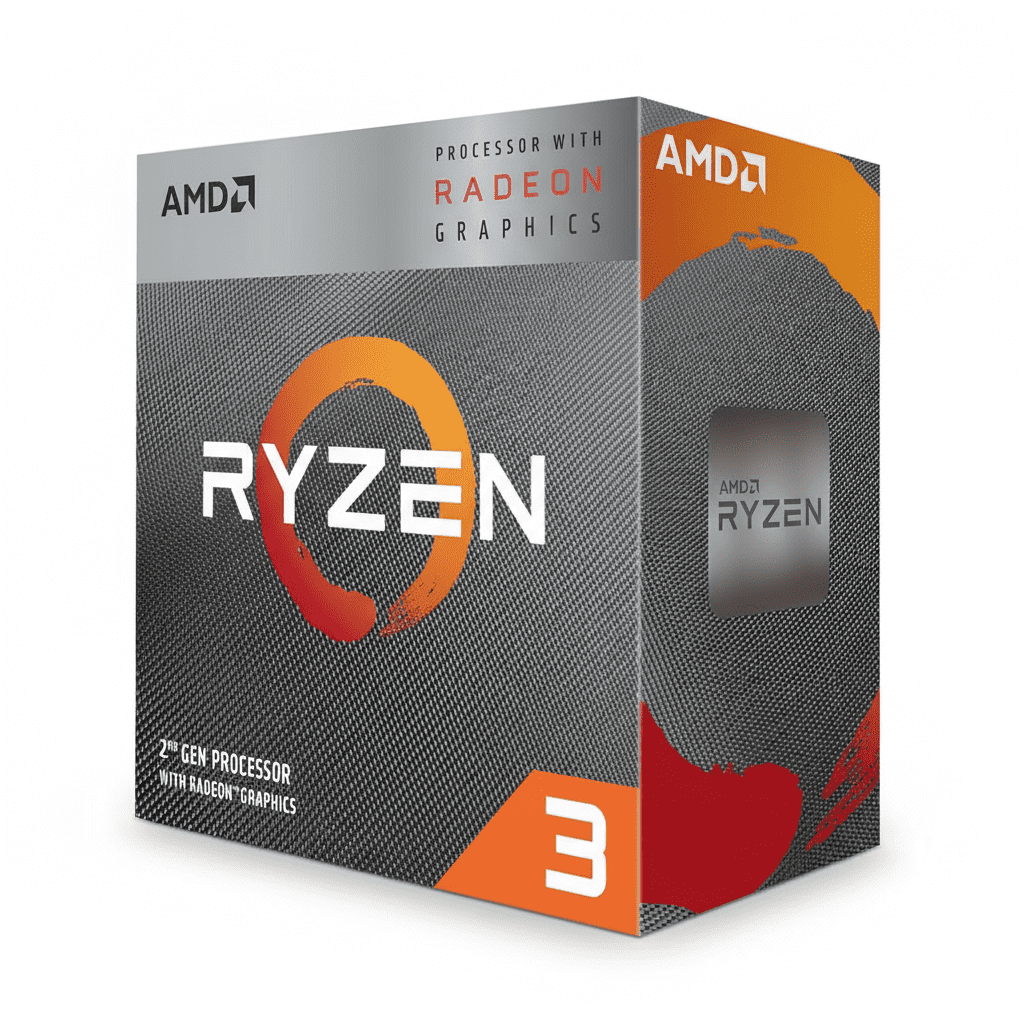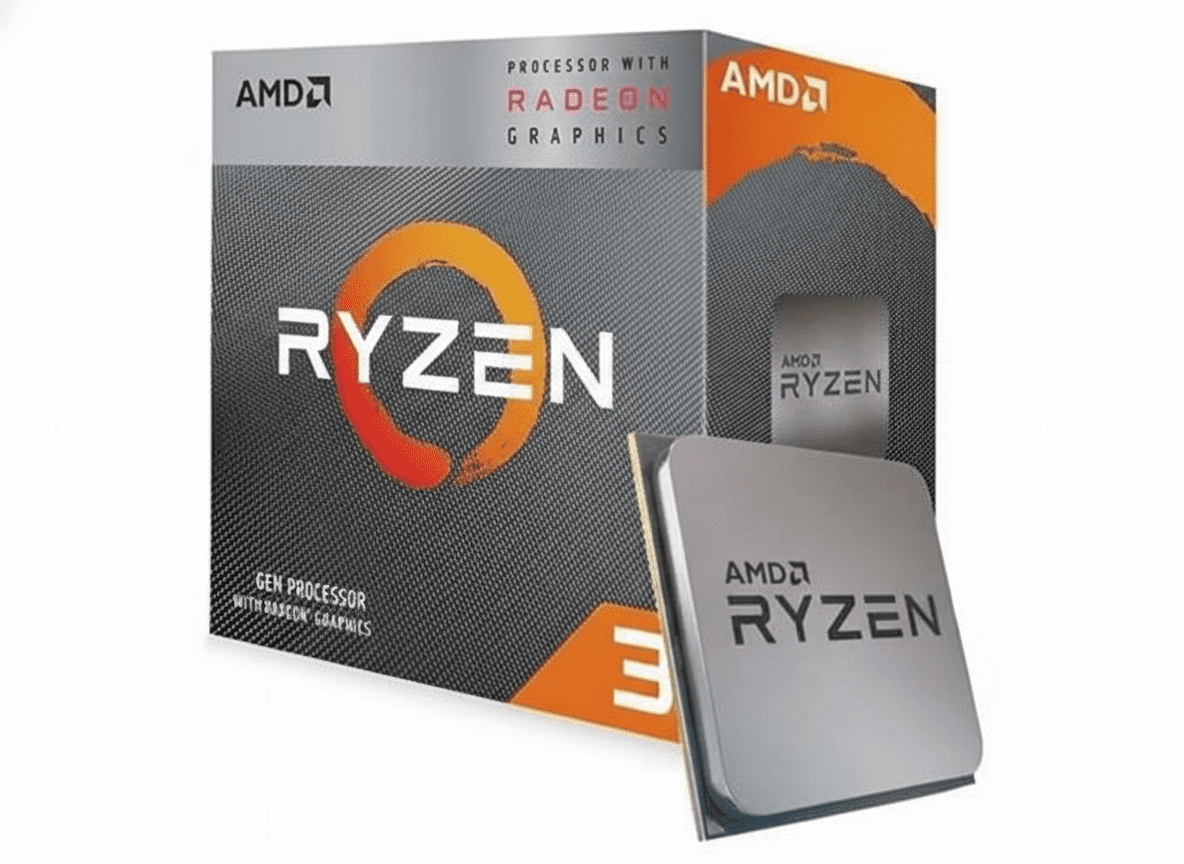
AMD Ryzen 3 5300G Review: Budget APU with Integrated Radeon Graphics
The AMD Ryzen 3 5300G is an entry-level desktop APU that combines Zen 3 cores with integrated Radeon Vega 6 graphics, ideal for budget builds focused on everyday computing and light gaming without needing a separate GPU. Released in 2021, it features 4 cores and 8 threads on a 7nm process, with a 4.0 GHz base clock boosting to 4.2 GHz and 8MB L3 cache for efficient single-threaded tasks. It supports DDR4-3200 memory up to 128GB in dual-channel and PCIe 3.0 for basic expansions on AM4 motherboards. At a 65W TDP with configurable down to 45W, it runs cool in compact systems. Priced from ₹10,809, the Ryzen 3 5300G offers strong value for entry-level users in 2025, though it’s limited by its quad-core design and older platform.
Ready to Build on a Budget?
Grab the AMD Ryzen 3 5300G and get started with integrated graphics power!
Free delivery | EMI from ₹524/month | Non-Returnable | 3 Year Warranty
1. Core Performance: Zen 3 Efficiency for Daily Tasks
Optimized for entry-level workloads with solid single-thread performance.
4-Core Zen 3 (8 Threads):
Simultaneous Multithreading handles basic multitasking like web browsing and document editing on the efficient 7nm process. The Zen 3 architecture delivers up to 19% higher IPC than Zen 2, making it responsive for office apps and light photo editing in tools like GIMP. Though limited to four cores, it outperforms older quad-cores like the Ryzen 3 3100 by 15-20% in single-threaded tasks, suitable for students or home users in 2025 without demanding heavy loads.
4.0 GHz Base / 4.2 GHz Boost:
Precision Boost 2 scales frequencies dynamically for quick bursts in apps like Excel or video calls. With a high 4.0 GHz base, it sustains performance during prolonged use, such as streaming or casual browsing, while boosting to 4.2 GHz ensures snappy response times. This setup provides about 10-15% better efficiency than prior gens in power-constrained environments, keeping overall system power draw low under 70W.
8MB L3 Cache (2MB L2):
Shared Cache Design minimizes latency in memory-intensive operations like file handling or basic coding. The 8MB L3 acts as a unified buffer for all cores, improving hit rates by up to 20% over Zen 2 equivalents, which aids in smoother app switching and reduces stutters in light multitasking. Derived from Cezanne silicon, it prioritizes core efficiency, offering a balanced setup for budget systems where fast cache access enhances perceived speed without needing more threads.
2. Integrated Graphics & Platform Compatibility
All-in-one graphics and legacy AM4 ecosystem support.
Radeon Vega 6 Graphics:
6 Compute Units at up to 1.7 GHz handle 1080p video playback and eSports titles like CS:GO at low settings. This iGPU supports up to three displays via HDMI/DisplayPort, with hardware acceleration for H.264/HEVC decoding, making it great for media centers or office setups. While not for modern AAA games, it delivers 30-45 FPS in lighter titles, providing a cost-free graphics solution that saves ₹5,000+ on a discrete card for basic users.
AM4 Socket / 500 Series:
Compatible with B450/B550/X570 chipsets, often requiring a BIOS update for older boards. This broad support allows easy integration into existing AM4 systems, extending DDR4 platforms’ life without a full overhaul in 2025. Paired with affordable motherboards like the B450M, it enables complete builds under ₹20,000, though users should verify BIOS versions for seamless compatibility.
PCIe 3.0 / DDR4 Support:
20 PCIe Lanes for basic GPUs or NVMe SSDs, alongside dual-channel DDR4-3200 up to 128GB. This configuration suffices for entry-level storage like SATA SSDs or mid-range cards such as GTX 1650, delivering adequate bandwidth for 1080p setups without Gen 4 bottlenecks. In 2025, it remains viable for non-demanding users, though PCIe 3.0 caps speeds at about 3.9 GB/s for SSDs, which is fine for boot drives and general use.
Unlocked for Tweaks:
Precision Boost Overdrive enables safe overclocking via Ryzen Master for 5-10% gains in clocks. Enthusiasts can push the base to 4.3 GHz with improved cooling, boosting single-core scores in Cinebench by up to 8%, without exceeding the 65W TDP significantly. This feature, combined with the included Wraith Stealth cooler, allows minor tweaks for better responsiveness in gaming or productivity, maintaining the 3-year warranty.
3. Build Integration & Value Ecosystem
Compact and versatile for entry-level PC setups.
Compact 65W Design:
40 x 40 mm IHS with Wraith Stealth cooler for easy installation in mini-ITX or mATX cases. The low TDP ensures operation below 80°C under load with stock cooling, ideal for quiet home offices or HTPCs where noise and power efficiency matter. This design supports configurable TDP down to 45W, allowing even cooler runs in power-limited builds without sacrificing base performance.
Integrated APU Focus:
No Discrete GPU Needed for basic visuals, but scalable with cards like RX 6400 for improved gaming. The Vega 6 iGPU frees budget for other components, enabling full systems under ₹25,000 that handle 4K playback and office work. For users adding a GPU later, the AM4 platform’s PCIe slots provide flexibility, though limited to Gen 3 speeds.
AM4 Legacy Ecosystem:
Backward Compatibility with 300/400/500 series boards via BIOS flash for cost-effective refreshes. This extends the usability of DDR4 RAM and older cases, avoiding AM5’s DDR5 costs in 2025. While PCIe 3.0 and no DDR5 support limit future upgrades, it bridges to modern performance affordably, with strong community BIOS support ensuring reliable operation on budget motherboards like A520.
Pros and Cons
Honest assessment for entry-level APU buyers in 2025.
Pros
- Integrated Graphics: Vega 6 for light gaming and media without extra cost.
- Efficiency: 65W TDP runs cool with stock cooler.
- AM4 Support: Easy upgrades for existing platforms.
- Value Pricing: Under ₹11K for all-in-one solution.
- Overclockable: PBO for minor performance tweaks.
- 3-Year Warranty: Solid AMD reliability.
Cons
- Limited Cores: Only 4 for basic multitasking.
- PCIe 3.0: Caps newer SSD/GPU speeds.
- Small Cache: 8MB L3 vs higher models.
- AM4 End-of-Life: No DDR5 or future upgrades.
- OEM Availability: Limited retail stock.
- BIOS Required: For older motherboards.
Who Is This Processor For? Tailored Recommendations
The Ryzen 3 5300G suits:
- Budget Builder: Entry-level PCs under ₹20K with integrated graphics.
- Home Office User: Daily tasks like browsing and video calls.
- Casual Gamer: eSports at 720p-1080p low settings.
Who Might Consider Other Options?
- Heavy Multitasker: Needs 6+ cores for editing or streaming.
- Serious Gamer: Vega insufficient for AAA at high settings.
- Future-Proof Seeker: Lacks DDR5 and PCIe 4.0 support.
Competitive Edge: What Sets It Apart
Affordable APU with integrated graphics for no-GPU builds.
- Vs Ryzen 3 3200G: Zen 3 IPC uplift of 19% for better efficiency.
- Vs Intel i3-10100: Superior iGPU with Vega 6 vs UHD 630.
- Value Proposition: 36% off MSRP for OEM-sourced deals.
- APU Efficiency: All-in-one under ₹11K vs separate CPU+GPU.
Full Specification Details
General Information
- Price (Starting): ₹10,809
- Model: Ryzen 3 5300G
- Architecture: Zen 3 (Cezanne)
- Launch Date: April 2021
Processor & Cache
- Cores/Threads: 4 / 8
- Base/Boost Clock: 4.0 GHz / 4.2 GHz
- Cache: 8MB L3 / 2MB L2
Power & Thermal
- TDP: 65W (45-65W Configurable)
- Unlocked: Yes (PBO)
- Max Temp: 95°C
Connectivity & Memory
- Socket: AM4
- Chipsets: 300/400/500 Series
- Memory: DDR4-3200 Up to 128GB
- PCIe: 3.0 (20 Lanes)
Graphics & Other
- iGPU: Radeon Vega 6 (1.7 GHz, 6 CUs)
- Process: 7nm TSMC
- Warranty: 3 Years
- OS Support: Windows 10/11
Compatibility
- Motherboards: B450/B550/X570/A520 (BIOS Update)
- RAM: DDR4-3200 Dual-Channel Up to 128GB
- Cooler: Wraith Stealth Included
Final Verdict
The AMD Ryzen 3 5300G remains a solid entry-level APU for budget builds, offering integrated graphics and Zen 3 efficiency, but its quad-core limit suits only light use in 2025.
Best for cost-conscious beginners seeking simplicity.