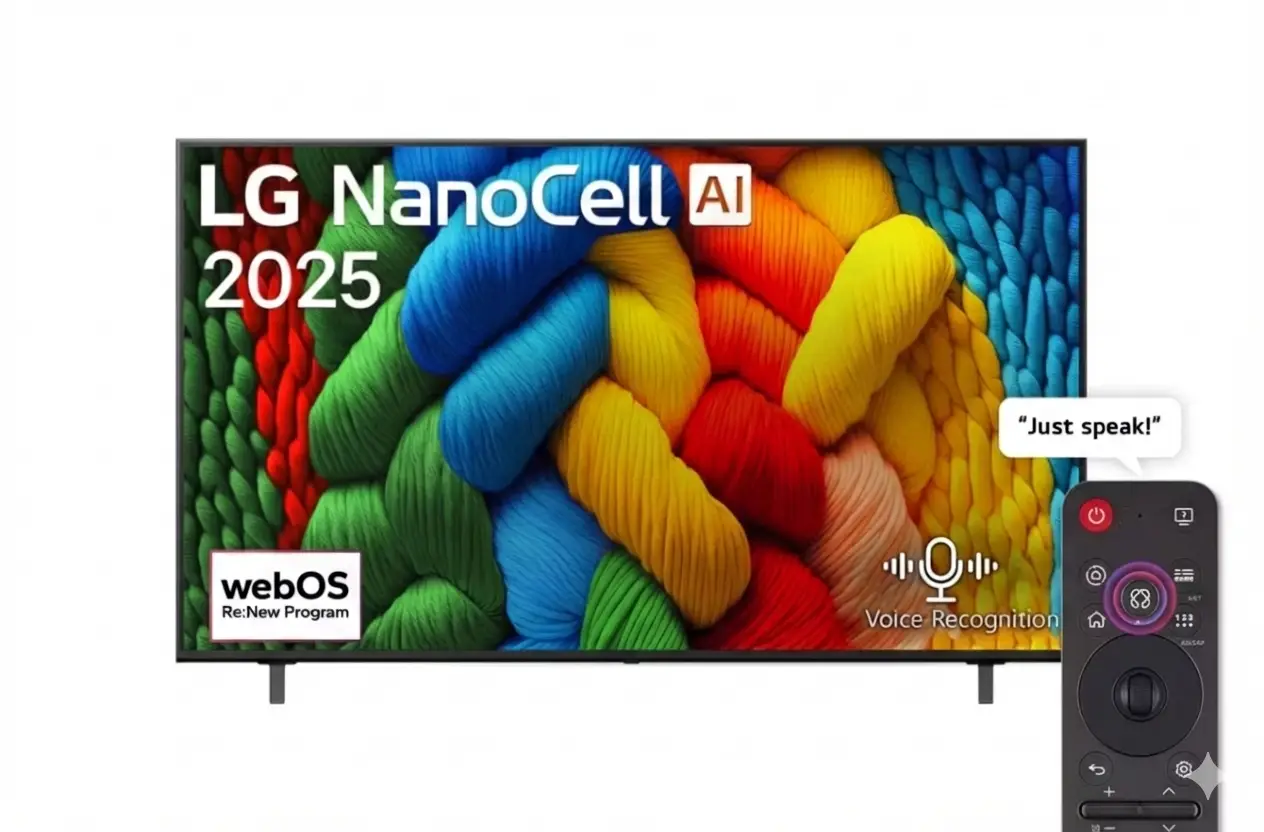
1. What is the current price of LG 86NANO80A6A in India?
Best price ₹1,95,899 on Flipkart (46% off MRP ₹3,68,740). Other retailers: Croma ₹2,15,000, Vijay Sales ₹2,10,000, Amazon ₹2,05,990, LG Official Store ₹2,25,000. Prices fluctuate during sales events (Diwali, Republic Day, Prime Day) potentially dropping ₹5,000-15,000 creating optimal purchase windows. Check multiple retailers comparing prices including delivery charges, installation fees, extended warranty costs determining true total ownership cost versus headline pricing.
2. What is optimal viewing distance for 86-inch TV?
Recommended viewing distance 10.7-14.3 feet (129-172 inches) for immersive 4K experience filling field-of-view comfortably. Closer distances (8-10 feet) create IMAX-like immersion suitable for movies/gaming but potentially overwhelming for casual TV viewing. Farther distances (16-22 feet) provide relaxed comfortable viewing appropriate for spacious living rooms where TV integrated into overall room design versus dominating visual attention. Calculate your seating-to-TV distance ensuring falls within comfortable range before purchasing – too close creates neck strain from head turning, too far reduces detail visibility defeating 86-inch size purpose.
3. Does LG 86NANO80A6A support 120Hz gaming?
No, 86NANO80A6A limited to 60Hz native refresh rate preventing 120fps gaming modes available in select PlayStation 5 and Xbox Series X titles (Call of Duty, Fortnite, Apex Legends performance modes). Supports VRR up to 60Hz eliminating screen tearing for 30-60fps gaming which covers majority of console games. Serious competitive gamers requiring 120Hz should consider LG 75QNED80A6A (₹1,74,990) with 120Hz refresh or dedicated gaming monitors. Casual-to-serious console gamers find 60Hz adequate as most AAA games target 30fps (quality mode) or 60fps (performance mode) making 120Hz unnecessary for current console gaming landscape.
4. Is soundbar necessary or are built-in speakers sufficient?
Soundbar highly recommended for 86-inch scale despite AI Sound Pro virtual surround processing. 2.0CH 20W speakers inadequate filling large room matching visual impact creating audio-visual imbalance disappointing users expecting flagship sound matching flagship picture. Minimum recommendation: LG S77S soundbar (₹35,000) with 3.1.2CH 400W Dolby Atmos creating appropriate audio scale. Budget option: LG S70T (₹20,000) providing significant upgrade over TV speakers. Premium option: LG S80QY (₹55,000) delivering reference audio quality matching ₹1,95,899 TV investment. Built-in speakers acceptable temporarily during budget accumulation for soundbar purchase but plan eventual upgrade achieving complete entertainment system versus permanent compromise undermining overall experience.
5. What are dimensions and will it fit through standard doorway?
TV dimensions without stand: 1927mm (W) × 1104mm (H) × 59.9mm (D). Packaging dimensions: 2115mm × 1215mm × 228mm. Standard Indian doorways 900-1000mm wide insufficient for packaged TV requiring unboxing outside home bringing panel through doorway separately or removing door frame temporarily. Measure your doorways, hallways, stairways, elevator dimensions before ordering preventing delivery failures discovered after arrival. Wall mounting requires 600×400mm VESA mount with studs/reinforcement supporting 45.2kg weight – professional installation (₹3,000-8,000) strongly recommended versus DIY risking injury or damage from improper handling massive 86-inch panel requiring minimum 3-4 person team safely maneuvering through home without scratching walls or damaging display.
6. Does it support Dolby Vision or only HDR10?
Supports HDR10 and HLG only – no Dolby Vision, HDR10+, or HDR10+ Adaptive. HDR10 Pro processing optimizes standard HDR10 content through Dynamic Tone Mapping providing scene-by-scene optimization creating improved presentation versus static tone mapping. Lack of Dolby Vision not critical limitation as HDR10 universal format supported by all streaming services (Netflix, Amazon Prime, Disney+, Apple TV+) ensuring broad content compatibility. Dolby Vision available only on premium LG OLED models (C5, G5 series) and higher-tier QNED Mini LED TVs. HDR10 sufficient for majority of viewers – videophiles demanding absolute best HDR presentation requiring Dolby Vision should consider OLED alternatives accepting higher cost for ultimate picture quality.
7. What is difference between 86NANO80A6A and 75NANO80A6A?
Primary difference is size: 86″ vs 75″ (11-inch diagonal difference, 27% more screen area). Both share identical features: α7 Gen8 AI Processor, webOS 25 AI, NanoCell technology, HGiG gaming, 60Hz refresh, HDR10 Pro, Home Hub, AI Voice ID, same connectivity. 75NANO80A6A priced ₹92,990 (53% cheaper) creating significant savings for buyers where room size constraints prevent 86″ or budget limitations make ₹1,95,899 prohibitive. Choose 86″ if room accommodates 18-22 feet viewing distances and budget permits premium for ultimate scale. Choose 75″ if room smaller (14-18 feet distances) or budget constrained accepting modest size compromise maintaining all advanced features at substantially lower cost creating better value proposition for size-appropriate environments.
8. How does AI Voice ID work and is it secure?
AI Voice ID recognizes individual family member voices through training process where each user speaks enrollment phrases enabling AI learning unique voice characteristics (pitch, tone, cadence). When recognized user speaks command, TV automatically loads personal profile with customized recommendations, watch history, preferences. Voice data processed primarily on-device with minimal cloud transmission maintaining privacy. Can be disabled reverting to manual profile selection. Creates 80-85% recognition accuracy in typical household environments – background noise, similar voices (twins, siblings), accented speech may reduce accuracy requiring occasional manual profile switching. Particularly valuable multi-generational households with 4-6 users having distinct preferences eliminating manual “Who’s watching?” prompts typical of streaming services creating seamless personalized experience adapting to speaker automatically.
9. Can I use it for PC gaming or only console gaming?
Works with PC gaming via HDMI connection supporting up to 4K 60Hz from graphics card output. VRR support eliminates tearing, ALLM reduces input lag when gaming detected, Game Optimizer presets apply to PC games. However, 60Hz refresh rate limits to 60fps maximum disappointing PC gamers accustomed to 144Hz+ monitors with high-framerate gaming. 86-inch size also suboptimal for PC gaming requiring desk distances (3-5 feet) creating overwhelming field-of-view causing motion sickness, eye strain versus comfortable entertainment distances (16-22 feet) appropriate for couch gaming. PC gamers better served by dedicated gaming monitors (27-32 inch, 144-240Hz) for competitive advantages versus living room TV compromise. 86NANO80A6A acceptable for casual PC gaming at distance, single-player story games, controller-based PC gaming mimicking console experience but insufficient for competitive FPS gaming requiring precision, high refresh rates, close viewing distances.
10. What is webOS Re:New Program and how long will TV receive updates?
webOS Re:New Program guarantees 5 years of major platform upgrades from purchase date. 2025 purchase with webOS 25 receives updates through webOS 29 (2029) adding new features, app compatibility, security patches annually. CES 2025 Innovation Award winner for cybersecurity category recognizing comprehensive long-term support. After 5 years, TV continues functioning but stops receiving major OS updates potentially losing access to newer streaming apps, security vulnerabilities remain unpatched, features stagnate. Competitor TVs typically receive 2-3 years support creating premature obsolescence forcing replacement despite functional hardware. 5-year commitment extends useful lifespan from typical 3-5 years to 7-10 years creating superior long-term value justifying LG premium pricing versus abandoned alternatives becoming outdated requiring expensive replacement negating initial savings through premature obsolescence hidden costs.
11. Is 86-inch too big for my living room?
Calculate viewing distance first: Measure couch-to-TV wall distance in feet. Optimal range: 10.7-14.3 feet for immersive viewing, 16-22 feet for relaxed viewing. Room size: 86″ appropriate for 300+ sq ft living rooms (17×18 feet minimum). Ceiling height minimum 9-10 feet preventing overwhelming vertical presence. If viewing distance under 10 feet or room under 250 sq ft, consider 75″ (75NANO80A6A ₹92,990) or 65″ (65NANO80A6A ₹1,09,499) creating appropriate scale avoiding overwhelming presence. Use online TV size calculators or create cardboard template (1927mm × 1104mm) positioning on wall visualizing scale before purchase preventing expensive returns from size miscalculation. Remember: can always wish TV larger, never wish smaller – err toward caution if uncertain about size appropriateness for specific room dimensions and viewing distances.
12. What smart home devices are compatible with Home Hub?
Compatible ecosystems: 1) LG ThinQ appliances (refrigerators, washers, dryers, dishwashers, air conditioners, air purifiers, robot vacuums, ovens) with deepest integration showing detailed status and control. 2) Google Home devices (Nest thermostats, cameras, doorbells, speakers, Chromecast) with full integration. 3) Matter-certified devices from any manufacturer (Samsung, Apple, Amazon, others) ensuring universal compatibility. 4) Selected third-party smart devices with Google Assistant compatibility. Setup requires LG ThinQ mobile app for initial pairing then TV Home Hub provides control. Incompatible: Apple HomeKit exclusive devices, Amazon Alexa-only devices lacking Google Assistant support, proprietary systems (SmartThings without Matter, Zigbee-only devices). Check device compatibility before purchasing smart home products intended for Home Hub control avoiding disappointing incompatibilities discovered post-purchase.
13. Does it have Bluetooth and can I connect wireless headphones?
Yes, Bluetooth 5.1 supports wireless headphones, earbuds, speakers. Pairing process: Settings > Sound > Bluetooth > Add Device > Select headphones. Supports standard Bluetooth audio profiles (A2DP, AVRCP) ensuring compatibility with major brands (Sony, JBL, Bose, Sennheiser, Apple AirPods, Samsung Buds). Bluetooth audio useful for late-night viewing without disturbing household, hearing-impaired users benefiting from dedicated headphone volume, private viewing scenarios. Latency typically 100-200ms creating slight audio delay noticeable in gaming or lip-sync issues – use wired headphones (via soundbar or audio extractor) for gaming requiring precise audio timing. LG Sound Sync enables wireless LG soundbar connection eliminating cables. Two-way Bluetooth Surround Ready supports pairing two compatible LG wireless speakers creating rear surround channels expanding soundstage beyond built-in speakers or front soundbar alone.
14. How many HDMI ports and which support eARC?
Total 4 HDMI ports – HDMI 2 supports eARC (enhanced Audio Return Channel) for lossless audio passthrough to soundbar/AV receiver. HDMI 1-4 support HDMI 2.0 (4K 60Hz maximum, no HDMI 2.1 on this model). eARC enables Dolby Atmos, DTS:X, uncompressed PCM audio transmission from TV to external audio system maintaining highest quality versus regular ARC limited to compressed Dolby Digital/DTS. Connect soundbar to HDMI 2 for eARC functionality. Other ports for gaming consoles, cable box, streaming devices, Blu-ray player. No HDMI 2.1 features (4K 120Hz, VRR beyond 60Hz, ALLM works via HDMI 2.0 compatibility) – gamers requiring full HDMI 2.1 specification need premium OLED or QNED models with true 120Hz support and HDMI 2.1 ports enabling advanced gaming features impossible from HDMI 2.0 implementation.
15. What is NanoCell technology and how is it different from QLED?
NanoCell uses nano-meter-sized particles filtering impure RGB wavelengths eliminating color muddiness creating pure accurate colors. QLED (Quantum Dot LED) uses quantum dot layer enhancing color brightness and saturation through different physics. Key differences: NanoCell prioritizes color accuracy and wide viewing angles (IPS-type panel), QLED prioritizes brightness and color volume (VA-type panel with narrower viewing angles). NanoCell better for multi-person viewing maintaining color consistency off-axis, QLED better for bright rooms requiring maximum brightness overcoming ambient light. Both superior to standard LED lacking color enhancement technologies. Neither matches OLED’s perfect blacks, infinite contrast, superior viewing angles – OLED remains ultimate picture quality accepting higher cost. 86NANO80A6A’s NanoCell appropriate for family viewing prioritizing color accuracy and viewing angle consistency versus QLED’s brightness-first approach with off-axis color degradation frustrating side-positioned viewers.
16. Can I watch 3D movies on this TV?
No, 86NANO80A6A does not support 3D playback – LG discontinued 3D support across entire TV lineup from 2017 onwards due to declining consumer interest, limited 3D content availability, industry abandonment of 3D home video formats. Last LG TVs with 3D were 2016 OLED models. 3D enthusiasts requiring home 3D viewing must consider 3D projectors supporting active/passive 3D technologies or retain older 3D-capable TVs. Blu-ray 3D discs still playable on compatible players but display on 2D-only TVs shows single eye view only (flat 2D picture) losing stereoscopic 3D effect. 3D feature absence affects minimal users as home 3D viewing essentially dead format with streaming services discontinuing 3D content, studios stopping 3D Blu-ray production, consumer VR headsets replacing 3D TVs for immersive experiences making 3D TV feature irrelevant for 99% of buyers.
17. What warranty coverage and should I buy extended warranty?
Standard warranty: 1 year comprehensive + 1 year additional on panel (total 2 years panel coverage) from LG India. Covers manufacturing defects, component failures, panel issues excluding accidental damage, liquid damage, physical damage, improper installation. Extended warranty options: LG Extended Warranty (₹8,000-15,000 for 2-3 additional years), retailer plans (Flipkart, Croma, Vijay Sales offering 3-5 year coverage ₹10,000-20,000), third-party insurance (Acko, Onsitego covering accidental damage ₹12,000-18,000). Recommendation: Extended warranty worth considering for ₹1,95,899 investment protecting against expensive panel replacements (₹80,000-1,20,000), logic board failures (₹25,000-40,000) exceeding warranty cost. Panel defects typically manifest within 3 years making 3-5 year extended coverage valuable peace-of-mind versus risk paying out-of-pocket repair costs potentially 50-60% of original TV price creating total loss scenario forcing premature replacement.
18. Does it support screen mirroring from iPhone and Android?
Yes, supports multiple screen mirroring methods: 1) Apple AirPlay 2 for iPhone/iPad/Mac wireless mirroring with audio – requires iOS 12.3+, same WiFi network, AirPlay enabled in TV settings. 2) Screen Share for Android devices using WiFi Direct – Settings > Connection > Screen Share > Select TV from phone. 3) Google Cast (Chromecast built-in) for casting from apps supporting Cast protocol. 4) Miracast for Windows 10/11 PC wireless display. 5) DLNA for media streaming from network devices. Most reliable: AirPlay for Apple users, Screen Share for Android users. Mirroring useful for presentations, photo sharing, mobile gaming on large screen, browser content viewing. Latency 200-500ms makes real-time gaming suboptimal – use HDMI connection for lag-sensitive applications. Quality limited by WiFi bandwidth – 5GHz WiFi recommended versus 2.4GHz for smooth mirroring preventing stuttering, lag, quality degradation typical of congested networks or weak signals.
19. What streaming apps are pre-installed and can I add more?
Pre-installed apps include Netflix, Amazon Prime Video, Disney+ Hotstar, YouTube, Apple TV+, Sony LIV, Zee5, JioCinema, SunNXT, Eros Now, Spotify, YouTube Music, browser, LG Channels (free streaming). Additional apps installable via LG Content Store including regional apps (Hoichoi, aha, MX Player), international services (Hulu USA region-locked, BBC iPlayer UK), gaming (GeForce NOW, Luna), fitness (Calm, Peloton). Not available: Some niche services without webOS apps require Chromecast/AirPlay workarounds. App availability changes as developers add/remove webOS support – major services well-supported, obscure services may lack native apps. webOS Re:New Program ensures 5-year app compatibility maintaining access to evolving streaming landscape versus abandoned platforms losing app support as services deprecate older TV OS versions creating frustrating incompatibilities forcing external streaming device purchases negating smart TV investment.
20. How is motion handling and is there soap opera effect?
TruMotion motion smoothing feature adds interpolated frames between original frames creating smoother motion reducing judder in 24fps film content. Adjustable levels: Off, Clear, Smooth, User (custom). “Soap opera effect” (overly smooth unnatural motion) occurs when TruMotion enabled on cinema content designed for 24fps cadence creating video-like appearance versus film-like presentation. Recommendation: Disable TruMotion for movies using FILMMAKER MODE preserving director’s intent, enable for sports/news reducing motion blur. Cinema purists keep TruMotion off permanently accepting natural 24fps judder as authentic film presentation. Casual viewers preferring smooth motion enable TruMotion accepting soap opera effect trade-off. 60Hz refresh rate limits motion performance versus 120Hz displays offering superior motion clarity – fast sports, action sequences show motion blur typical of 60Hz displays acceptable for casual viewing but disappointing for motion-critical content where 120Hz provides noticeably smoother experience.
21. What is power consumption and monthly electricity cost?
Power consumption varies by content and settings: SDR content typical mode ~180-220W, HDR content maximum brightness ~250-300W, standby mode ~0.5W. Estimated usage: 5 hours daily average = 0.9-1.1 kWh per day = 27-33 kWh monthly. Electricity cost calculation (₹7 per kWh average India rate): 30 kWh × ₹7 = ₹210 monthly, ₹2,520 annually. Factors affecting consumption: Brightness settings (lower brightness reduces power), content type (HDR demands more power), picture mode (Eco mode reduces consumption 20-30%), ambient light sensor (auto brightness adjustments). Energy efficiency: Large 86″ panel inherently consumes more than smaller sizes – 55″ consumes 40-50% less power creating ongoing savings versus 86″ but compromising screen size. Power consumption acceptable for 86″ class – similar to running small air conditioner or electric kettle few hours daily creating modest electricity impact within typical household budget not requiring special electrical considerations beyond standard 15A wall outlet.
22. Can it be used as computer monitor for work-from-home?
Technically capable but not recommended for primary work monitor. Issues: 1) Size – 86″ overwhelming at desk distances (2-3 feet) causing eye strain, neck pain from constant head turning. 2) Pixel density – 51 PPI (pixels per inch) lower than computer monitors (100-200 PPI) making text appear slightly soft requiring sitting farther back. 3) Input lag – 15-25ms acceptable for casual use but slower than 1ms gaming monitors affecting mouse cursor responsiveness. 4) RGB subpixel layout optimization for motion content versus static text may show color fringing. Better use: Extended monitor for presentations, video editing, creative work benefiting from massive canvas, occasional laptop connection for entertainment. Primary work-from-home: Dedicated 24-32 inch monitor (₹12,000-40,000) with higher pixel density, ergonomic desk setup, proper text rendering creates appropriate work environment. 86NANO80A6A excellent for entertainment doubling as occasional work display but insufficient replacing dedicated work monitor for 8-hour daily professional use requiring text clarity, ergonomic positioning impossible from massive TV dimensions.
23. What accessories should I buy along with TV?
Essential: 1) Soundbar (₹20,000-55,000) – LG S77S recommended minimum. 2) HDMI cables (₹500-2,000 each) – Quality cables for devices, minimum 2-3 extra cables. 3) Surge protector (₹800-2,500) – Protect ₹1,95,899 investment from power fluctuations. Recommended: 4) Wall mount (₹2,000-8,000) + installation if wall mounting. 5) TV stand/console (₹8,000-30,000) if furniture placement. 6) Cleaning kit (₹300-800) – Microfiber cloths, screen cleaner. 7) Extended warranty (₹8,000-15,000). Optional: 8) Streaming device backup (₹2,500-5,000) – Fire TV Stick, Chromecast if smart features fail. 9) Gaming console if serious gamer (PS5 ₹50,000, Xbox Series X ₹50,000). 10) Wireless gamepad (₹2,000-5,000) for cloud gaming. Budget ₹30,000-50,000 for complete setup beyond TV purchase creating total investment ₹2,25,000-2,45,000 for turnkey entertainment system versus buying TV alone discovering missing essential components requiring additional purchases fragmenting budget and delaying complete system enjoyment.
24. How does it compare to Samsung, Sony, TCL alternatives?
vs Samsung 85CU8000 (₹1,89,990): LG better AI features, gaming capabilities, 5-year updates. Samsung better if existing Samsung ecosystem. vs Sony 85X80L (₹2,19,990): LG better value ₹24k cheaper, superior gaming, smart features. Sony better picture processing reputation. vs TCL 85C655 (₹1,39,999): TCL cheaper ₹56k savings, QLED panel. LG better reliability, processor, software, service network. vs Hisense 85U6K (₹1,49,990): Hisense better Mini LED backlight, 120Hz refresh. LG better brand trust, software, long-term support. Summary: LG 86NANO80A6A best overall package balancing features, reliability, software sophistication, support at reasonable premium versus cheaper alternatives with compromises or expensive Sony without commensurate advantages justifying higher cost. Choose LG if wanting best-balanced large-screen smart TV prioritizing intelligence, longevity, peace-of-mind versus specializing in single attribute (cheapest, brightest, fastest) at expense of other factors creating less-balanced overall ownership experience.
25. Should I buy now or wait for price drops?
Current ₹1,95,899 (December 2025) represents 46% off MRP creating good value. Price patterns: Major sales (Republic Day Jan 26, Amazon Prime Day July, Flipkart Big Billion Days Oct, Diwali Oct-Nov, Year-end Dec) offer ₹5,000-15,000 additional discounts potentially reaching ₹1,80,000-1,90,000 lowest prices. However, waiting risks: 1) Stock shortages during sales requiring backorder waits. 2) Opportunity cost of months without TV enjoyment. 3) Uncertain future pricing – might not drop further. Buy now if: Need TV immediately, current price acceptable, fear stock-outs. Wait if: Major sale within 4-8 weeks, willing to risk stock availability, budget extremely tight requiring absolute lowest price. Negotiation tip: Contact retailers requesting price match or additional discounts (free installation, extended warranty, accessories) leveraging competitor pricing creating savings without waiting. New model launches (86NANO81A6A hypothetical 2026 successor) typically occur mid-year causing previous model clearance sales but 2025 model remains current until mid-2026 maintaining stable pricing until successor announcement creating predictable buying window through mid-2026 before significant obsolescence discounting typical of superseded models.