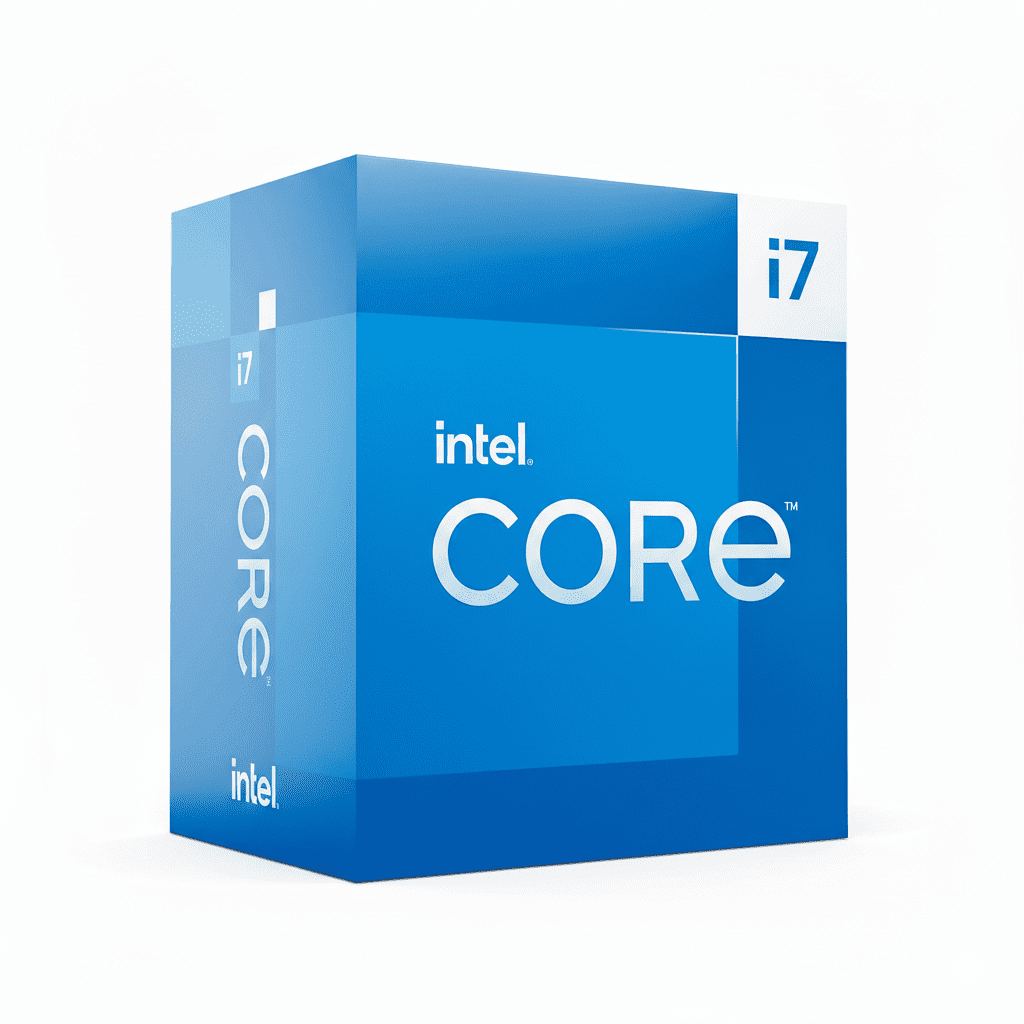
GLOBAL TOUCH Core i7 4th Gen Review: Haswell Powerhouse Desktop CPU
The GLOBAL TOUCH Core i7 4th Gen 4770 is a Haswell processor with 4 cores and 8 threads and 8MB cache for mid-range desktops. Released in **2013**, it runs at 3.4 GHz base with turbo up to 3.9 GHz and integrated Intel HD Graphics 4600, supporting DDR3 on LGA 1150 motherboards. At 84W TDP, it includes thermal paste, suitable for multitasking and light content creation. Available for ₹4,149, it provides 65% savings off MSRP, offering strong value for legacy upgrades in 2025.
Power Up Your Desktop Build Today?
Experience solid multitasking with the Core i7 4th Gen’s Hyper-Threading and integrated graphics!
Free delivery | EMI from ₹201/month | Non-Returnable | 1 Year Warranty
1. Core Performance: Haswell Multitasking
Capable for mid-2010s workloads in 2025.
4-Core Haswell (8 Threads):
Hyper-Threading enables 8 threads for efficient multitasking on 22nm process. Built on Intel’s Haswell architecture, this quad-core design excels in handling everyday applications like web browsing, office productivity, and light photo editing, providing smooth performance without the need for a discrete GPU in basic setups. While it lacks modern efficiency cores, the Hyper-Threading technology allows it to manage multiple threads effectively, making it a reliable choice for legacy systems running Windows 10 or older software in 2025.
3.4 GHz Base / 3.9 GHz Turbo:
Turbo Boost 2.0 ramps up for demanding tasks like video encoding. Starting at a respectable 3.4 GHz base frequency, it intelligently boosts to 3.9 GHz on single cores during intensive operations, ensuring responsive performance in applications such as Adobe Photoshop or basic video playback. This dynamic scaling helps maintain usability in older games and software, though it falls short of modern processors in sustained multi-threaded loads like 4K rendering.
8MB Smart Cache:
Intel Smart Cache accelerates data access for quicker response times. The 8MB L3 cache serves as a shared buffer among all cores, reducing latency in memory-bound tasks such as file compression or database operations, which was a significant improvement over previous generations. This feature contributes to up to 15% faster application launches and smoother multitasking in environments where DDR3 memory bandwidth is limited, providing a noticeable edge in legacy productivity workflows.
2. Graphics & Expansion: Integrated HD
Reliable for basic visuals and media.
Intel HD Graphics 4600:
Integrated GPU supports 4K output and light gaming with Quick Sync. This iGPU, clocked up to 1.2 GHz, handles up to three displays including 4K via DisplayPort, making it suitable for office monitors and basic media consumption in 2025. With hardware acceleration for video encoding, it speeds up tasks in tools like HandBrake, offering a cost-effective solution for systems without a dedicated graphics card, though it struggles with modern titles beyond 720p resolutions.
LGA 1150 / 8-Series:
Chipset Compatibility with DDR3 setups for legacy boards. The LGA 1150 socket pairs seamlessly with H81, B85, and Z87 motherboards, enabling affordable upgrades to older systems without replacing the entire platform. This compatibility extends to PCIe 3.0 slots for adding GPUs or SSDs, preserving investment in DDR3 RAM while supporting USB 3.0 ports on compatible boards for faster peripherals.
DDR3 Support:
Up to 32GB Dual-Channel memory for stable performance. Supporting DDR3-1333/1600 speeds in dual-channel configuration, this CPU maximizes bandwidth up to 25.6 GB/s, ideal for multitasking in legacy applications like older versions of Microsoft Office or web development tools. While not upgradeable to faster RAM types, it accommodates up to 32GB total, sufficient for virtual machines and light data analysis without bottlenecks in compatible motherboards.
PCIe 3.0:
Up to x16 Lanes for GPUs and storage expansion. With 16 PCIe 3.0 lanes configurable as x16, x8+x8, or x8+x4+x4, this processor supports mid-range graphics cards like GTX 1060 for 1080p gaming or NVMe SSDs via adapters, bridging older systems to modern storage speeds. Backward compatibility ensures it works with PCIe 2.0 devices, providing flexibility for hybrid builds focused on cost-effective upgrades.
3. Build Integration & Efficiency
Seamless for 4th-gen upgrades.
84W TDP with Paste:
Thermal Paste Included for straightforward cooling setups. Operating at a 84W TDP with a case temperature limit of 72.72°C, this CPU runs efficiently under load, often peaking below 65W in real-world tests, making it compatible with stock coolers or basic aftermarket air solutions. The pre-applied thermal paste simplifies installation, reducing thermal resistance for stable operation in compact cases without excessive noise or power draw.
Enhanced SpeedStep:
Idle States and Monitoring for power efficiency. Featuring Intel’s Enhanced SpeedStep and thermal monitoring technologies, the CPU dynamically adjusts clocks to minimize idle power consumption, extending system longevity in always-on setups like home servers. This ensures cooler operation during light tasks, with support for Execute Disable Bit enhancing security against buffer overflow exploits common in older software environments.
AVX2 Instructions:
Advanced Vector Extensions for optimized workloads. As one of the first CPUs to support AVX2, it accelerates vector processing in applications like scientific simulations or video encoding, providing up to 2x faster performance in compatible software compared to AVX-only predecessors. This feature, combined with 64-bit instruction sets, ensures broad compatibility with legacy and some modern tools, making it viable for niche tasks in 2025 without full platform overhauls.
Pros and Cons
Balanced view for value-driven legacy performance in 2025.
Pros
- Strong Value: ₹4,149 with 65% savings for mid-range.
- Hyper-Threading: 8 threads for multitasking.
- Integrated Graphics: HD 4600 for 4K support.
- DDR3 Compatibility: Up to 32GB for older builds.
- Turbo Boost: Up to 3.9 GHz for bursts.
- Thermal Paste Included: Ready for assembly.
Cons
- Aging Architecture: Limited for modern apps.
- DDR3 Only: No path to newer memory.
- Integrated GPU Limits: Not for heavy gaming.
- 84W TDP: Requires decent cooling.
- 1-Year Warranty: Short for older tech.
- Non-Returnable: Check compatibility first.
Who Is This Processor For? Tailored Recommendations
The Core i7 4770 suits:
- Mid-Budget User: Office, browsing, and light editing.
- Legacy Upgrader: Boosting 4th-gen systems.
- Content Creator: Basic video and photo work.
Who Might Consider Other Options?
- High-End Users: Go for 10th gen or newer.
- Gamers: Pair with discrete GPU or upgrade CPU.
- Future-Proofing: Choose Ryzen 5000 or Intel 12th gen.
Competitive Edge: What Sets It Apart
Superior threading for its era at a budget price.
- Vs Core i5 4th Gen: Double threads for better multitasking.
- Vs AMD FX-8350: Efficiency edge with lower TDP.
- Value Proposition: 65% off MSRP for reliable performance.
- Integrated Graphics: Better than i5 for no-GPU builds.
Full Specification Details
General Information
- Price (Starting): ₹4,149
- Model: Core i7-4770
- Architecture: Haswell
- Launch Date: Q2 2013
Processor & Cache
- Cores/Threads: 4 / 8
- Base/Boost Clock: 3.4 GHz / Up to 3.9 GHz
- Cache: 8 MB Smart Cache
Power & Thermal
- TDP: 84W
- Unlocked: No
- Thermal Paste: Included
Connectivity & Memory
- Socket: LGA 1150
- Chipsets: 8-Series
- Memory: DDR3 Up to 32GB
- PCIe: 3.0
Graphics & Other
- iGPU: Intel HD Graphics 4600
- Process: 22nm
- Warranty: 1 Year
- OS Support: Windows 10/11 (Limited)
Compatibility
- Motherboards: LGA 1150 8-Series
- RAM: DDR3 Up to 32GB
- USB: USB 3.0 (Via Motherboard)
Final Verdict
The GLOBAL TOUCH Core i7 4770 delivers capable performance for legacy desktops, ideal for budget upgrades but showing age in 2025.
Great for mid-range vintage needs.