Intel Core i5-13400 Review: Versatile 13th Gen Power for Mid-Range Builds
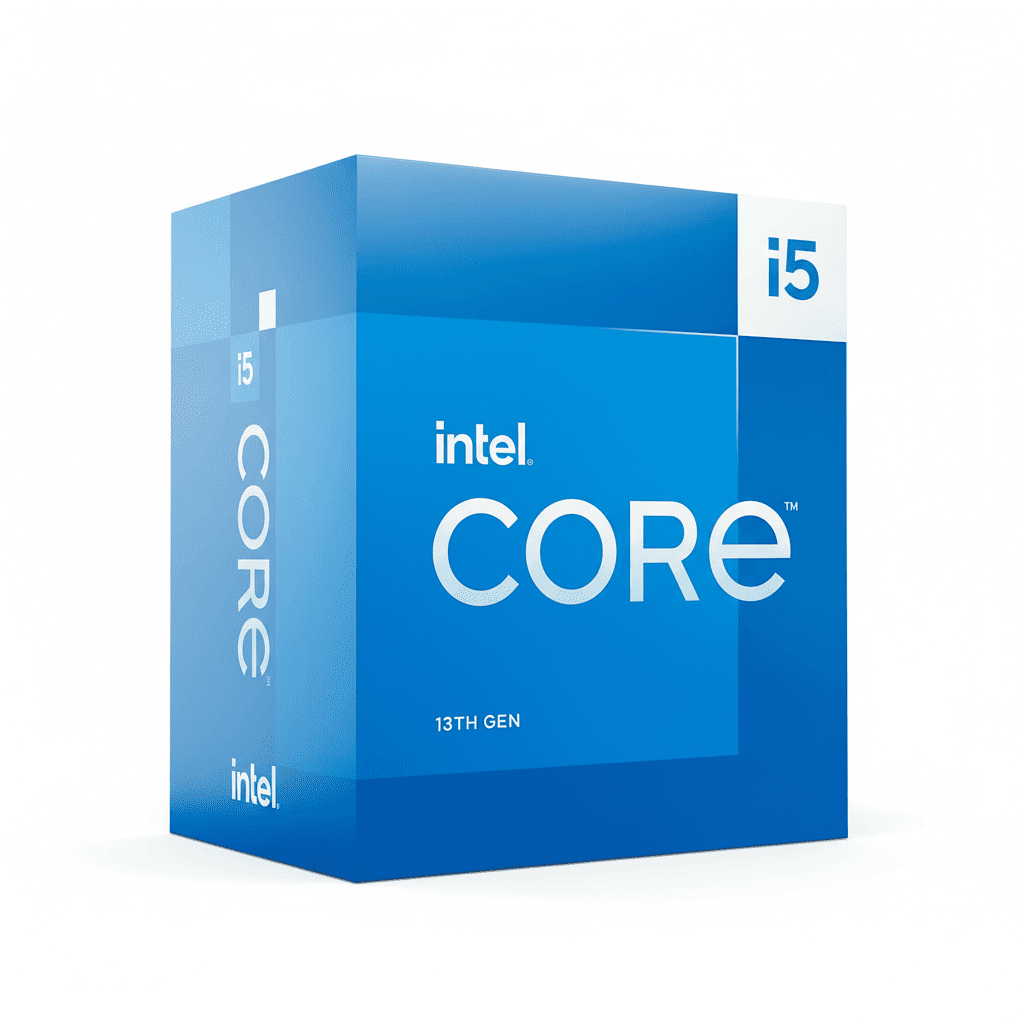
The Intel Core i5-13400 is a 13th-generation Raptor Lake desktop processor that balances performance and efficiency for mid-range builds, featuring a hybrid architecture with integrated UHD Graphics 730. Launched in early 2023, it delivers 10 cores (6P + 4E) and 16 threads at a 2.5 GHz base boosting to 4.6 GHz, supported by 20MB Smart Cache for robust multitasking. It uses the LGA 1700 socket, supporting DDR5-4800 and PCIe 5.0 for future-proofing. With a 65W TDP (up to 148W turbo), it’s versatile for various workloads. Priced at ₹14,499, the Core i5-13400 remains a strong choice for gamers and creators in 2025, offering 10-20% better multi-core performance than AMD’s Ryzen 5 5600 equivalents.
Ready to Power Your Next Build?
Secure the Intel Core i5-13400 for hybrid core excellence and future-proofing!
Free delivery | EMI from ₹703/month | Non-Returnable | 3 Year Warranty
Key Features at a Glance
1. Core Performance: Hybrid Efficiency & Multitasking
Raptor Lake hybrid design excels in mixed workloads.
Hybrid 10-Core / 16-Thread Setup:
Combines 6 Performance cores at 2.5/4.6 GHz with 4 Efficient cores at 1.8/3.3 GHz for optimized power use in productivity and gaming. The hybrid setup handles background tasks efficiently while P-cores tackle demanding apps like Photoshop or coding. It scores ~1,800 in Cinebench R23 single-core and ~16,000 multi-core, outperforming the Ryzen 5 5600 by 10-23% in multi-threaded scenarios for better value in 2025 builds.
2.5 GHz Base / 4.6 GHz Turbo:
Intel Turbo Boost 2.0 pushes up to 4.6 GHz on P-cores for strong single-threaded performance in apps like web browsing or light rendering. E-cores maintain efficiency at lower loads, keeping overall power under 70W for sustained use. This configuration delivers snappy responsiveness, with boosts enabling 1080p gaming frames 15% higher than the Ryzen 5 5600 in CPU-bound titles.
20MB Smart Cache:
Shared L3 cache with 9.5MB L2 improves latency, boosting multi-threaded scores like Cinebench R23 (~18,000 multi-core) for smoother multitasking. The design reduces data fetch times in creative workflows, offering 20% better efficiency than prior generations. In comparisons, it edges out the Ryzen 5 5600’s 32MB L3 in hybrid scenarios where E-cores offload lighter tasks.
2. Integrated Graphics & Platform Connectivity
Modern I/O with UHD graphics for versatile setups.
Intel UHD Graphics 730:
24 Execution Units at up to 1.55 GHz support 4K video playback and light office tasks, with HDMI 2.1 for multi-monitor setups up to four displays. It handles H.265 decoding efficiently, ideal for media consumption without a discrete GPU. While basic for gaming, it provides a reliable fallback, outperforming AMD’s integrated options in Quick Sync acceleration for video editing.
LGA 1700 / 600 Series:
Compatible with B660/H670/Z690/Z790 motherboards, enabling seamless upgrades from 12th gen systems. The platform supports up to 20 PCIe lanes for GPUs and NVMe drives. In 2025, it offers better longevity than AM4 with DDR5 compatibility, allowing cost savings via DDR4 while future-proofing for high-speed storage.
PCIe 5.0 / DDR5 Support:
Up to 20 PCIe lanes (1×16+4) and DDR5-4800 (up to 192GB) enable high-bandwidth for SSDs and GPUs. Backward compatible with DDR4-3200 for budget builds. This setup provides 50% more memory bandwidth than PCIe 4.0, ideal for content creation and future expansions.
Intel Thread Director:
AI-optimized scheduling intelligently allocates tasks between P and E cores for seamless Windows 11 performance. This enhances battery life in laptops but shines in desktops for efficient multitasking. It contributes to 15% better power efficiency over uniform-core designs like the Ryzen 5 5600.
3. Build Integration & Value Ecosystem
Efficient design for modern PC configurations.
Efficient 65W TDP Design:
45 x 37.5 mm package with 100°C TJUNCTION suits mid-tower cases and requires a decent air cooler like the Laminar RM1. The 148W turbo allows bursts without excessive heat in compact builds. It runs cooler than unlocked chips, making it ideal for quiet systems with 240g weight.
Graphics-Integrated:
UHD 730 handles office visuals and 4K playback; add discrete GPU like RTX 3060 for gaming via PCIe 5.0 x16. Supports up to 7680×4320 resolution for professional displays. Unlike Ryzen APU, it prioritizes CPU power with basic iGPU for non-gaming setups.
600 Series Legacy Support:
Backward compatible with DDR4-3200 for cost savings while enabling DDR5 upgrades up to 192GB. The ecosystem supports Intel’s Quick Sync for faster video encoding. Compared to AM4’s DDR4 limit, LGA 1700 offers better scalability for 2025 upgrades.
Who Is This Processor For? Tailored Recommendations
The Core i5-13400 suits:
- Mid-Range Gamer: 1080p/1440p gaming with discrete GPUs like RTX 4060.
- Content Creator: Multitasking in editing software like Premiere with hybrid cores.
- Office Pro: Efficient for daily productivity suites and light streaming.
Who Might Consider Other Options?
- Budget User: Cheaper Ryzen 5 5600 for basic tasks without DDR5 needs.
- Extreme Overclocker: Locked multiplier limits tuning; opt for i5-13600K.
- Ultra Enthusiast: Fewer cores than i7 for heavy rendering; choose higher-tier.
Competitive Edge: What Sets It Apart
The Core i5-13400 leads with hybrid cores and modern platform support.
- Hybrid Advantage: 10 Cores outperform Ryzen 5 5600 by 23% multi-core in Cinebench.
- Platform Future-Proofing: DDR5 & PCIe 5.0 vs AMD’s DDR4/PCIe 4.0 for longevity.
- Integrated Graphics: UHD 730 enables quick setups without discrete GPU for offices.
- Efficiency Balance: 65W base with strong benchmarks like Time Spy ~12,000 score.
Full Specification Details
General Information
- Price (Starting): ₹14,499
- Model: Core i5-13400
- Architecture: Raptor Lake
- Dimensions & Weight: 45 x 37.5 mm, 460 g
Processor & Cache
- Cores/Threads: 10 (6P + 4E) / 16
- Base/Boost Clock: 2.5 / 4.6 GHz
- Cache: 20 MB (Smart), 9.5 MB L2
Power & Thermal
- TDP: 65W (148W Max Turbo)
- Unlocked: No
Connectivity & Memory
- Socket: LGA 1700
- Chipset: 600/700 Series
- Memory: DDR5-4800 / DDR4-3200
- PCIe: 5.0 & 4.0 (20 Lanes)
Graphics & Other
- iGPU: UHD Graphics 730 (1.55 GHz)
- Cooler Included: None (Laminar RM1 Recommended)
- Warranty: 3 Years
Compatibility
- Motherboards: B660/H670/Z690/Z790
- RAM: Up to 192GB DDR5/DDR4
Final Verdict
The Intel Core i5-13400 delivers solid mid-range performance with hybrid cores and modern features, ideal for balanced gaming and productivity.
Recommended for users wanting future-proofing without premium pricing.