ReviewNest

7 Mind-Blowing Reasons to Buy the Hisense E5Q QLED

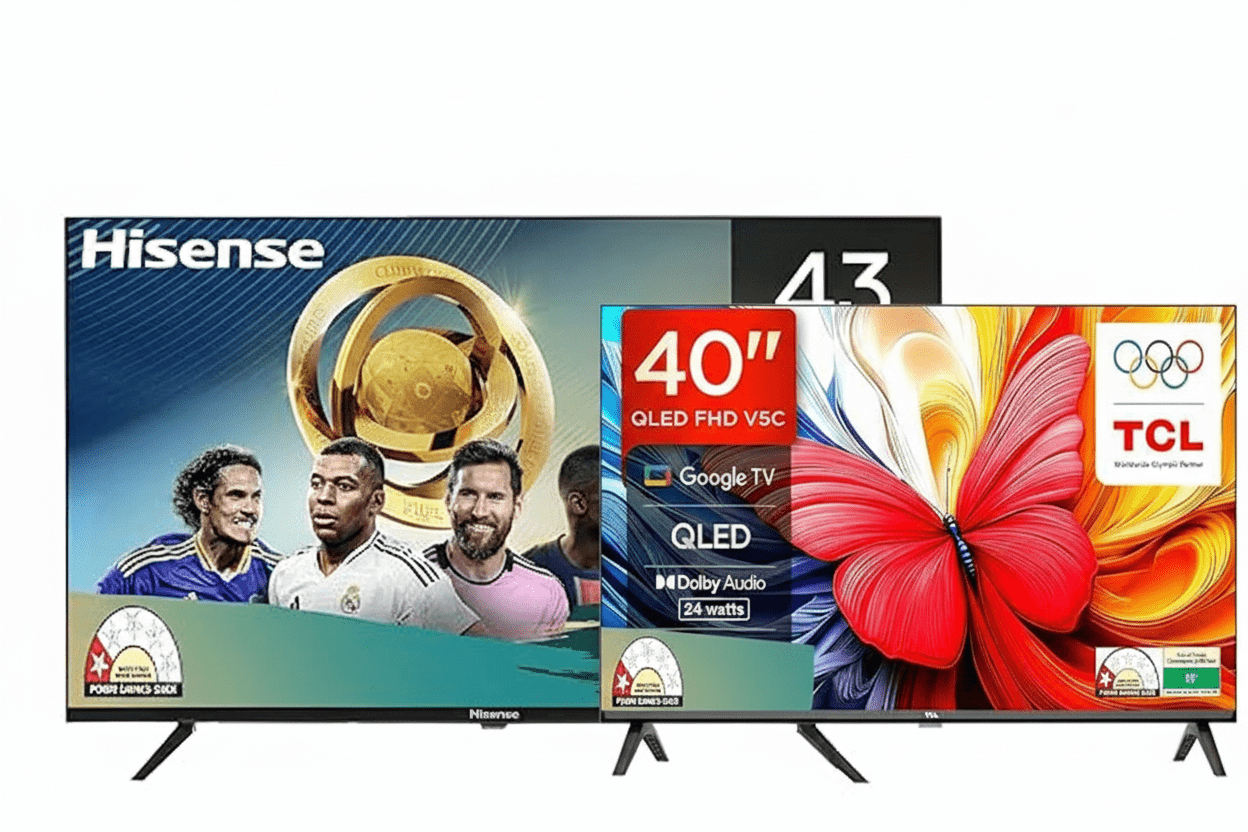
TCL 40″ V5C vs. Hisense 43″ E5Q QLED TV Comparison (2025)

TCL V5C (40″) vs. Hisense E5Q (43″) QLED TV Battle

A detailed comparison of two leading Full HD QLED Google TVs for 2025.


At a Glance

TCL V5C Series (40-inch)

4.0/5 (647 Ratings)

  • Price: ₹15,490
  • Display: 40″ QLED, Full HD
  • Sound: 24W with Dolby Audio
  • OS: Google TV
View TCL Deal

Hisense E5Q Series (43-inch)

4.0/5 (352 Ratings)

  • Price: ₹16,999
  • Display: 43″ QLED, Full HD
  • Sound: 30W with Dolby Audio
  • OS: Google TV
View Hisense Deal

Display: Size and Quality

TCL’s 40-inch QLED

The TCL TV features a 40-inch Full HD QLED panel with 100% Color Volume Plus and HDR 10 support. With 300 nits of brightness and Micro Dimming technology, it delivers vibrant colors and improved contrast for an excellent viewing experience.

Hisense’s Larger 43-inch QLED

Hisense offers a larger 43-inch screen with a slightly brighter QLED panel at 330 nits. It also supports HDR 10 and boasts a 1200:1 native contrast ratio, providing deep blacks and bright highlights. The larger size makes it more immersive for a primary living room TV.

Audio Performance

TCL’s 24W Dolby Audio

TCL equips its TV with a solid 24W speaker system that supports Dolby Audio. This configuration provides clear and balanced sound that is well-suited for watching TV shows, movies, and general entertainment without distortion.

Hisense’s More Powerful 30W Sound

Hisense gains an edge with its more powerful 30W speaker setup. This extra wattage allows for a richer, more room-filling sound with better depth and bass response, making it a better out-of-the-box solution for cinematic audio.

OS, Hardware, and Performance

A Shared Platform: Google TV

Both TVs run on the Google TV operating system. This means users of either TV will enjoy a very similar experience, including a content-first home screen, Google Assistant voice control, built-in Chromecast, and access to thousands of apps from the Google Play Store.

Identical Core Hardware

Under the hood, both TVs are evenly matched. Each is powered by a 64-bit Quad-Core processor, 1GB of RAM, and 8GB of internal storage. This hardware ensures that the Google TV interface runs smoothly for everyday tasks like streaming and app navigation on both models.

Connectivity and Design

Hisense: The Connectivity King

Hisense offers a more robust port selection with three HDMI ports and two USB ports, making it easier to connect multiple devices like game consoles and streaming sticks. It also features faster Wi-Fi 5 and Bluetooth 5.0 for better wireless performance.

TCL’s Solid Offering

The TCL TV provides a functional set of ports, including two HDMI and one USB port. While it has fewer ports than the Hisense, it covers the essentials for most users. Both TVs thankfully include a headphone jack for private audio.

Specification Summary

FeatureTCL V5C (40-inch)Hisense E5Q (43-inch)
Screen Size40 Inches43 Inches
ResolutionFull HD (1920×1080)Full HD (1920×1080)
Brightness300 nits330 nits
Sound Output24 Watts30 Watts
HDMI / USB Ports2 / 13 / 2
Wi-Fi / BluetoothWi-Fi 4 / BT 5.0Wi-Fi 5 / BT 5.0
Warranty1 Year (6 mo. remote)1 Year

Final Verdict and Recommendation

Choose the TCL V5C TV if…

…you are looking for the most affordable entry into Full HD QLED technology. It provides excellent picture quality and all the benefits of Google TV at a very competitive price point, making it a fantastic value.

Choose the Hisense E5Q TV if…

…you can stretch your budget slightly for a more premium experience. The larger screen, higher brightness, more powerful sound, and superior connectivity make it a better long-term investment and a more capable centerpiece for your entertainment setup.

🏆 Overall Winner: Hisense E5Q Series

For a small price increase, the Hisense E5Q delivers significant upgrades across the board: a larger, brighter screen, more powerful audio, and better connectivity. It offers a more complete and future-proof package, making it our recommended choice between the two.
7 Mind-Blowing Reasons to Buy Xiaomi Over Samsung

Xiaomi QLED vs. Samsung LED
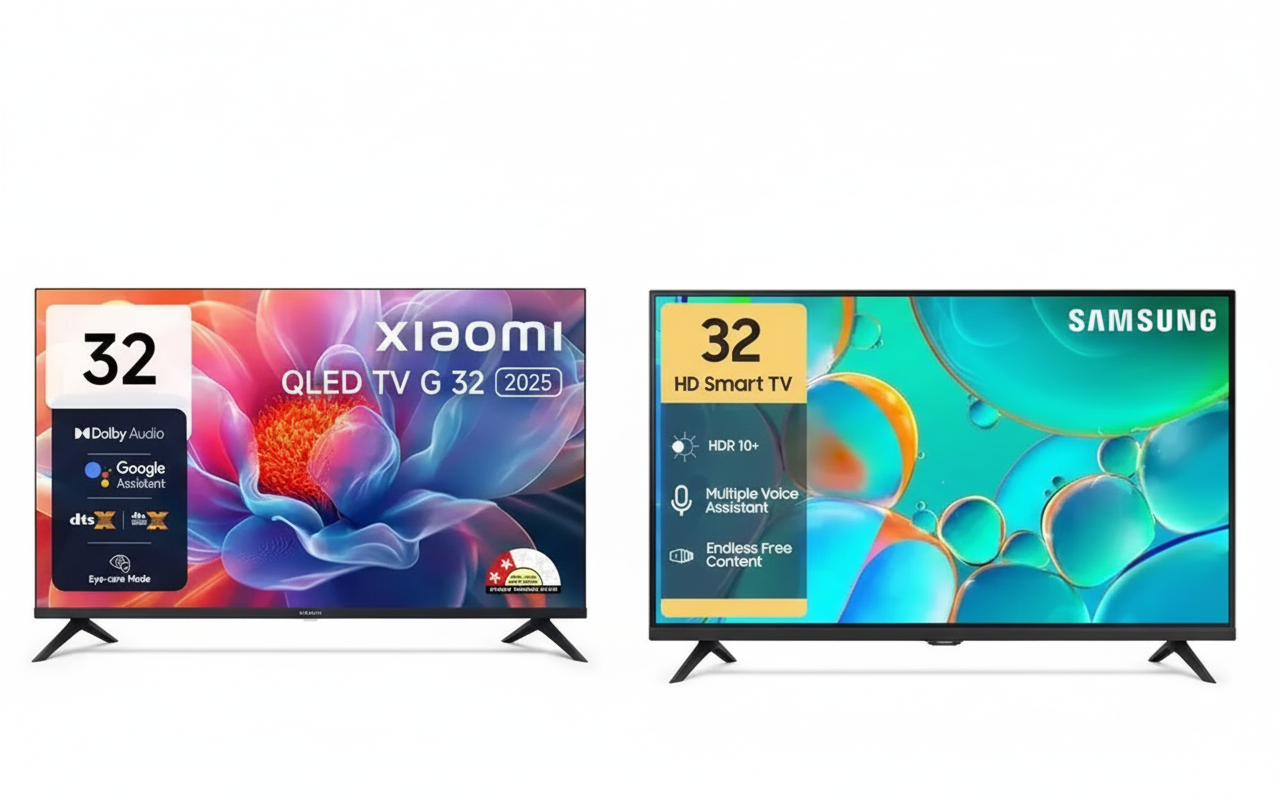
Xiaomi QLED vs. Samsung Tizen TV (32-inch, 2025) – In-Depth Comparison

Xiaomi G Series QLED vs. Samsung Tizen TV (32-inch, 2025)

A head-to-head battle between two of the best budget 32-inch smart TVs.


At a Glance

Xiaomi G Series QLED (L32MB-APIN)

4.0/5 (7,206 Ratings)

  • Price: ₹12,499
  • Display: 32″ QLED, HD Ready
  • Sound: 20W with Dolby Audio
  • OS: Google TV
View Xiaomi Deal

Samsung Tizen TV (UA32H4500FUXXL)

4.3/5 (1,13,813 Ratings)

  • Price: ₹12,740
  • Display: 32″ LED, HD Ready
  • Sound: 20W with OTS Lite & Q-Symphony
  • OS: Tizen
View Samsung Deal

Display Technology: QLED vs. LED

Xiaomi’s QLED Panel

Xiaomi takes the lead with its QLED display, which uses Quantum Dot technology to produce a wider range of colors (90% DCI-P3) and higher brightness. This results in more vibrant, lifelike, and punchy images compared to a standard LED TV. It also supports HDR 10.

Samsung’s Advanced LED

Samsung uses a high-quality LED panel enhanced with its PurColor technology for accurate color reproduction and Contrast Enhancer for better depth. It also supports HDR10+, a slightly more advanced HDR format than the Xiaomi. While excellent for an LED, it can’t fully match the color volume of QLED.

Audio Experience

Xiaomi’s Dolby Audio System

The Xiaomi TV comes with a standard 20W speaker setup supported by Dolby Audio and DTS. This provides clear, balanced sound that is perfectly suitable for everyday TV shows, news, and casual movie watching.

Samsung’s Sound Innovations

Samsung also has a 20W system but enhances it with advanced software. Object Tracking Sound (OTS) Lite makes audio feel like it’s coming from where the action is on-screen, while Q-Symphony allows the TV speakers to work in harmony with a Samsung soundbar for a richer, more immersive soundstage.

OS, Hardware, and Performance

Operating System

Xiaomi uses Google TV, offering vast app support and a content-forward interface. Samsung uses its proprietary Tizen OS, known for its speed, stability, and unique features like Samsung TV Plus (100+ free channels).

Processor & RAM

Both TVs are equipped with a capable Quad-Core processor, 1GB of RAM, and 8GB of storage. This ensures smooth navigation and app performance on both operating systems for everyday use.

Refresh Rate

The Xiaomi TV has a standard 60Hz refresh rate, which is great for movies and TV shows. The Samsung TV has a 50Hz refresh rate, which is common in its price range but slightly lower than the Xiaomi.

Connectivity, Design, and Warranty

Ports & Inputs

Both TVs offer two HDMI ports. Xiaomi has an edge with two USB ports and a headphone jack. Samsung provides one USB port but includes an Ethernet port for a stable wired internet connection.

Design and Build

Xiaomi boasts a premium-looking metal, bezel-less design. Samsung features a slim, modern look that is also very appealing. Both are lightweight and suitable for tabletop or wall-mounted setups.

Warranty

Both manufacturers offer excellent warranty packages. Each provides a 1-year comprehensive warranty plus an additional 1-year warranty specifically for the display panel, giving buyers peace of mind.

Specification Summary

FeatureXiaomi G Series QLEDSamsung Tizen TV
Display TechQLEDLED
HDR SupportHDR10HDR10+
Sound FeaturesDolby Audio, DTSOTS Lite, Q-Symphony, Adaptive Sound
Operating SystemGoogle TVTizen
Refresh Rate60Hz50Hz
USB Ports21
Headphone JackYesNo
Warranty1+1 Year (Panel)1+1 Year (Panel)

Final Verdict & Recommendation

Choose the Xiaomi G Series TV if…

…picture quality is your absolute top priority. The QLED panel delivers superior color and brightness. It’s also the better choice if you prefer the Google TV ecosystem and need a headphone jack for private listening.

Choose the Samsung Tizen TV if…

…you value a refined and feature-rich smart experience. Samsung’s Tizen OS, advanced audio features like Q-Symphony, and value-adds like Samsung TV Plus and Knox Security make it a powerful all-around entertainment hub.

Overall Recommendation

For pure visual fidelity, the **Xiaomi G Series QLED** has the edge. For a more feature-packed and secure smart ecosystem with superior sound software, the **Samsung Tizen TV** is an outstanding choice. The decision comes down to QLED picture vs. a smarter, more integrated OS experience.