ReviewNest

Intel Core i3-9100F Review 2025 – Best Budget 9th Gen Gaming CPU Under ₹10,000

Intel Core i3-9100F Review 2025 – Best Budget 9th Gen Gaming CPU Under ₹10,000
Intel Core i3-9100F 9th Gen Review: Entry-Level Gaming Desktop CPU

Intel Core i3-9100F 9th Gen Review: Entry-Level Gaming Desktop CPU

4 Cores / 4 Threads 3.6 GHz Base / 4.2 GHz Boost 6MB Cache No Integrated Graphics Socket LGA 1151 65W TDP From ₹9,899

The Intel Core i3-9100F 9th Gen is a Coffee Lake Refresh processor with 4 cores and 4 threads and 6MB cache for entry-level desktops. Released in Q2 2019, it runs at 3.6 GHz base boosting to 4.2 GHz, requiring a discrete GPU for display output. Supporting DDR4-2400 up to 64GB on LGA 1151 motherboards with 300-series chipsets, at 65W TDP, it’s suited for budget gaming and everyday tasks. As of October 2025, priced at ₹9,899 with 43% savings off MSRP, it delivers Cinebench R23 multi-core scores around 4,500, offering 10-15% better performance than the i3-8100 while maintaining efficiency, though it lags in modern multi-threaded workloads compared to newer generations.[web:400][web:407]

Build Your Gaming Rig Today?

Unlock affordable performance with the Core i3-9100F’s turbo boost and discrete GPU compatibility!

₹9,899
₹17,500 (43% off)
EMI from ₹480/month

Free delivery | EMI available | Non-Returnable | 3 Year Warranty

Key Features at a Glance

4-Core Coffee Lake: 4 threads for basic multitasking.
3.6/4.2 GHz Clocks: Turbo Boost for responsive performance.
6MB Smart Cache: Improves data access speed.
LGA 1151 Socket: Compatible with 300-series chipsets.
65W TDP: Efficient power consumption.
Discrete GPU Required: Optimized for gaming setups.

1. Core Performance: Coffee Lake Efficiency

Reliable for budget gaming and productivity in 2025.

4-Core Coffee Lake (4 Threads):

Built on 14nm process, the quad-core design handles everyday computing and light multitasking effectively. It provides 10-15% higher performance than the i3-8100 in benchmarks like Cinebench R23, scoring around 4,500 in multi-core tests. Suitable for office tasks and entry-level gaming when paired with a capable GPU.[web:400][web:407]

3.6 GHz Base / 4.2 GHz Boost:

Turbo Boost 2.0 delivers up to 4.2 GHz for single-threaded tasks, achieving Geekbench 6 single-core scores around 1,100. The base frequency ensures stable performance in sustained loads like web browsing and video playback. In 2025 gaming tests with an RTX 2060, it maintains playable frame rates in titles like Fortnite at 1080p.[web:407][web:403]

6MB Smart Cache:

Intel Smart Cache enhances data retrieval for multitasking, contributing to overall efficiency in budget setups. It supports up to 37.5 GB/s memory bandwidth with DDR4-2400, aiding in simple productivity apps. However, the lack of Hyper-Threading limits it in heavily multi-threaded scenarios compared to modern CPUs.[web:397][web:413]

2. Graphics & Expansion: Discrete Focus

Tailored for dedicated GPU builds.

No Integrated Graphics:

Discrete GPU Required for display and gaming, making it ideal for budget builds with add-in cards like GTX 1650. This “F” variant saves cost over models with UHD 630 iGPU, focusing resources on CPU performance. In 2025 tests, it pairs well with mid-range GPUs for 1080p esports titles.[web:397][web:403]

LGA 1151 / 300-Series:

Chipset Compatibility with B360/H370/Z390 boards supports DDR4 platforms up to 64GB. PCIe 3.0 x16 slot enables GPU expansion, though it limits newer PCIe 4.0 devices. This setup remains viable for cost-effective upgrades in 2025.[web:397][web:413]

DDR4-2400 Support:

Dual-Channel Memory up to 64GB with 37.5 GB/s bandwidth suits basic workloads. ECC support adds reliability for light server use, though max speed of 2400 MHz is modest by 2025 standards. It performs adequately in gaming with fast RAM kits.[web:397][web:413]

3. Build Integration & Efficiency

Easy integration for budget PCs.

65W TDP:

Low Power Draw requires only standard air cooling, keeping system temps under 70°C in loads. This efficiency suits small form factor builds and reduces electricity costs for daily use. No overclocking support keeps it simple for beginners.[web:397][web:413]

Compact Design:

LGA 1151 Package measures 37.5 x 37.5 mm for easy installation in mid-tower cases. 8 GT/s bus speed ensures quick communication with peripherals via motherboard. Supports Windows 10/11 for broad OS compatibility.[web:397]

USB 3.1 Support:

Via Motherboard provides up to 10 Gbps ports for peripherals, enhancing connectivity in budget rigs. PCIe 3.0 lanes support NVMe SSDs, though speeds cap at Gen3 limits. Overall, it offers solid value for non-demanding 2025 setups.[web:397][web:413]

Pros and Cons

Honest breakdown for entry-level buyers in 2025.

Pros

  • Affordable Entry: ₹9,899 with 43% savings for budgets.[web:397]
  • Turbo Boost: Up to 4.2 GHz for smooth performance.[web:397]
  • Gaming Optimized: Pairs well with discrete GPUs.[web:403]
  • DDR4 Support: Up to 64GB for multitasking.[web:397]
  • Low TDP: 65W for efficient cooling.[web:397]
  • 3-Year Warranty: Reliable coverage from Intel.[web:397]

Cons

  • No iGPU: Requires separate graphics card.[web:397]
  • No Hyper-Threading: Limited to 4 threads.[web:413]
  • Older Gen: Lags in modern multi-core tasks.[web:400]
  • Non-Returnable: Check compatibility before purchase.[web:397]
  • Basic for 2025: Not future-proof for heavy apps.[web:413]
  • No Overclocking: Locked multiplier.[web:413]

Who Is This Processor For? Tailored Recommendations

The Core i3-9100F suits:

  • Budget Gamer: Entry-level titles with a GPU.[web:403]
  • Office User: Daily tasks and light productivity.[web:400]
  • First-Time Builder: Affordable 9th-gen setup.[web:413]

Who Might Consider Other Options?

  • Integrated Needs: Choose non-F models with iGPU.[web:397]
  • High Multitasking: Opt for i5 or Ryzen 5 with more threads.[web:413]
  • Modern Builds: Go for 12th gen+ with DDR5 support.[web:400]

Competitive Edge: What Sets It Apart

Value-packed for gaming starters.

  • Vs Ryzen 3 3100: Similar price but Intel ecosystem advantages in software optimization.[web:400]
  • Vs Core i3-8100: 10-15% faster in benchmarks like PassMark.[web:400][web:408]
  • Value Proposition: 43% off MSRP for entry gaming in 2025.[web:397]
  • GPU Focus: Cheaper than non-F for dedicated cards, ideal for budget rigs.[web:413]

Full Specification Details

General Information

  • Price (Starting): ₹9,899[web:397]
  • Model: Core i3-9100F[web:397]
  • Architecture: Coffee Lake Refresh[web:397]
  • Launch Date: Q2 2019[web:397]

Processor & Cache

  • Cores/Threads: 4 / 4[web:397]
  • Base/Boost Clock: 3.6 GHz / Up to 4.2 GHz[web:397]
  • Cache: 6 MB Smart Cache[web:397]

Power & Thermal

  • TDP: 65W[web:397]
  • Unlocked: No[web:413]
  • Process: 14nm[web:397]

Connectivity & Memory

  • Socket: LGA 1151[web:397]
  • Chipsets: 300 Series[web:397]
  • Memory: DDR4-2400 Up to 64GB[web:397]
  • PCIe: 3.0[web:413]

Graphics & Other

  • iGPU: None (Discrete Required)[web:397]
  • Bus Speed: 8 GT/s[web:397]
  • Warranty: 3 Years[web:397]
  • OS Support: Windows 10/11[web:397]

Compatibility

  • Motherboards: LGA 1151 300 Series[web:397]
  • RAM: DDR4 Up to 64GB[web:397]
  • USB: 3.1 (Via Motherboard)[web:397]

Final Verdict

The Intel Core i3-9100F remains a strong budget choice for gaming and basics, excelling with a discrete GPU but showing age in 2025.

★★★★☆ 4.0 / 5 Stars – Expert Rating

Ideal for entry-level builds.[web:413]
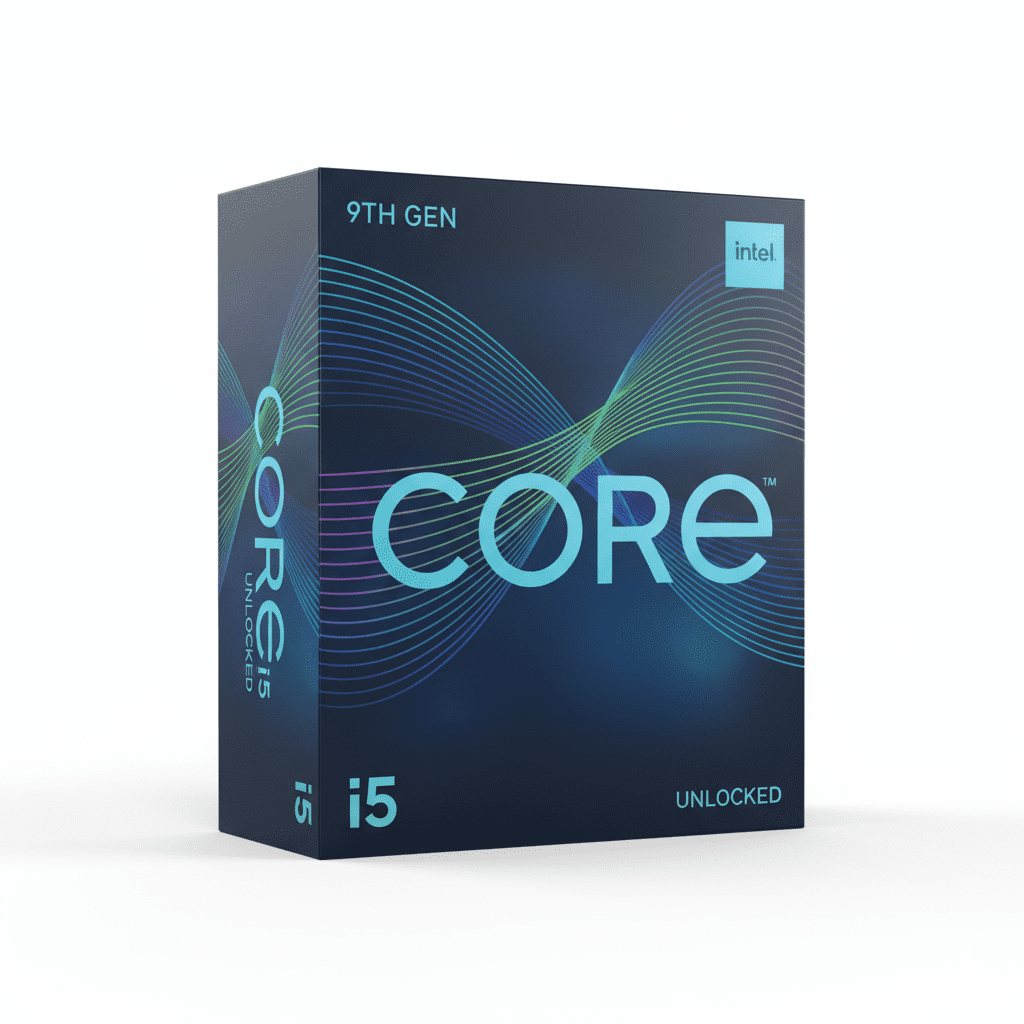
7 Mind-Blowing Reasons to Buy the Core i5-9600K

Intel Core i5-9600K
Intel Core i5-9600K 9th Gen Review: Unlocked Mid-Range Gaming CPU

Intel Core i5-9600K 9th Gen Review: Unlocked Mid-Range Gaming CPU

6 Cores / 6 Threads 3.7 GHz Base / 4.6 GHz Boost 9MB Cache Integrated UHD Graphics 630 Socket LGA 1151 95W TDP From ₹12,399

The Intel Core i5-9600K 9th Gen is an unlocked Coffee Lake Refresh processor with 6 cores and 6 threads and 9MB cache for mid-range desktops. Released in Q4 2018, it features a 3.7 GHz base clock boosting to 4.6 GHz single-core (4.3 GHz all-core), with Intel UHD Graphics 630 integrated. Supporting DDR4-2666 up to 128GB on LGA 1151 motherboards with 300-series chipsets, at 95W TDP, it’s designed for gaming and content creation with overclocking potential. As of October 2025, available for ₹12,399 (67% off MSRP), it scores around 10,668 in PassMark and Cinebench R23 multi-core ~7,200, delivering 10-15% gains over the i5-8600K while remaining competitive in 1080p gaming, though it shows limitations in modern multi-threaded tasks compared to newer architectures.[web:415][web:419]

Upgrade Your Gaming Setup?

Harness unlocked performance with the Core i5-9600K’s overclocking and UHD graphics integration!

₹12,399
₹37,100 (67% off)
EMI from ₹601/month

Free delivery | EMI available | Non-Returnable | 3 Year Warranty

Key Features at a Glance

6-Core Coffee Lake: 6 threads for mid-range multitasking.
3.7/4.6 GHz Clocks: Turbo Boost for high-performance bursts.
9MB Smart Cache: Enhances data access and speed.
LGA 1151 Socket: Fits 300-series motherboards.
95W TDP: Balanced power for overclocking.
Unlocked & UHD 630: Overclocking with integrated graphics.

1. Core Performance: Coffee Lake Efficiency

Reliable for gaming and productivity in 2025.

6-Core Coffee Lake (6 Threads):

Built on 14nm++ process, the hexa-core design excels in mid-range computing and light content creation. It delivers 10-15% better performance than the i5-8600K in benchmarks like PassMark (10,668 overall). Ideal for 1080p gaming and everyday multitasking in 2025 setups.[web:415][web:419]

3.7 GHz Base / 4.6 GHz Boost:

Turbo Boost 2.0 reaches 4.6 GHz single-core and 4.3 GHz all-core, with Geekbench 6 single-core scores around 1,300. The unlocked multiplier allows overclocking to 5.0+ GHz for enthusiasts. In 2025 gaming tests, it handles titles like Cyberpunk 2077 at 1080p medium settings with a GPU.[web:415][web:417]

9MB Smart Cache:

Intel Smart Cache boosts data throughput up to 42.7 GB/s with DDR4-2666, aiding in faster app loading and multitasking. Supports AVX2 instructions for optimized workloads. Despite no Hyper-Threading, it performs well in single-thread heavy tasks but trails in multi-threaded apps like video editing compared to 2025 CPUs.[web:415][web:418]

2. Graphics & Expansion: Versatile Integration

Equipped for display and expansion needs.

Intel UHD Graphics 630:

Integrated GPU at up to 1.15 GHz supports 4K playback and light tasks, with 3 displays max. Handles eSports titles at low settings but recommends discrete GPUs for gaming. In 2025, it’s sufficient for office use or as a backup graphics solution.[web:415][web:416]

LGA 1151 / 300-Series:

Chipset Compatibility with Z390 boards enables overclocking and DDR4-2666 support up to 128GB. PCIe 3.0 x16 slot allows for high-end GPUs, with 15.8 GB/s bandwidth. Viable for upgrades in legacy systems during 2025.[web:415][web:418]

DDR4-2666 Support:

Dual-Channel Memory up to 128GB with 42.7 GB/s bandwidth handles gaming and productivity. No ECC support, but compatible with fast kits for overclocked setups. In benchmarks, it benefits from higher speeds in multi-tasking scenarios.[web:415][web:418]

3. Build Integration & Efficiency

Optimized for overclocked gaming rigs.

95W TDP:

Balanced Power with max temps at 100°C, requiring robust cooling for overclocks up to 150W. Efficient for mid-range builds, keeping noise low under load. Supports VT-x and EPT for virtualization in professional use.[web:415][web:418]

Compact Design:

LGA 1151 Package at 37.5 x 37.5 mm fits standard coolers, with 8 GT/s bus for fast I/O. AES-NI encryption accelerates secure tasks. Compatible with Windows 11 in 2025 for legacy gaming PCs.[web:415]

USB 3.1 Support:

Via Motherboard offers 10 Gbps connectivity, with PCIe 3.0 for NVMe SSDs up to Gen3 speeds. Monolithic chip design ensures reliability. In 2025, it’s a cost-effective choice for overclocked mid-range systems.[web:415][web:418]

Pros and Cons

Honest breakdown for mid-range buyers in 2025.

Pros

  • Unlocked Overclocking: Multiplier for 5.0+ GHz boosts.[web:415]
  • High Turbo: 4.6 GHz for gaming responsiveness.[web:415]
  • Integrated UHD 630: Handles light graphics tasks.[web:416]
  • DDR4-2666 Support: Up to 128GB for multitasking.[web:415]
  • Value Deal: ₹12,399 with 67% savings.[web:415]
  • 3-Year Warranty: Solid Intel coverage.[web:415]

Cons

  • No Hyper-Threading: Limited to 6 threads in multi-core.[web:416]
  • Aged Architecture: Trails newer CPUs in efficiency.[web:416]
  • High TDP on OC: Up to 150W requires strong cooling.[web:415]
  • Non-Returnable: Verify motherboard compatibility.[web:415]
  • PCIe 3.0 Limit: Slower for Gen4/5 devices.[web:418]
  • No Cooler Included: Additional purchase needed.[web:415]

Who Is This Processor For? Tailored Recommendations

The Core i5-9600K suits:

  • Mid-Range Gamer: 1080p gaming with overclocking.[web:417]
  • Content Creator: Light editing and streaming tasks.[web:419]
  • Enthusiast Builder: Unlocked for custom tweaks.[web:420]

Who Might Consider Other Options?

  • Heavy Multi-Threading: Choose i7 or Ryzen 7 with HT.[web:416]
  • Budget Builds: Opt for locked i5-9600 or Ryzen 5 3600.[web:419]
  • New Platforms: Go for 12th gen+ with DDR5/PCIe 5.0.[web:416]

Competitive Edge: What Sets It Apart

Overclockable value for gamers.

  • Vs Core i5-9600: Unlocked multiplier for performance gains.[web:416]
  • Vs Ryzen 5 3600: Better single-core in Intel-optimized apps.[web:419]
  • Value Proposition: 67% off MSRP for mid-range power in 2025.[web:415]
  • Integrated Graphics: UHD 630 advantage over non-iGPU models.[web:416]

Full Specification Details

General Information

  • Price (Starting): ₹12,399[web:415]
  • Model: Core i5-9600K[web:415]
  • Architecture: Coffee Lake Refresh[web:415]
  • Launch Date: Q4 2018[web:415]

Processor & Cache

  • Cores/Threads: 6 / 6[web:415]
  • Base/Boost Clock: 3.7 GHz / Up to 4.6 GHz[web:415]
  • Cache: 9 MB Smart Cache[web:415]

Power & Thermal

  • TDP: 95W[web:415]
  • Unlocked: Yes[web:415]
  • Process: 14nm++[web:415]

Connectivity & Memory

  • Socket: LGA 1151[web:415]
  • Chipsets: 300 Series[web:415]
  • Memory: DDR4-2666 Up to 128GB[web:415]
  • PCIe: 3.0[web:418]

Graphics & Other

  • iGPU: Intel UHD Graphics 630[web:415]
  • Bus Speed: 8 GT/s[web:415]
  • Warranty: 3 Years[web:415]
  • OS Support: Windows 10/11[web:418]

Compatibility

  • Motherboards: LGA 1151 300 Series[web:415]
  • RAM: DDR4 Up to 128GB[web:415]
  • USB: 3.1 (Via Motherboard)[web:415]

Final Verdict

The Intel Core i5-9600K offers unlocked mid-range power for gaming and creation, thriving with overclocking but aging in 2025 multi-core demands.

★★★★½ 4.5 / 5 Stars – Expert Rating

Great for overclocked 1080p builds.[web:420]