ReviewNest

HD Ready QLED vs Full HD TVs in 2025: Which Budget TV Should You Buy?

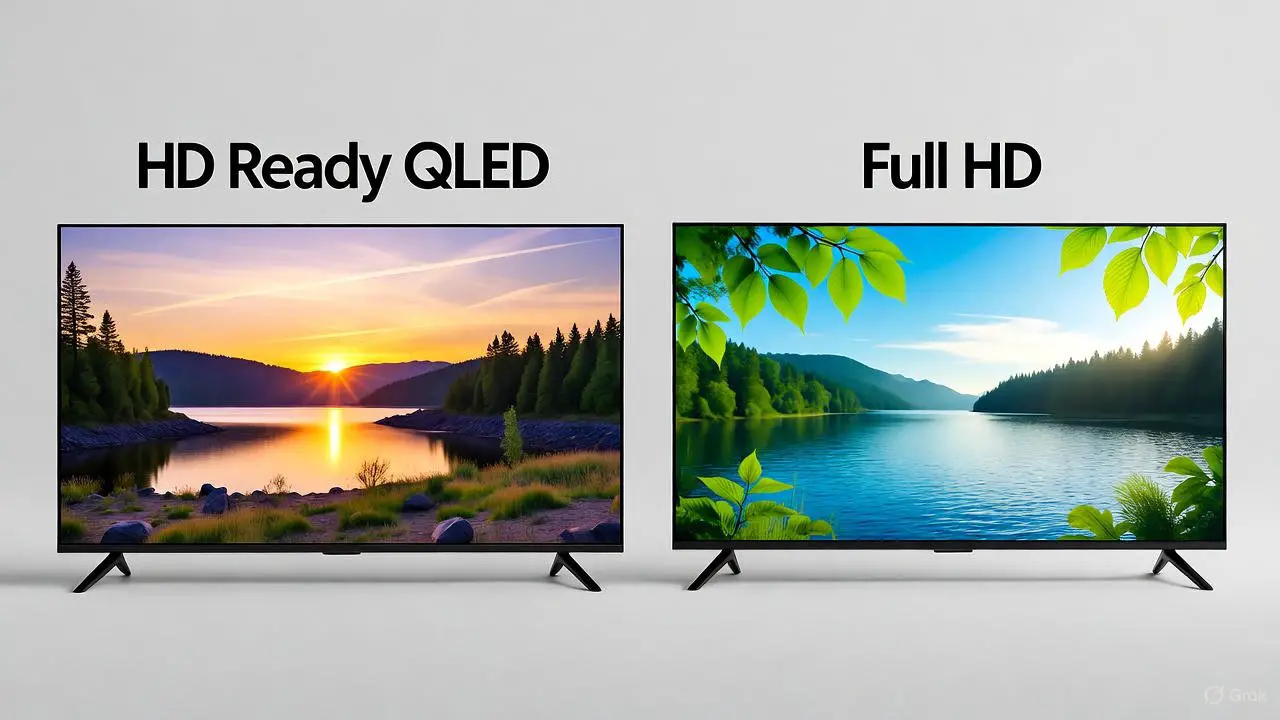
HD Ready QLED vs Full HD TVs
HD Ready QLED vs Full HD TVs in 2025 – Full Width Cards Design

HD Ready QLED vs Full HD TVs in 2025: The Ultimate Budget Buying Guide

Buying a budget TV in India has become more confusing than ever. With options like **HD Ready**, **Full HD**, and the newer **HD Ready QLED** all competing under ₹12,000, many buyers struggle to identify the best value.

This article will clarify the key differences, explain which option makes the most sense in 2025, and provide actionable buying advice to ensure you get the best viewing experience for your money.

Understanding TV Resolutions and Display Technologies

Resolution (Sharpness)

This determines the number of pixels on the screen. More pixels mean a sharper, more detailed image.

  • HD Ready (720p): Resolution of 1280×720 pixels. Best for smaller screens (24–32 inches), suitable for casual DTH or cable viewing.
  • Full HD (1080p): Resolution of 1920×1080 pixels, providing sharper text and images, ideal for watching movies with subtitles or sitting closer to the screen.

Display Technology (Color & Brightness)

Influences color vibrancy, contrast, and brightness levels.

  • LED: Standard technology using an array of LEDs as backlight.
  • QLED (Quantum Dot LED): Advanced panel technology using a layer of quantum dots to enhance color accuracy, brightness, and contrast.
  • HD Ready QLED: Combines 720p resolution with QLED color technology.
  • Full HD QLED: Combines 1080p resolution with QLED colors.

Why Older Full HD LED TVs Are Less Appealing in 2025

  • Production Shift: Most major brands focus on 4K and QLED models for 2025, leaving budget to newer HD Ready TVs.
  • Older Stock: Available Full HD models are mostly 2022–2023 units.
  • Outdated Features: Slower processors, older Android TV versions, lower brightness, mediocre HDR, weaker speakers.

Though sharper in resolution, older Full HD LEDs may feel dated compared to modern HD Ready QLED TVs with better features.

Why HD Ready QLED Is the Smarter Budget Choice in 2025

  • Vivid Colors and Contrast: Quantum Dot tech delivers a wider color gamut, reproducing up to 94% of the DCI-P3 color space.
  • Superior Brightness: QLED panels are brighter, great for bright Indian homes.
  • Modern Smart OS: Comes with Google TV 12/13 or latest Android TV for smooth streaming.
  • Better HDR Performance: HDR10 support for improved color and contrast.
  • Future-Proofing: Newer 2024-2025 models with updates, warranty, and HDMI eARC support.
Pro Tip: For a 32-inch TV viewed from 6–8 feet, the human eye barely distinguishes 720p from 1080p, but the richer colors and brightness of QLED are very noticeable.

Feature Comparison: HD Ready QLED (2025) vs. Full HD LED (2022–23)

FeatureFull HD LED (Older Models)HD Ready QLED (2025 Models)
Resolution1920×1080 (Sharper)1280×720 (Acceptable for 32″)
BrightnessAverageHigh (Excellent for bright rooms)
ColorsStandardRich & vibrant (Quantum Dot)
Smart OSOld Android / PatchWallGoogle TV 12/13 / Latest Android TV
HDR SupportBasic or NoneHDR10 / Wide Color Gamut
Audio20W Average24W–30W Tuned Speakers
DesignBasic, Thicker BezelsSleek, Frameless Designs
WarrantyOlder Stock, Limited SupportFull 1-2 Year Warranty & Service
Price₹8,000–₹11,000₹10,000–₹12,000

Top Recommended Budget TVs for 2025 (Under ₹12,000)

TCL 32″ QLED HD Ready Google TV (2025)

Approx. ₹11,499: Bright QLED display, HDR10 support, and smooth Google TV experience with major apps pre-installed.

Kodak 32″ QLED HD Ready Smart TV (2025)

Approx. ₹10,999: Offers rich colors and decent audio performance with the latest Android TV OS.

Blaupunkt 32″ QLED HD Ready TV (2025)

Approx. ₹11,999: Features HDR10 support, Google TV, and a premium slim-bezel design.

Verdict: Which TV Should You Buy?

OptionWhen to Choose
Full HD LED (Older Models)Only if screen sharpness is your absolute top priority and you find a significant discount on a 1080p model.
HD Ready QLED (2025 Models)Best choice for most buyers: **better colors, brightness, smart OS, HDR, and modern design.**

Our Recommendation:

For budget buyers under ₹12,000 in 2025, **HD Ready QLED is the smarter, future-proof choice.** You may lose some resolution but gain vastly improved picture quality, features, and warranty support.
7 Mind-Blowing Reasons to Buy Xiaomi Over Samsung

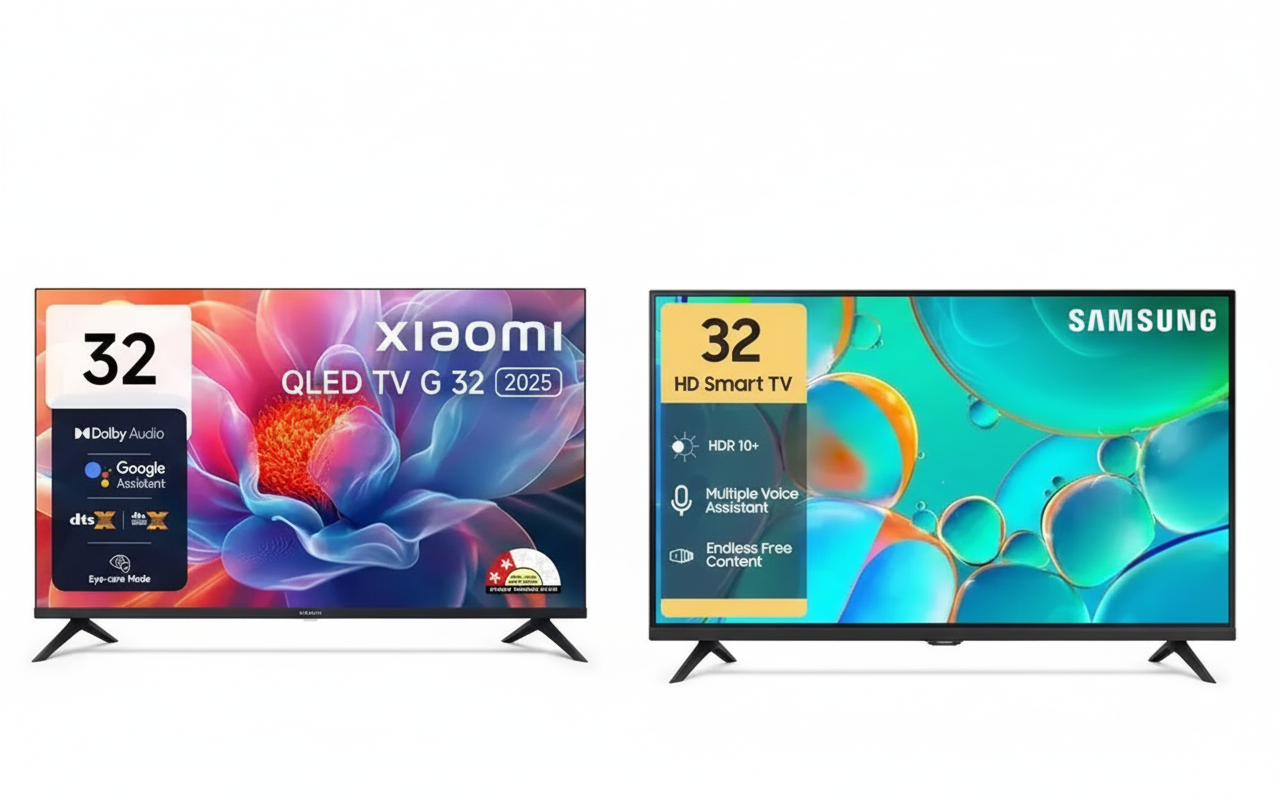
Xiaomi QLED vs. Samsung LED
Xiaomi QLED vs. Samsung Tizen TV (32-inch, 2025) – In-Depth Comparison

Xiaomi G Series QLED vs. Samsung Tizen TV (32-inch, 2025)

A head-to-head battle between two of the best budget 32-inch smart TVs.


At a Glance

Xiaomi G Series QLED (L32MB-APIN)

4.0/5 (7,206 Ratings)

  • Price: ₹12,499
  • Display: 32″ QLED, HD Ready
  • Sound: 20W with Dolby Audio
  • OS: Google TV
View Xiaomi Deal

Samsung Tizen TV (UA32H4500FUXXL)

4.3/5 (1,13,813 Ratings)

  • Price: ₹12,740
  • Display: 32″ LED, HD Ready
  • Sound: 20W with OTS Lite & Q-Symphony
  • OS: Tizen
View Samsung Deal

Display Technology: QLED vs. LED

Xiaomi’s QLED Panel

Xiaomi takes the lead with its QLED display, which uses Quantum Dot technology to produce a wider range of colors (90% DCI-P3) and higher brightness. This results in more vibrant, lifelike, and punchy images compared to a standard LED TV. It also supports HDR 10.

Samsung’s Advanced LED

Samsung uses a high-quality LED panel enhanced with its PurColor technology for accurate color reproduction and Contrast Enhancer for better depth. It also supports HDR10+, a slightly more advanced HDR format than the Xiaomi. While excellent for an LED, it can’t fully match the color volume of QLED.

Audio Experience

Xiaomi’s Dolby Audio System

The Xiaomi TV comes with a standard 20W speaker setup supported by Dolby Audio and DTS. This provides clear, balanced sound that is perfectly suitable for everyday TV shows, news, and casual movie watching.

Samsung’s Sound Innovations

Samsung also has a 20W system but enhances it with advanced software. Object Tracking Sound (OTS) Lite makes audio feel like it’s coming from where the action is on-screen, while Q-Symphony allows the TV speakers to work in harmony with a Samsung soundbar for a richer, more immersive soundstage.

OS, Hardware, and Performance

Operating System

Xiaomi uses Google TV, offering vast app support and a content-forward interface. Samsung uses its proprietary Tizen OS, known for its speed, stability, and unique features like Samsung TV Plus (100+ free channels).

Processor & RAM

Both TVs are equipped with a capable Quad-Core processor, 1GB of RAM, and 8GB of storage. This ensures smooth navigation and app performance on both operating systems for everyday use.

Refresh Rate

The Xiaomi TV has a standard 60Hz refresh rate, which is great for movies and TV shows. The Samsung TV has a 50Hz refresh rate, which is common in its price range but slightly lower than the Xiaomi.

Connectivity, Design, and Warranty

Ports & Inputs

Both TVs offer two HDMI ports. Xiaomi has an edge with two USB ports and a headphone jack. Samsung provides one USB port but includes an Ethernet port for a stable wired internet connection.

Design and Build

Xiaomi boasts a premium-looking metal, bezel-less design. Samsung features a slim, modern look that is also very appealing. Both are lightweight and suitable for tabletop or wall-mounted setups.

Warranty

Both manufacturers offer excellent warranty packages. Each provides a 1-year comprehensive warranty plus an additional 1-year warranty specifically for the display panel, giving buyers peace of mind.

Specification Summary

FeatureXiaomi G Series QLEDSamsung Tizen TV
Display TechQLEDLED
HDR SupportHDR10HDR10+
Sound FeaturesDolby Audio, DTSOTS Lite, Q-Symphony, Adaptive Sound
Operating SystemGoogle TVTizen
Refresh Rate60Hz50Hz
USB Ports21
Headphone JackYesNo
Warranty1+1 Year (Panel)1+1 Year (Panel)

Final Verdict & Recommendation

Choose the Xiaomi G Series TV if…

…picture quality is your absolute top priority. The QLED panel delivers superior color and brightness. It’s also the better choice if you prefer the Google TV ecosystem and need a headphone jack for private listening.

Choose the Samsung Tizen TV if…

…you value a refined and feature-rich smart experience. Samsung’s Tizen OS, advanced audio features like Q-Symphony, and value-adds like Samsung TV Plus and Knox Security make it a powerful all-around entertainment hub.

Overall Recommendation

For pure visual fidelity, the **Xiaomi G Series QLED** has the edge. For a more feature-packed and secure smart ecosystem with superior sound software, the **Samsung Tizen TV** is an outstanding choice. The decision comes down to QLED picture vs. a smarter, more integrated OS experience.